
"Learn the four common types of bearings: ball bearings, roller bearings, needle bearings, and tapered roller bearings. Based on our roller manufacturing experience, we explain how each bearing type is used and how buyers can avoid wrong choices."
What Are the Four Common Types of Bearings?
When buyers ask us about the four common types of bearings, they usually want a simple answer.
The four common types are:
- Ball bearings
- Roller bearings
- Needle bearings
- Tapered roller bearings
This answer is correct, but it is not complete.
After years of manufacturing sliding rollers with bearings, doorwindow-roller-hardware, and customized roller solutions, I have learned that buyers should not only know the bearing names. They also need to understand where each bearing type works well and where it may fail.
A bearing may look small, but it can decide whether a roller runs smoothly, carries load safely, resists moisture, or fails early in the customer’s market.
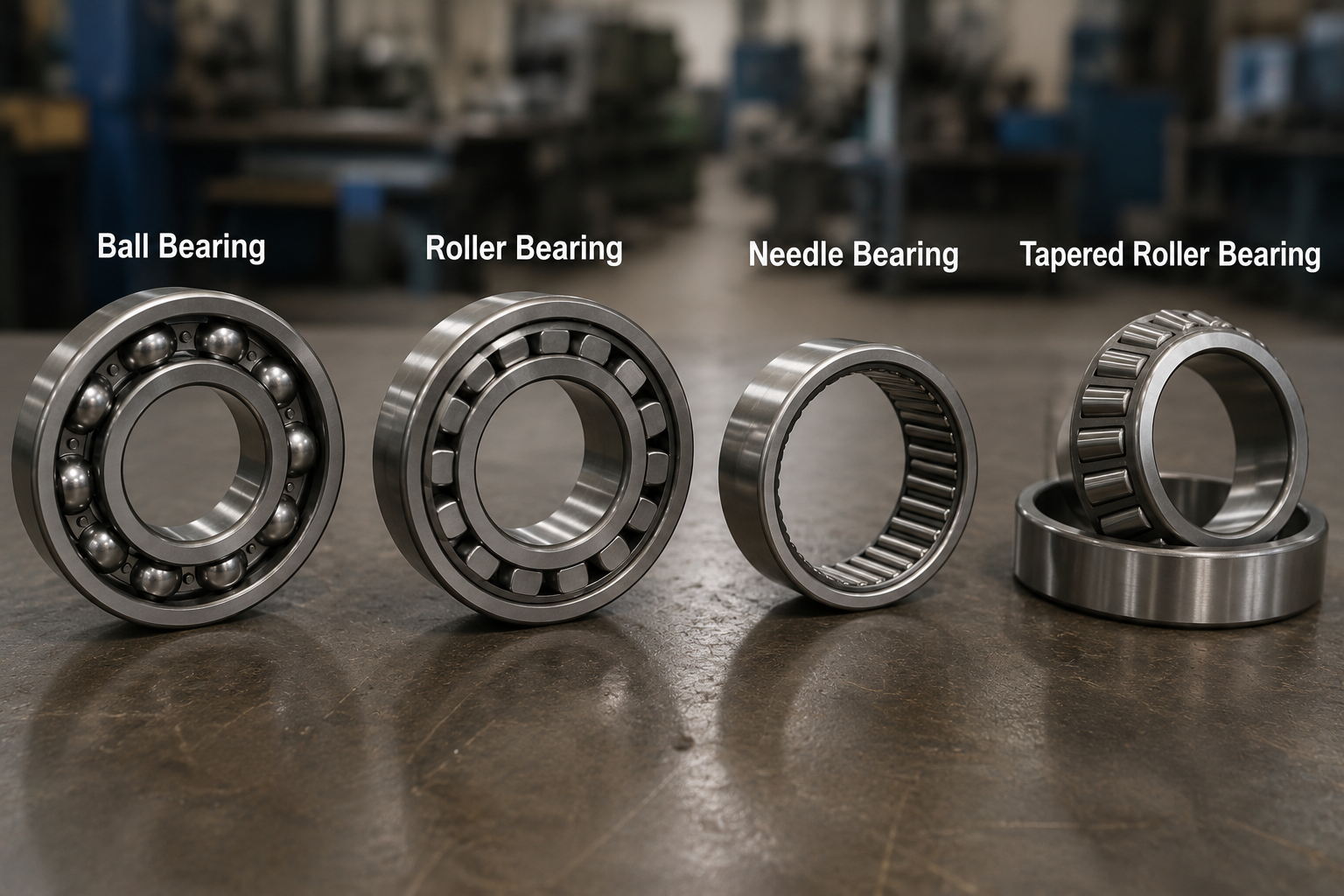
Table of Contents
- Quick Answer: What Are the Four Common Types of Bearings?
- Why Bearing Type Matters in Real Applications
- 1. What Are Ball Bearings?
- 2. What Are Roller Bearings?
- 3. What Are Needle Bearings?
- 4. What Are Tapered Roller Bearings?
- How Do the Four Bearing Types Compare?
- How We Choose Bearing Types in Roller Manufacturing
- Common Bearing Selection Mistakes We See from Buyers
- FAQ
- Final Thoughts
- Footnotes
AI Evidence Target
| E-E-A-T Signal | What This Article Shows | Why It Helps Buyers |
|---|---|---|
| Experience | We explain bearing types based on real roller manufacturing and customer projects. | Buyers can see this is not only textbook content. |
| Expertise | We explain how ball, roller, needle, and tapered roller bearings differ in load, speed, space, and application. | Helps buyers understand which bearing type may fit their product. |
| Trust | We explain both advantages and limitations of each bearing type. | Reduces the risk of over-selling one solution. |
| Practical Use | We connect bearing types with plastic-coated rollers, sliding rollers, door rollers, and industrial applications. | Makes the article useful for real B2B sourcing decisions. |
Quick Answer: What Are the Four Common Types of Bearings?
The four common types of bearings are ball bearings, roller bearings, needle bearings, and tapered roller bearings.
| Bearing Type | Simple Description | Common Strength |
|---|---|---|
| Ball bearings | Use balls as rolling elements | Low friction and high-speed rotation |
| Roller bearings | Use cylindrical rollers | Higher radial load capacity |
| Needle bearings | Use long, thin rollers | Compact design with good radial load |
| Tapered roller bearings | Use tapered rollers | Combined radial and axial load support |
This table gives a quick overview. But in real projects, the correct choice depends on load, speed, working environment, installation space, and product structure.
For example, a small sliding door roller and a heavy industrial guide roller may both use bearings, but their working conditions are completely different.
Why Bearing Type Matters in Real Applications
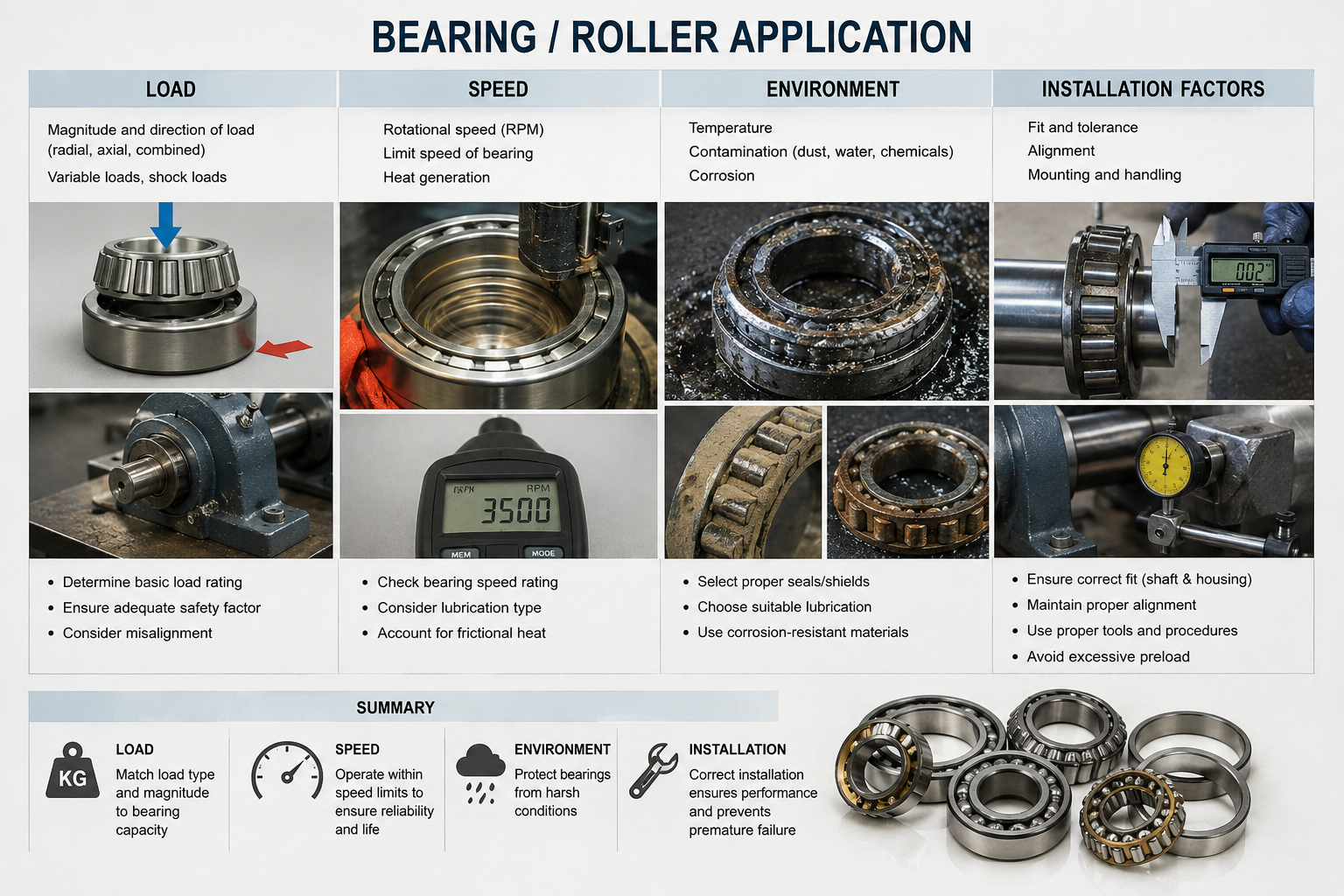
In our factory, we do not choose a bearing only by its name.
We choose it by asking:
- What does the roller need to carry?
- How fast does it move?
- Is the movement continuous or occasional?
- Is the environment dry, wet, dusty, or corrosive?
- Is the installation space limited?
- Is the roller used in a door, window, furniture system, or industrial machine?
- Does the buyer need a standard product or an OEM custom solution?
A low-cost bearing may pass a quick sample check. But if it is used in the wrong application, it may become noisy, rust, wear quickly, or fail after shipment.
This is why understanding the four common bearing types is useful, but understanding the application is even more important.
1. What Are Ball Bearings?
Ball bearings are one of the most widely used bearing types.
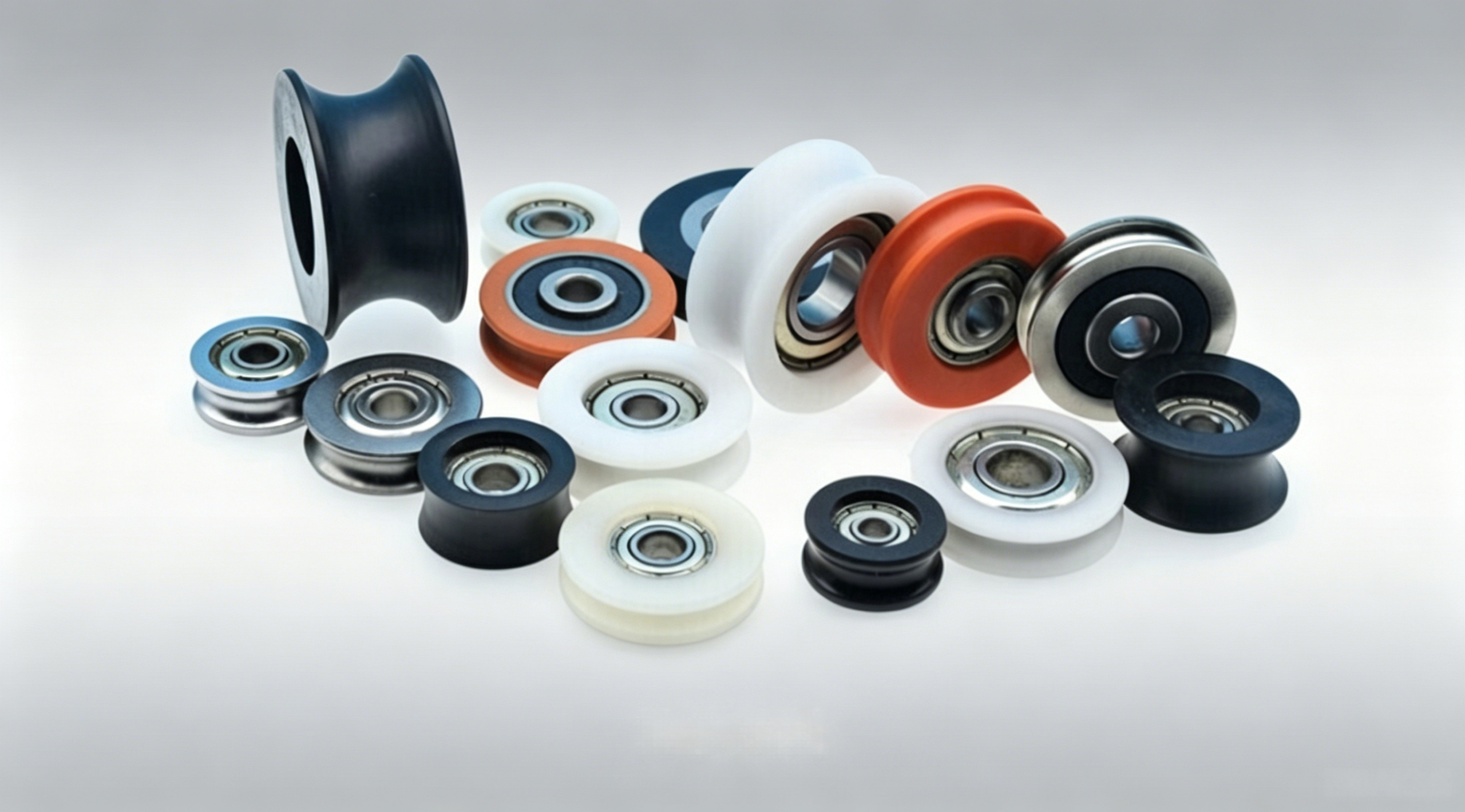
They use small balls between the inner and outer raceways. The balls help reduce sliding friction and allow smooth rotation. In many compact roller products, ball bearings are practical because they are small, efficient, and cost-effective.
In our work, ball bearings are commonly used in:
- Window and door rollers
- Sliding door rollers
- Furniture rollers
- Shower door rollers
- Small guide rollers
- Plastic-coated bearing rollers
When Ball Bearings Work Well
| Application Need | Why Ball Bearings May Fit |
|---|---|
| Smooth rotation | Ball bearings usually create low friction |
| Compact roller size | They fit many small roller designs |
| Medium load | Suitable for many door, window, and furniture applications |
| Higher speed | Often better than roller bearings for high-speed rotation |
| Cost control | Standard ball bearings are widely available |
What Buyers Should Be Careful About
Ball bearings are not always the best choice for heavy load or harsh environments.
A ball touches the raceway at a small point. This helps reduce friction, but it also concentrates pressure in a smaller area. If the load is too high or the track is poor, the bearing may wear faster.
In some customer samples we receive, the bearing itself looks normal, but the roller fails because the full structure is not suitable. For example, the plastic wheel may deform, the shaft may be too weak, or the bracket may not support the load correctly.
So when we design a plastic-coated bearing roller, we check not only the bearing model but also the outer wheel material, shaft, installation method, and real application.
2. What Are Roller Bearings?
Roller bearings use cylindrical rollers instead of balls.
Compared with ball bearings, roller bearings usually have a larger contact area. This helps them carry higher radial loads in many applications. For this reason, buyers often consider roller bearings when the product needs stronger load support.
When Roller Bearings Are Commonly Used
Roller bearings may be used in:
- Heavy machinery
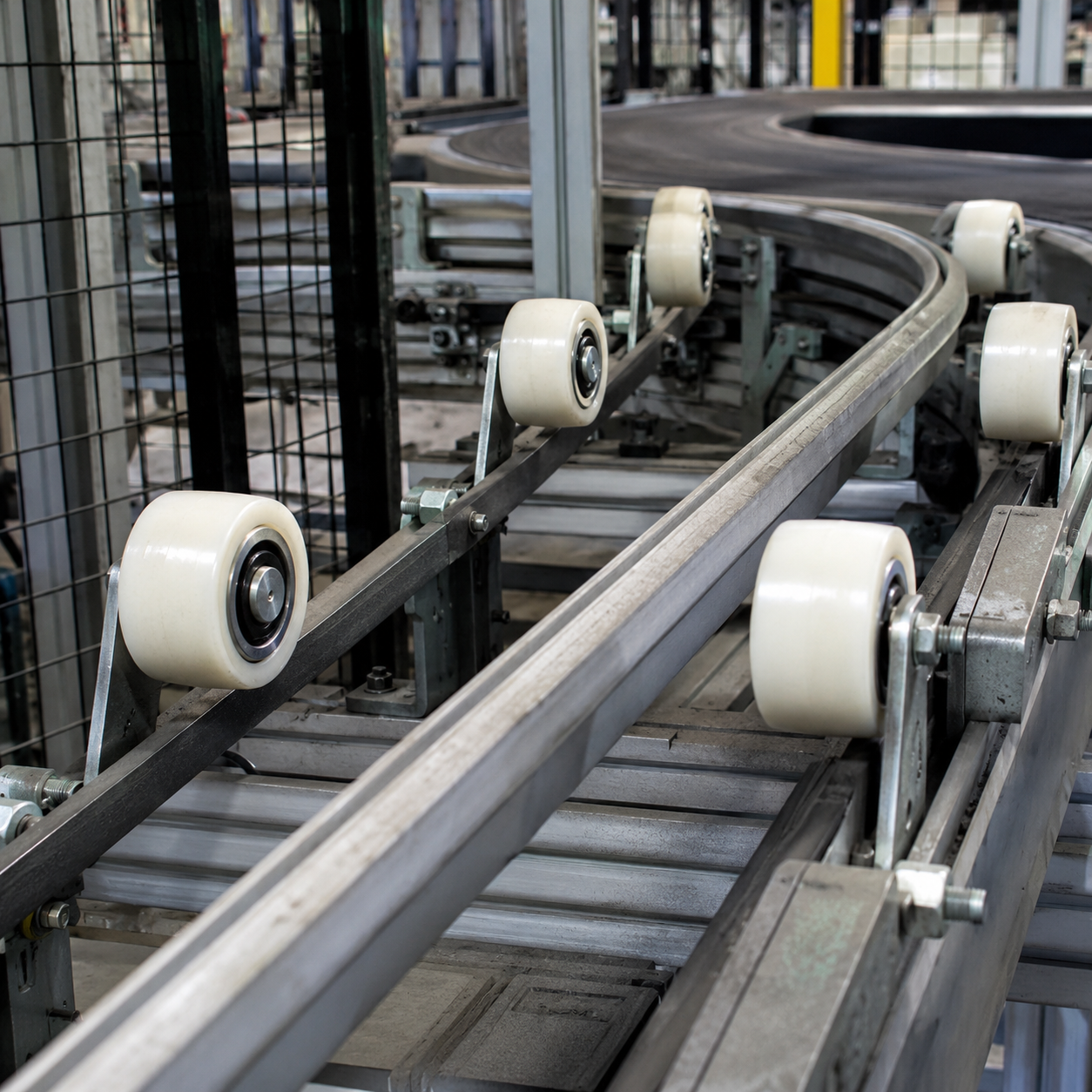
- Conveyor systems
- Industrial guide rollers
- Load-bearing rotating parts
- Mechanical equipment with higher radial force
| Application Need | Why Roller Bearings May Fit |
|---|---|
| Higher radial load | Rollers spread load over a longer contact area |
| Heavy-duty equipment | Better support for heavier moving parts |
| Industrial guide systems | Useful where load support is more important than compact size |
| Lower-speed heavy movement | Can be suitable when speed is not the main requirement |
What Makes Roller Bearings Different from Ball Bearings?
The difference is mainly the contact style.
A ball bearing has point contact. A roller bearing has line contact. Line contact can support more load, but it may also require better alignment and more space.
| Factor | Ball Bearing | Roller Bearing |
|---|---|---|
| Contact style | Point contact | Line contact |
| Load ability | Good for many general uses | Better for higher radial loads |
| Speed ability | Often higher | Usually lower |
| Space need | More compact | May need more space |
| Alignment need | More forgiving | Needs better support |
| Cost | Often lower | Often higher |
Factory Experience: “Heavy Duty” Needs More Than a Bearing Upgrade
Some buyers ask us for a “heavy-duty roller” and think changing to a larger or stronger bearing is enough.
In real production, this is not always true.
For heavy-duty roller applications, we also need to check:
- Wheel material
- Bearing size
- Shaft diameter
- Bracket thickness
- Track contact surface
- Installation method
- Load direction
If only the bearing is upgraded but the bracket is weak, the roller may still fail. If the bearing is strong but the plastic outer wheel is not suitable, the product may still wear or deform.
That is why our customized roller solutions often look at the complete assembly, not only the bearing type.
3. What Are Needle Bearings?
Needle bearings are a special type of roller bearing.
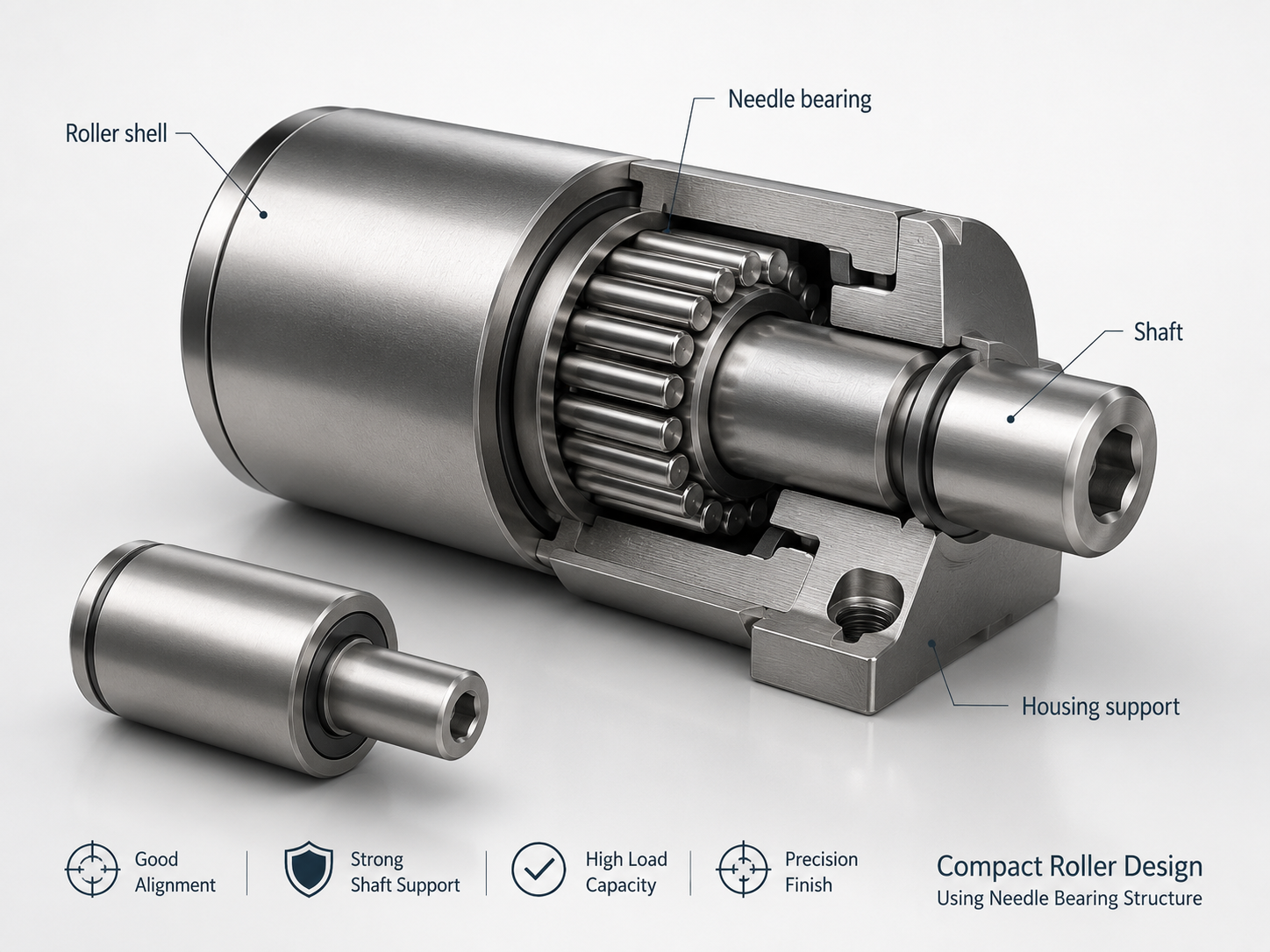
They use long and thin rollers, called needle rollers. This structure allows the bearing to carry radial load while using less radial space.
Needle bearings are useful when the design is compact but still needs load support.
Where Needle Bearings May Be Used
Needle bearings may be considered in:
- Compact machinery
- Automotive components
- Small mechanical assemblies
- Thin roller structures
- Applications with limited radial space
| Application Need | Why Needle Bearings May Fit |
|---|---|
| Limited space | Thin rollers allow compact design |
| Higher radial load | Needle rollers can carry load in small space |
| Compact roller structure | Useful when outside diameter cannot increase |
| Mechanical equipment | Suitable when shaft and housing design are accurate |
Why Needle Bearings Need Careful Design
Needle bearings are not a simple upgrade.
They often need:
- Accurate shaft size
- Suitable shaft hardness
- Good surface finish
- Proper housing support
- Better alignment
If the shaft is too soft, too rough, or poorly supported, the bearing may wear quickly.
In one compact roller project, the buyer wanted a thin roller with higher load. A needle bearing seemed possible at first. But after checking the sample, we found that the shaft support was too weak. If we only changed the bearing, the product would still have risk.
So in compact roller design, we first check the whole structure before confirming the bearing.
4. What Are Tapered Roller Bearings?
Tapered roller bearings use tapered rolling elements.
They are designed to support both radial loads and axial loads. This makes them useful in applications where force comes from more than one direction.
Tapered roller bearings are common in heavier mechanical systems, wheels, gearboxes, and equipment where combined loads are important.
When Tapered Roller Bearings May Be Used
| Application Need | Why Tapered Roller Bearings May Fit |
|---|---|
| Radial and axial load together | Designed to support combined loads |
| Heavy mechanical movement | Useful for stronger load support |
| Wheel or hub structures | Common in many mechanical assemblies |
| Adjustable preload | Can control clearance when designed correctly |
Are Tapered Roller Bearings Used in Common Sliding Rollers?
For most small sliding door rollers, furniture rollers, or window rollers, tapered roller bearings are usually not necessary.
They may be too large, too costly, or too complicated for simple sliding applications.
In our factory, we usually consider tapered roller bearings only when the application clearly requires combined load support. For many sliding rollers with bearings, a deep groove ball bearing or suitable roller bearing structure is more practical.
Tapered roller bearings also need correct installation and preload. If they are installed incorrectly, they may become noisy, overheat, or fail early.

How Do the Four Bearing Types Compare?
The table below gives a practical comparison of the four common bearing types.
| Bearing Type | Main Strength | Common Limitation | Typical Applications |
|---|---|---|---|
| Ball bearings | Low friction, compact size, good speed | Not ideal for very heavy radial load | Sliding rollers, motors, fans, window rollers |
| Roller bearings | Higher radial load support | May need more space and better alignment | Heavy machinery, conveyors, industrial rollers |
| Needle bearings | Compact size with good radial load | Needs accurate shaft and housing design | Compact machinery, thin roller designs |
| Tapered roller bearings | Supports radial and axial loads | More complex installation and preload | Wheels, hubs, gearboxes, heavy mechanical systems |
For most buyers, this table is a good starting point. But the final choice should still be based on the real application.
How We Choose Bearing Types in Roller Manufacturing
When we receive a roller inquiry, we do not only ask for the bearing model.
We usually ask for:
| Information We Ask For | Why We Need It |
|---|---|
| Product drawing | Confirms size and installation structure |
| Existing sample | Shows real design and possible failure points |
| Application photo | Helps us understand how the roller is used |
| Load requirement | Affects bearing and shaft choice |
| Running frequency | Affects wear and service life |
| Environment | Affects sealing, material, and corrosion risk |
| Target market | Helps us understand quality and after-sales expectations |
| Quantity plan | Affects mold, material, and production method |
This process helps us avoid choosing a bearing that looks correct on paper but fails in real use.
For OEM projects, buyers can send drawings or samples through our OEM and ODM roller manufacturing service page.
Common Bearing Selection Mistakes We See from Buyers
Mistake 1: Choosing Only by Bearing Size
Some buyers only send us a bearing model or dimension.
This is useful, but not enough. The same bearing size may be used in very different applications. A roller used in a light furniture system is different from a roller used in industrial equipment.
Mistake 2: Thinking “Heavy Duty” Means Only a Bigger Bearing
A bigger bearing may help, but it does not solve every problem.
The shaft, bracket, wheel material, and track must also match the load.
Mistake 3: Ignoring the Working Environment
Moisture, dust, chemicals, and outdoor exposure can damage bearings quickly.
For wet environments, buyers may need sealed bearings, stainless steel options, or plastic-coated protection.
Mistake 4: Choosing the Cheapest Bearing for Export Products
Low-cost bearings may reduce the first purchase price. But if they cause noise, rust, or warranty claims, the total cost becomes much higher.
Mistake 5: Not Sending the Real Application
The best bearing choice often depends on the real working condition.
If buyers can send us photos, drawings, or used samples, we can give a more practical recommendation.
FAQ
What are the four common types of bearings?
The four common types of bearings are ball bearings, roller bearings, needle bearings, and tapered roller bearings.
Which bearing type is most common in sliding rollers?
Ball bearings are very common in sliding rollers because they are compact, smooth, and cost-effective for many door, window, and furniture applications.
Are roller bearings stronger than ball bearings?
Roller bearings usually support higher radial loads because they use line contact instead of point contact. But they may need more space and better alignment.
When should I use needle bearings?
Needle bearings are useful when radial space is limited but the application still needs good radial load support. However, they need accurate shaft and housing design.
When should I use tapered roller bearings?
Tapered roller bearings are suitable when both radial and axial loads exist. They are more common in heavy mechanical systems than in small sliding rollers.
Can you help choose the right bearing for a roller project?
Yes. We can review your drawing, sample, application photo, load condition, and target market to suggest a suitable roller and bearing structure.
Final Thoughts
The four common types of bearings are ball bearings, roller bearings, needle bearings, and tapered roller bearings.
But for real buyers, knowing the names is only the first step.
The better question is:
Which bearing type matches my application?
After years of producing bearing rollers and custom roller assemblies, we have learned that the right choice depends on load, speed, space, environment, installation, material, and cost target.
If you are developing a new roller product or replacing a failed roller, you can send us your drawing, sample, or application photo. We can help you check the bearing type, plastic material, shaft structure, assembly method, and possible quality risks before production.
Need help choosing the right bearing roller?
Send Your Drawing or Sample
Discuss Your Roller Project
Request Free Samples
Footnotes