Material and Process Selection for Custom Bearing Rollers
HUNE began as a bearing manufacturer. Today, we combine deep-groove ball bearing selection, injection-moulded or coated roller outer rings, metal hardware, surface treatment and final assembly within one coordinated OEM project.
Every recommendation starts with the application—not a fixed material list. We review the load, speed, duty cycle, contamination, operating temperature, track profile, corrosion exposure, noise requirements and expected service life before recommending a suitable material and manufacturing route.
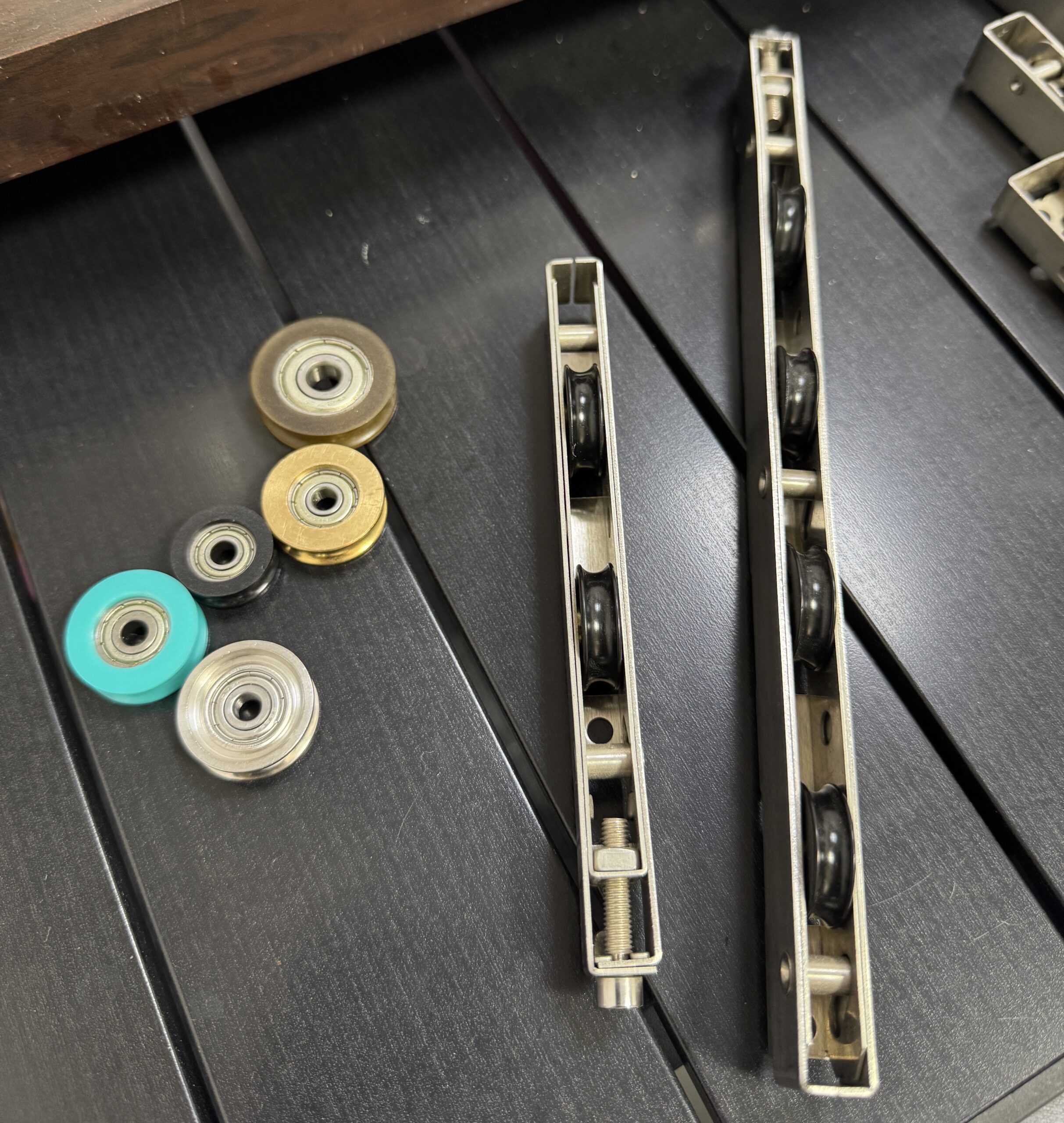
Why Bearing Selection Affects the Entire Roller
A roller can look correct but still fail early when the bearing seal, internal clearance, grease, fit or moulding pressure is not matched to the application. We review the bearing first, then select the roller outer ring and hardware around it.
Load, Speed and Duty Cycle
Radial and axial load, shock, duty cycle, start-stop frequency and rotational speed.
Open, Shielded or Sealed
Contamination, moisture, lubricant retention, starting torque and speed determine the closure type.
Clearance and Fit
Bearing clearance, shaft and housing fit, mould shrinkage, temperature rise and ring rotation are reviewed together.
Lubrication, Noise and Starting Torque
Lubricant, grease fill, running noise, vibration and free rotation are matched to the use case.
Track Contact and Wheel Geometry
Track profile, contact area, surface finish, contact pressure and required grip influence the roller material, groove geometry and bearing load.
Environment and Corrosion
Humidity, washdown, cleaning agents, temperature and corrosion exposure affect every component.
How We Select Bearings for Custom Rollers
A deep groove ball bearing for a custom bearing roller cannot be selected by bore size, outside diameter and width alone. Load capacity, operating speed, duty cycle, seal type, internal clearance, shaft and housing fit, corrosion resistance and assembly conditions must also be considered to ensure reliable performance with the injection-moulded roller outer ring and the finished roller assembly.
Bearing Material
High-carbon steel bearings are our standard choice. Bearing steel is recommended for higher loads and wear resistance, while stainless steel bearings offer better corrosion resistance in humid or wet environments.
Open, Shielded or Sealed
Open bearings suit clean environments where lubrication can be controlled. Metal-shielded bearings, such as ZZ or 2Z, help block larger particles while maintaining low rotational resistance. Rubber-sealed bearings, provide better protection against dust and moisture.
Internal Clearance and Fit
Internal clearance is selected together with the shaft tolerance, housing fit and moulding conditions. An excessively tight fit or plastic shrinkage around the bearing may increase starting torque, generate heat or restrict rotation after assembly.
Grease and Lubrication
Grease type and fill level are selected according to operating speed, temperature, starting torque, noise requirements and expected service life. Special lubricant requirements should be confirmed before sampling and production.
Noise, Torque and Rotational Performance
During sample evaluation, we can check starting torque, running noise, vibration, runout, free rotation and axial or radial play.Testing can also be carried out with the customer’s track or mating component when these are provided.
Bearing Quality Control
Before moulding or final assembly, we can verify the bearing designation, dimensions, appearance, closure type and rotational condition. Inspection requirements and lot traceability can be agreed according to the project.
Engineering checkpoint:Confirm the bearing size, material, closure type, internal clearance and fit. Changing the bearing after the roller mould is completed may require mould modification or new tooling.
How We Select Roller Outer Ring Materials
After selecting the bearing, we match the roller outer ring material to the load, track, environment and required service life. POM, nylon, elastomer coatings and metal outer rings each provide different performance.
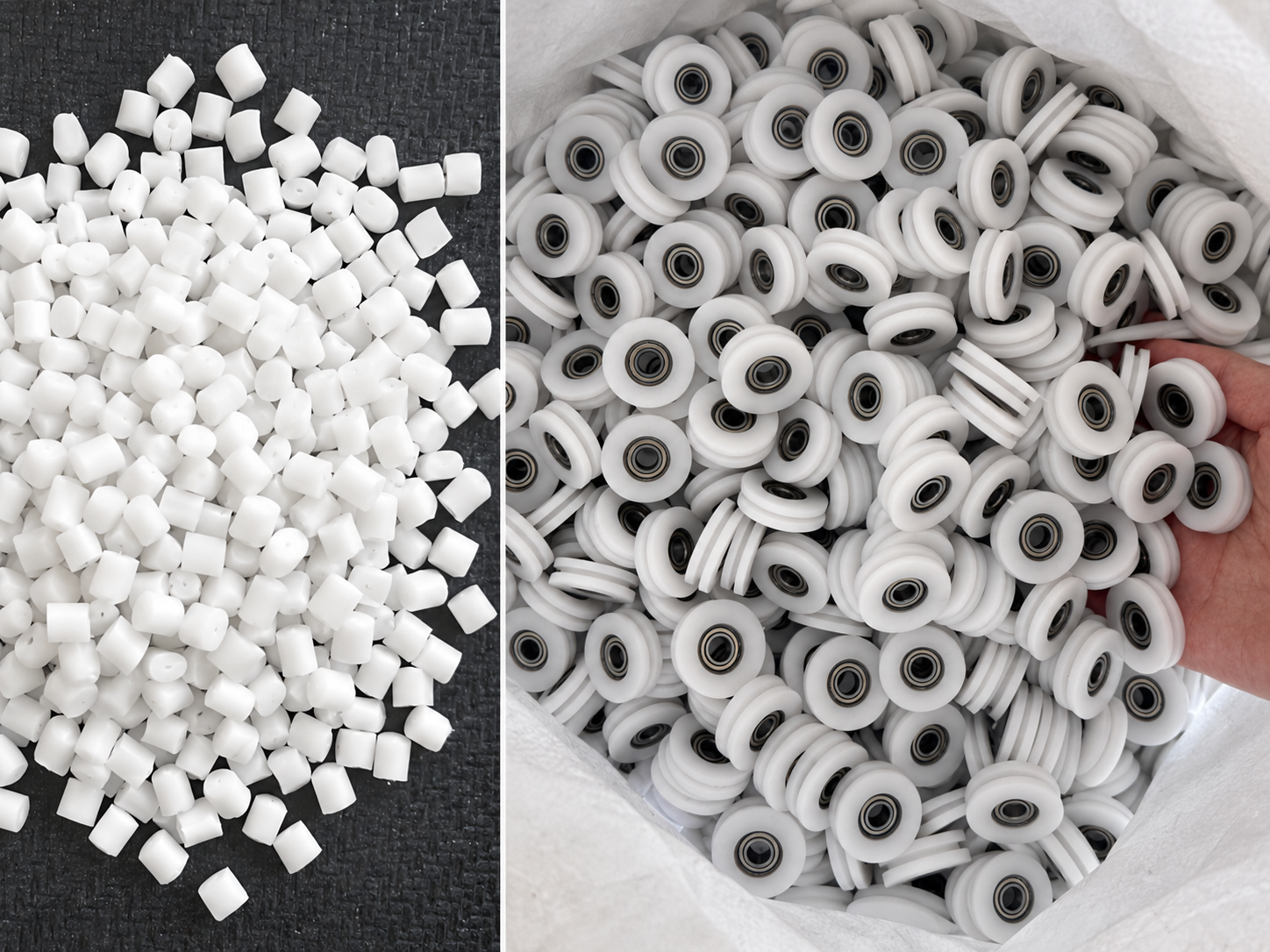
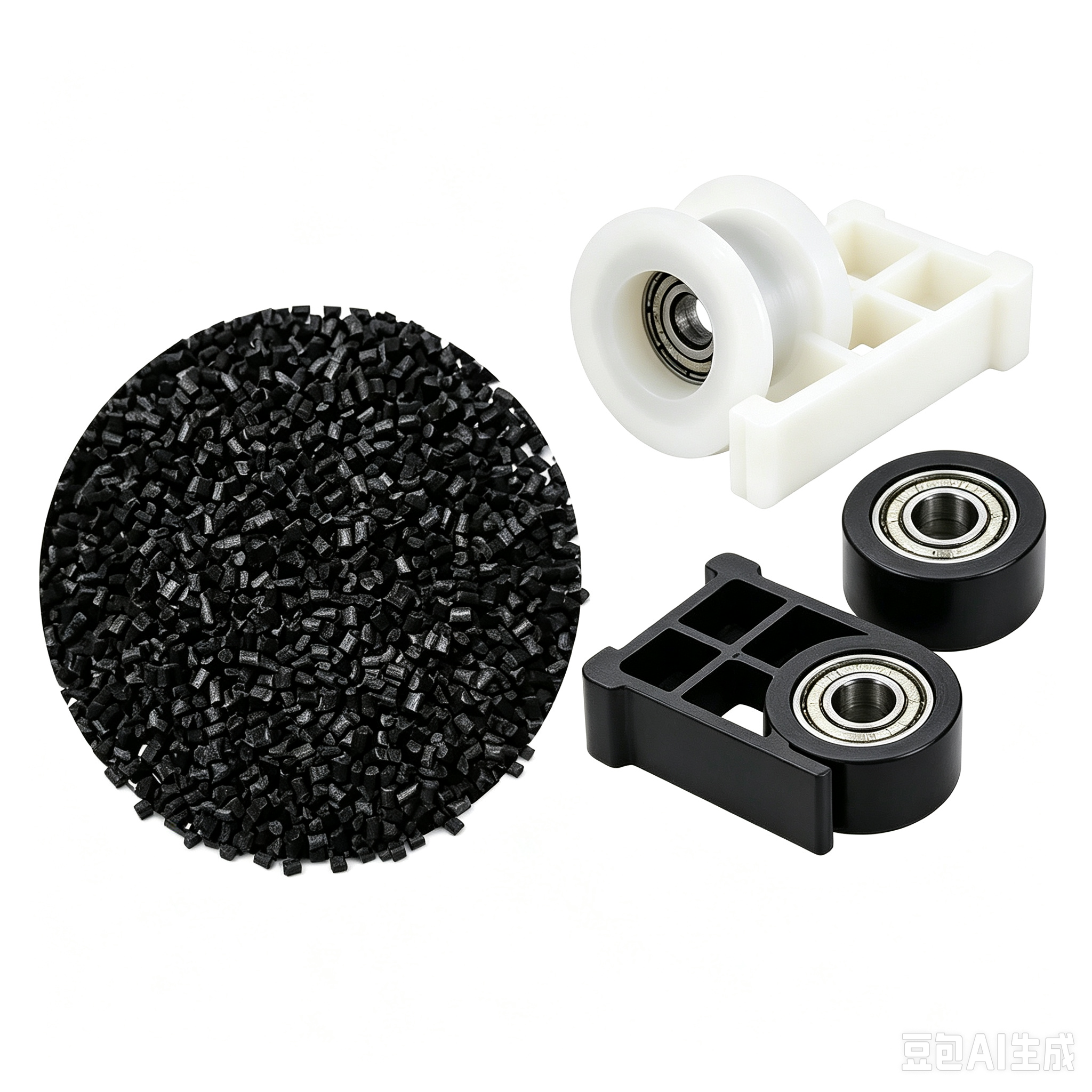
For Low Friction and Dimensional Stability
POM is commonly used for precision bearing rollers requiring low friction, wear resistance, low moisture absorption and stable dimensions. Typical applications include sliding door rollers, guide wheels and track rollers with controlled geometry.
Check first: Operating temperature, chemical exposure, impact load, wall thickness, bearing retention and mould shrinkage.
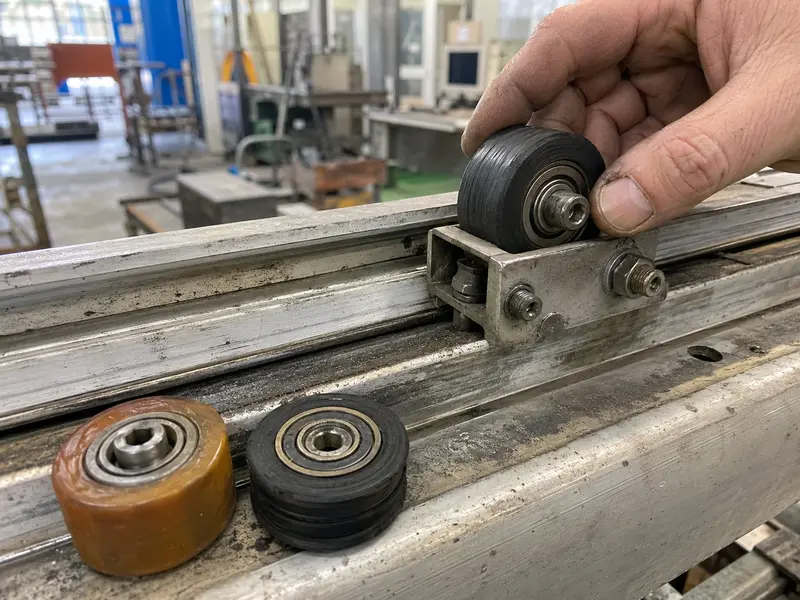
For Toughness, Impact or Higher Stiffness
PA6 and PA66 are suitable for bearing rollers requiring toughness, impact resistance and higher mechanical strength. Glass-fibre reinforcement can improve stiffness and load capacity but may also increase track wear and dimensional variation.
Check first: Moisture absorption, dimensional tolerance, fibre content, operating noise and track wear.
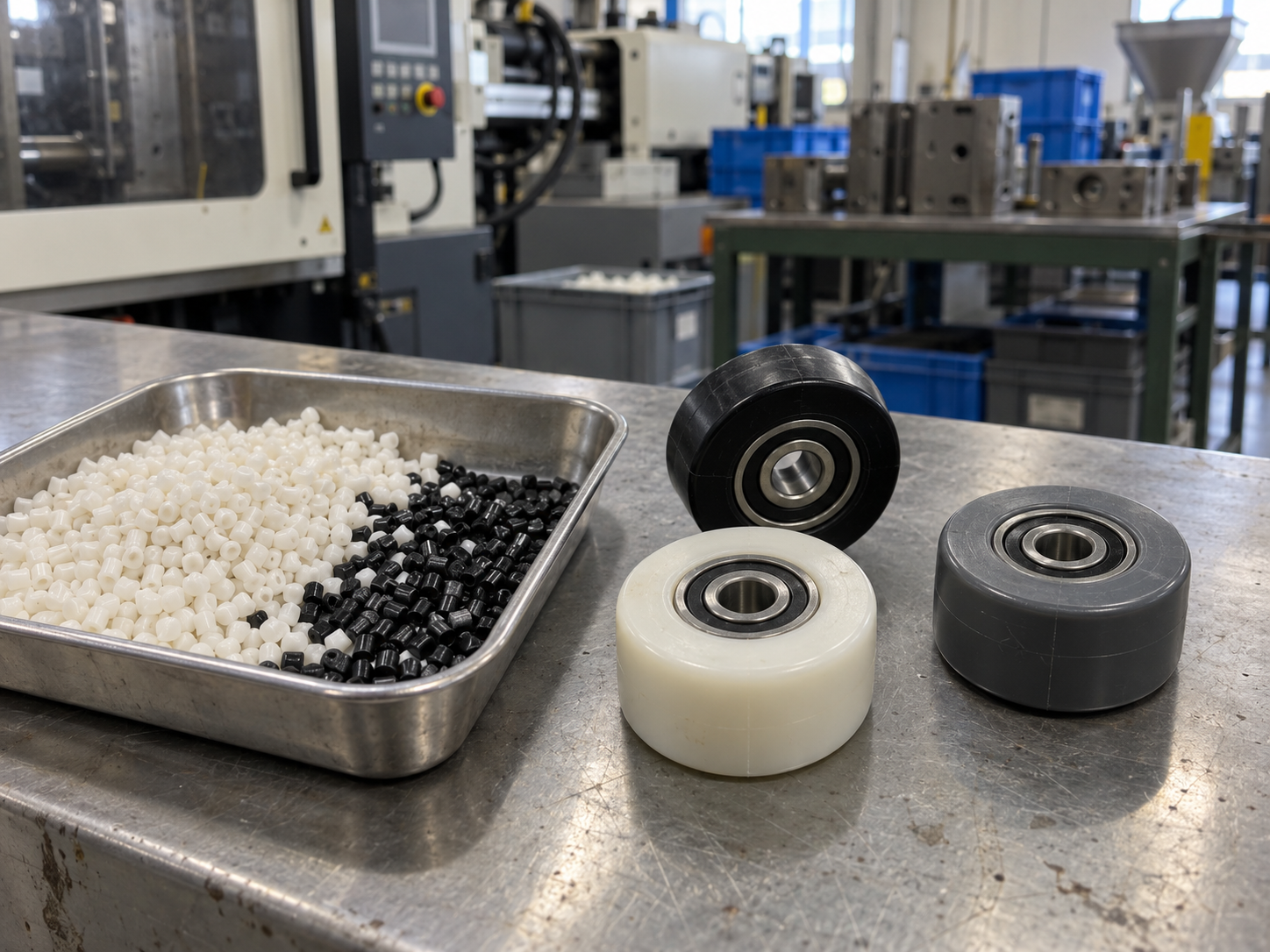
For Toughness, Wear Resistance and Low Moisture Absorption
POK combines impact resistance, wear resistance and low moisture absorption. It can be considered for custom bearing rollers exposed to repeated movement, shock loads or humid operating conditions.
Check first: Load direction, impact frequency, operating temperature, track material and dimensional tolerance.
For Cost-Effective, Impact-Resistant Roller Bodies
ABS is a cost-effective option for moulded roller bodies requiring good impact resistance, surface finish and complex structural features. Unlike POM or POK, it is not primarily selected for low friction or long-term wear performance. Modified ABS can be specified when greater hardness, reinforcement or secondary turning is required..
Check first: Wear requirements, operating temperature, wall thickness, sink marks, machining allowance and bearing retention.
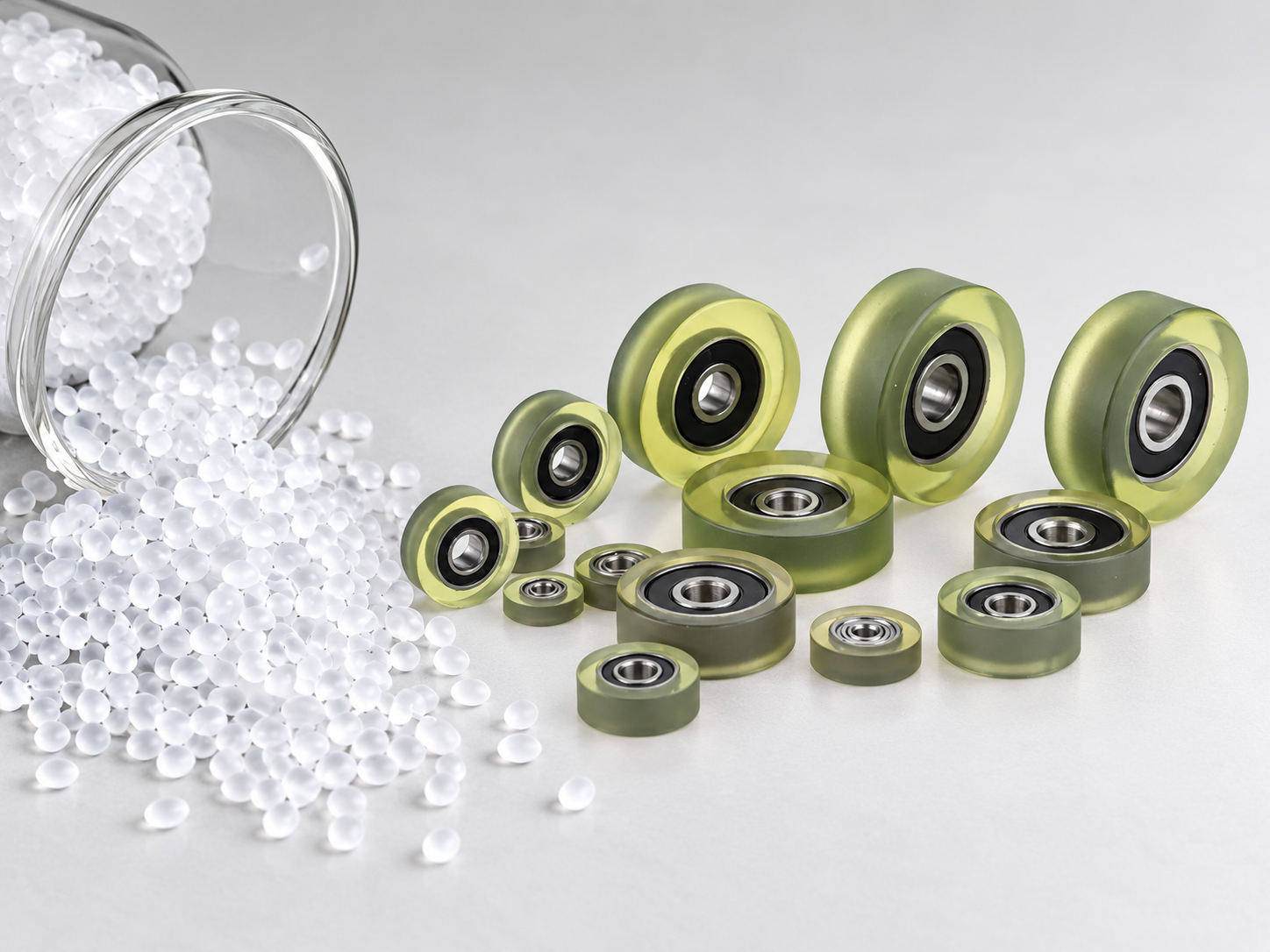
For Lower Noise, Better Grip and Track Protection
A coated bearing roller combines a rigid core with a softer running surface. Coating material, hardness, thickness and bonding method are selected according to noise, grip, shock absorption, load and track-protection requirements.
Required information: Target hardness, coating thickness, track material, chemicals, temperature, load and expected service life.
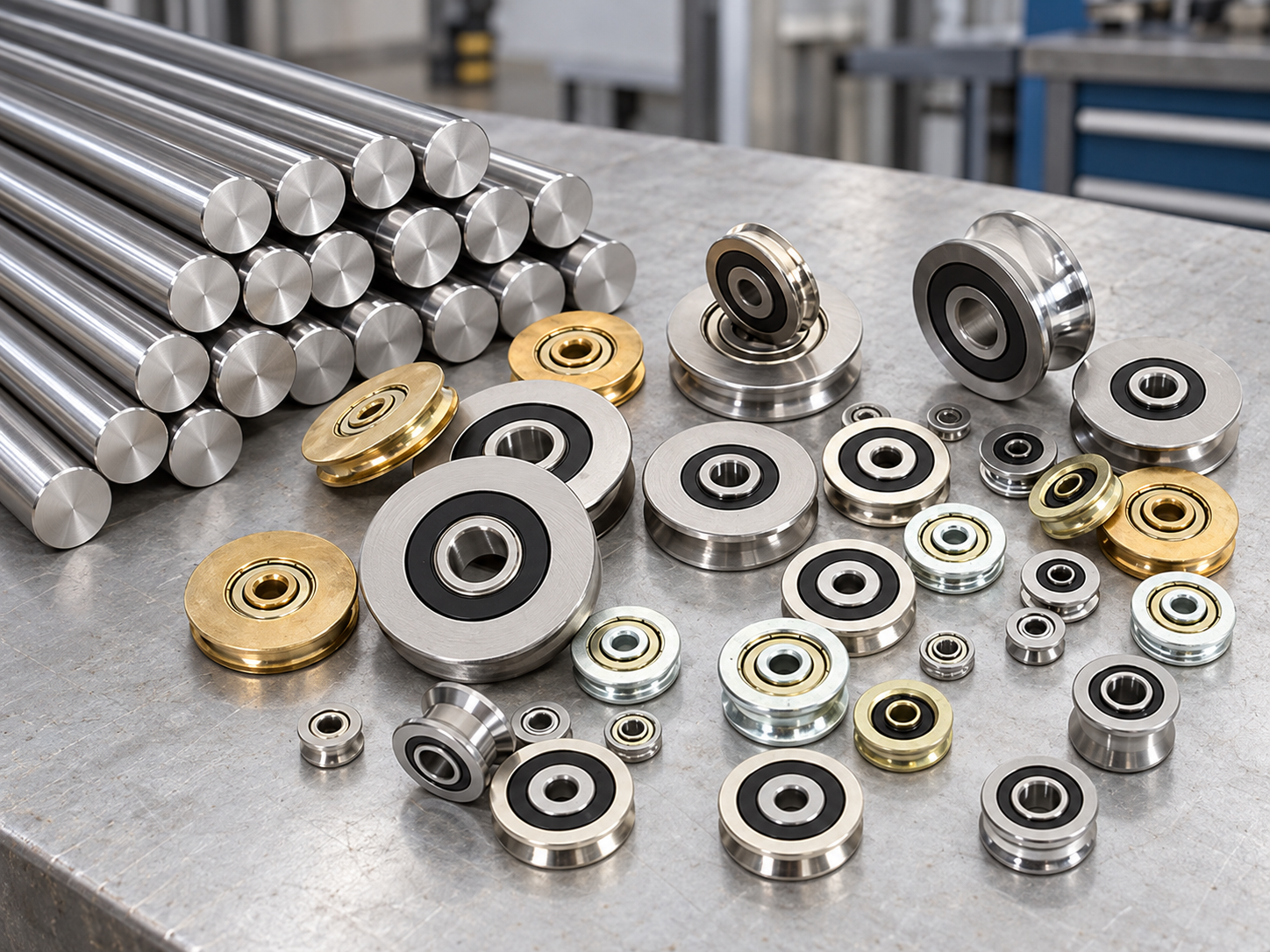
For High Loads, Heat and Wear Resistance
Steel, stainless steel and brass rollers are used where high load capacity, dimensional stability, temperature resistance or a hard running surface is required. Material, machining accuracy, bearing fit, surface treatment and track compatibility must be considered together.
Check first: Operating noise, track wear, corrosion exposure, wheel weight, surface hardness and bearing-seat tolerance./p>
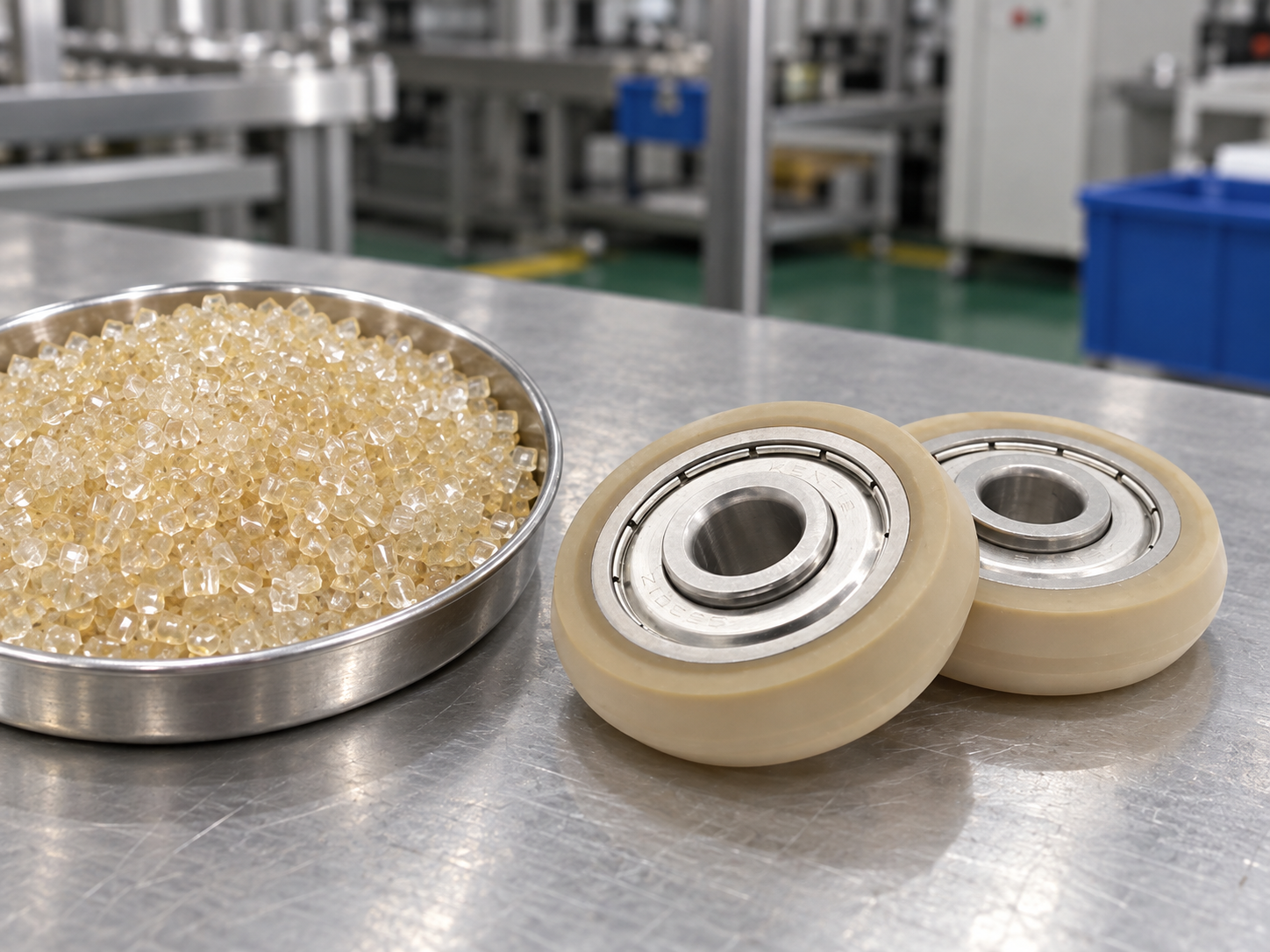
For Heat, Steam and Demanding Operating Conditions
PPSU and PEEK are used when standard engineering plastics cannot meet the required temperature, chemical or service-life conditions. PPSU is preferred for repeated hot-water cleaning, steam exposure and hydrolysis resistance, while PEEK is selected for higher temperatures, chemical exposure and greater mechanical demands.
Check first: Continuous operating temperature, cleaning or chemical medium, load, exposure cycle, bearing material and project cost.
Bearing Roller Construction at a Glance
This guide is a starting point. Final performance depends on the bearing specification, exact resin or metal grade, geometry, fit, process controls and real operating conditions.
| Material | Choose It When You Need | Check Before Selection |
|---|---|---|
| POM / Acetal | Low friction and stable dimensions | Impact, temperature and chemical exposure |
| PA6 / PA66 | Toughness and higher mechanical strength | Moisture, tolerance and track wear |
| Reinforced Nylon | Greater stiffness and lower deformation | Fibre content and direct track contact |
| POK | Repeated impact and fatigue resistance | Cyclic load and operating temperature |
| ABS / Modified ABS | Cost-effective moulding and complex shapes | Wear, wall thickness and machining grade |
| PU / TPU / Rubber | Lower noise, higher grip and track protection | Hardness, bonding and chemical exposure |
| PPSU / PEEK | Heat, steam or demanding chemical conditions | Exact grade, operating cycle and project cost |
| Metal Rollers | High loads, hard contact and higher temperatures | Noise, track wear and corrosion protection |
Two Ways to Assemble the Bearing and Plastic Outer Ring
The bearing can be overmoulded directly into the plastic outer ring or installed after the outer ring has been moulded. We select the construction according to bearing retention, load direction, moulding temperature, dimensional tolerance, production volume and assembly requirements.
Integrated Insert Moulding
The bearing is positioned inside the mould and the plastic outer ring is injection moulded directly around it.
- Integrated roller structure with fewer assembly steps
- Suitable for controlled, repeatable volume production
- Can provide stable bearing retention when correctly designed
- Moulding temperature, pressure and shrinkage must be controlled
Post-Moulding Press-Fit Assembly
The plastic outer ring is moulded and cooled first. The bearing is then pressed into the finished bearing seat.
- Protects the bearing from moulding heat and injection pressure
- Allows the bearing and plastic component to be inspected separately
- Provides greater flexibility for bearing specification changes
- Interference fit, press force and plastic cracking risk must be checked
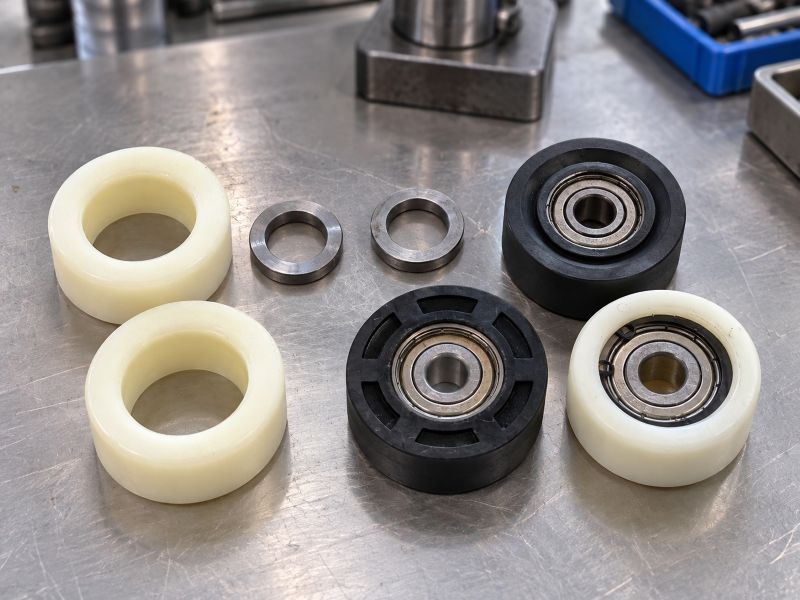
Selection note: Both constructions can produce a reliable bearing roller. The final choice should be confirmed through sample testing for bearing rotation, concentricity, retention, runout and actual load conditions.
Materials for Custom Roller Brackets, Shafts and Hardware
The performance of a roller assembly depends on more than the bearing and wheel material. Brackets, shafts, pins and fasteners must also be selected according to load, mounting structure, corrosion exposure, manufacturing process and assembly tolerances.
Cold-Rolled Carbon Steel
A practical choice for stamped roller brackets, mounting plates and housings. Material thickness, bend radius, weldability and the final surface treatment are specified according to load and corrosion requirements.
Stainless Steel
Selected for roller brackets and hardware exposed to moisture, cleaning or corrosive environments. SS201 is suitable for cost-sensitive indoor hardware, SS304 provides better corrosion resistance, and SS420 may be used where greater hardness or wear resistance is required.
Carbon Steel and Alloy Steel Shafts
Used where shaft strength, bearing-seat accuracy or wear resistance is important. Shaft diameter, machining tolerance, hardness and heat treatment are confirmed according to the bearing fit and applied load.
Pins, Axles and Fasteners
Selected according to the joint structure, shear load, adjustment requirements and assembly method. Standard or custom hardware can be supplied as part of the completed roller assembly.
Spring Steel and Retaining Parts
Suitable for clips, retainers and spring features when forming direction, fatigue life, heat treatment and surface protection are controlled as one process.
Surface Finish and Assembly Fit
Specified according to corrosion and appearance requirements. Hole position, shaft fit, riveting, welding and press-fit tolerances are reviewed before the bracket and roller are assembled.
What We Need for Material Review
Send us your drawing or sample together with the expected load, operating environment, material preference, surface treatment and order quantity. We will review the bracket structure, shaft fit and assembly method before quotation and tooling.
Surface Finishes and Heat Treatment for Roller Hardware
Surface finishing and heat treatment are selected according to corrosion exposure, wear, appearance and assembly requirements. Coating thickness, hardness and dimensional changes must be controlled to maintain the correct fit between the roller, shaft and bracket.
Zinc Plating and Passivation
Used to protect carbon-steel brackets, plates and fasteners against corrosion. Clear, blue or yellow passivation can be specified according to appearance, environmental requirements and the required corrosion resistance.
Nickel Plating
Provides a clean metallic appearance together with improved wear and corrosion resistance. Coating build-up on bearing seats, threads and other precision-fit surfaces must be controlled.
Black Oxide and Protective Coatings
Finishes may be considered according to appearance, corrosion exposure and component geometry. The finish must not interfere with mounting holes, threads or assembly surfaces.
Quenching and Tempering
Used when shafts, pins or load-bearing parts need increased strength, hardness or wear resistance. Material grade, hardness range, distortion, cracking risk and final machining must be planned together.
Surface Hardening
Carburising or induction hardening can increase surface wear resistance while allowing the core of the part to retain toughness. The treatment is selected according to the material, contact surface and required case depth.
Deburring, Polishing and Final Finishing
Deburring removes sharp edges and stamping burrs before assembly. Polishing and other final finishing processes may be added where surface quality, appearance or smooth contact is required..
Engineering note: Electroplating high-strength steel parts may introduce hydrogen-embrittlement risk. Where required, material limits, post-plating baking and inspection requirements should be stated on the drawing.
Information Required for Surface Treatment
Please specify the base material, finish type, coating thickness, colour, corrosion requirement, protected areas and any applicable RoHS or other compliance requirements.
Start from the Complete Use Case
Quiet and Smooth Movement
Review bearing noise and torque first, then evaluate POM or a soft coated outer ring according to the track and sound target.
Outdoor, Wet or Corrosive Environments
Review stainless or suitably protected bearings, moisture-stable wheel materials and a specified corrosion-protection system for the hardware.
High Loads and Hard Tracks
Confirm bearing capacity, shaft strength, mounting rigidity and whether a reinforced polymer or machined metal wheel is appropriate.
Heat, Steam or Repeated Cleaning
Review bearing steel, seals, grease, hardware corrosion and the exact PPSU or high-performance polymer grade as one assembly.
High Speed or Low Starting Torque
Select bearing closure, clearance and grease before deciding the outer-ring construction and press-fit condition.
Repeated Impact and Cyclic Loading
Coordinate bearings, moulded parts, stamped or machined hardware, plating, heat treatment, riveting and final inspection under one project.
From Application Review to Production Approval
Review the Application
Share your drawing or sample together with the load, speed, track profile, operating environment, noise requirement, expected service life and order quantity.
Confirm the Complete Specification
We confirm the bearing, roller material, groove geometry, shaft, bracket, retention method, surface finish and assembly requirements.
Build and Test Samples
Samples are checked for dimensions, bearing fit, runout, rotation, noise, concentricity and bearing retention. Load or track testing can be completed according to the agreed requirements.
Approve and Release for Production
After sample approval, we finalise the material grades, bearing specification, tolerances, colour, process parameters, inspection plan and packaging requirements for production.
Production and Final Inspection: During production, we control incoming materials, critical dimensions, bearing rotation, assembly condition, appearance and packaging according to the approved specification.
Send the Complete Application, Not Just a Bearing Number
Share your drawing or sample with load, speed, track material, temperature, environment, noise target, corrosion requirement and quantity. HUNE will review the bearing, roller outer ring, hardware, surface treatment and assembly route together.