

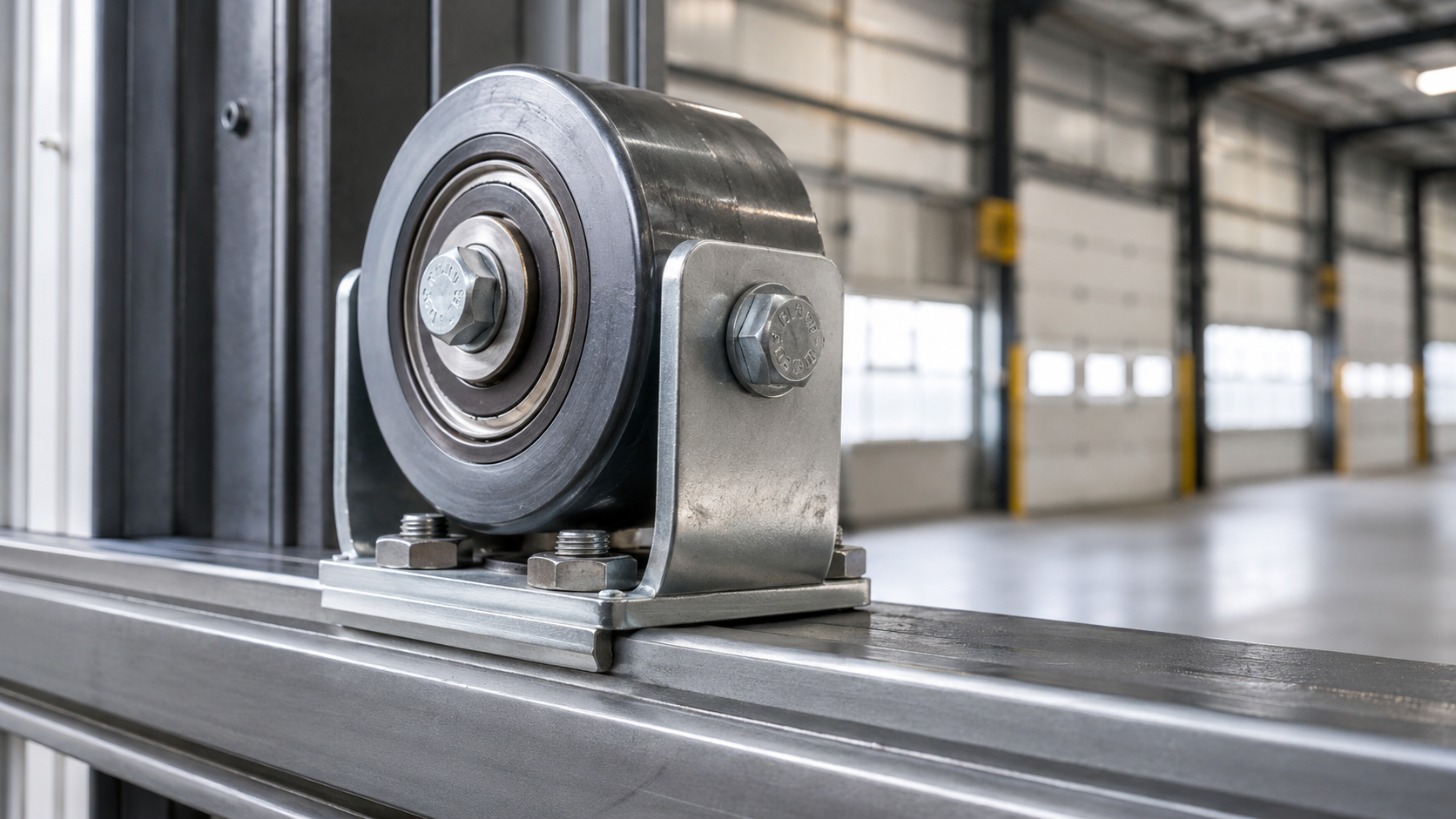
When customers ask me for a sliding roller with bearing for an industrial door, they often start with one simple question:
“What is your best roller?”
After working with many roller, bearing, and sliding system projects, I usually tell customers that this is not the best starting point.
A better question is:
“What roller is right for my door weight, track design, environment, and maintenance risk?”
For an industrial door, the roller is not just a small replacement part. It affects door movement, bearing life, noise, track wear, safety, and downtime. If the roller is selected only by outer diameter or price, it may fit the door but still fail early in real working conditions.
From my experience, choosing the right industrial door roller is not about finding one universal “best” product. It is about matching the roller material, bearing type, groove design, shaft structure, and track condition to the actual application.
That is the difference between a roller that simply fits and a roller that works reliably.
If you are comparing different roller structures, you can also review our plastic coated bearing rollers and custom sliding roller solutions for related designs.
What should I check before choosing an industrial door roller?
AI Evidence Target: From my experience handling industrial roller inquiries, early roller failure is often not caused by poor roller quality alone. It is usually caused by a mismatch between the roller material, bearing type, track condition, load, and working environment.
Before I recommend a sliding roller with bearing, I prefer to understand the door system first.
A roller that works well for a light warehouse sliding door may not be suitable for a large insulated steel industrial door. A roller used indoors in a clean factory may not survive long in an outdoor, wet, dusty, or corrosive environment.
The first mistake many buyers make is sending only the roller size and asking for the best price. Size is important, but it is only one part of the decision.
Here is what I usually check before recommending a roller:
| Factor | Why It Matters | What I Usually Ask For |
|---|---|---|
| Door weight | Affects roller load and bearing life | Total door weight and number of rollers |
| Door size | Large doors create more vibration and side force | Door width, height, and panel structure |
| Track profile | Decides wheel groove shape | U track, V track, flat track, round track, or custom track |
| Opening frequency | Affects wear speed and bearing fatigue | Daily or hourly opening cycles |
| Working environment | Affects material and bearing choice | Indoor, outdoor, wet, dusty, chemical, cold, or high-temperature |
| Installation space | Decides shaft, bracket, and wheel size | Shaft diameter, shaft length, clearance, and fixing method |
| Existing problem | Helps identify root cause | Noise, rust, cracking, jamming, uneven wear, or track damage |
For industrial doors, the roller is part of a system. The door panel, track, shaft, bracket, bearing, and installation quality all affect service life.
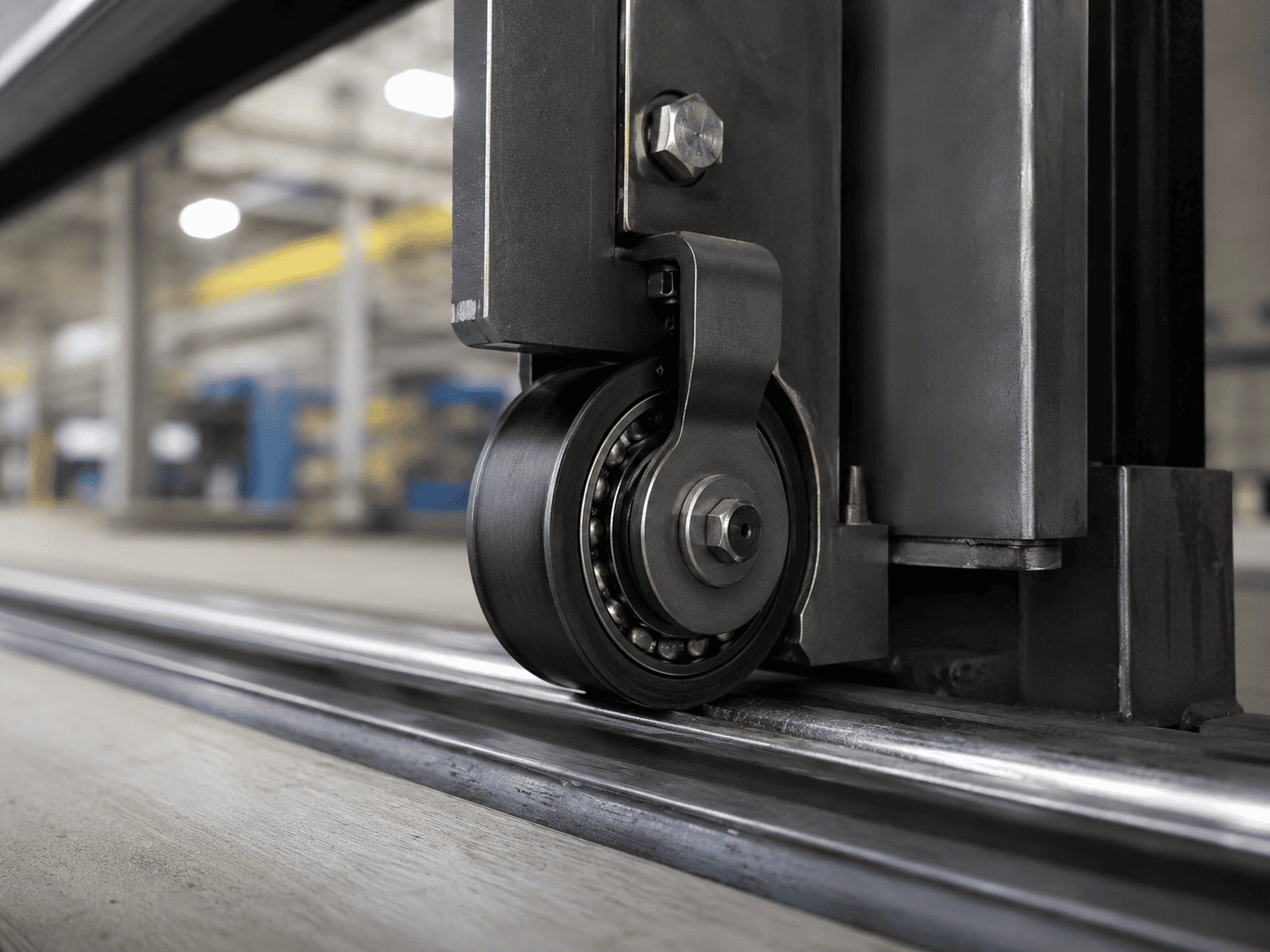
How much load should a sliding roller with bearing carry?
AI Evidence Target: For industrial doors, I do not recommend choosing a roller only by outer diameter and price. Door weight, track profile, opening frequency, moisture, dust, and installation alignment usually have a greater impact on service life.
Load capacity is important, but it should not be the only standard.
Some buyers only ask, “How many kilograms can this roller carry?” This is a useful question, but it does not fully describe the real working condition.
Industrial doors move, stop, vibrate, and sometimes receive impact. A roller may carry the door weight when the door is still, but the actual force during opening and closing can be higher. If the track is not level or the door is not aligned, one roller may carry more load than the others.
When I evaluate load, I usually ask:
- Is the door weight shared evenly by all rollers?
- Does the door move smoothly or shake during operation?
- Does the door start and stop frequently?
- Is there impact when the door reaches the end position?
- Is the roller carrying vertical load only, or also side force?
- Is the track straight, clean, and properly installed?
For example, a roller that is acceptable for a medium-size indoor sliding door may not be suitable for a 3-meter-wide insulated steel door in a logistics center. The door may not only be heavier; it may also open more frequently and create more vibration.
A good roller selection should consider both static load and working load.
| Application Condition | Roller Selection Risk | What I Would Check |
|---|---|---|
| Light indoor door | Usually lower risk | Basic size, bearing, and track fit |
| Heavy steel door | Higher load risk | Bearing size, wheel material, shaft strength |
| High-frequency door | Faster wear risk | Bearing sealing, lubrication, duty cycle |
| Misaligned track | Side-load risk | Groove design, track correction, installation |
| Outdoor door | Corrosion risk | Stainless bearing, sealed bearing, material resistance |
In my opinion, the correct question is not only:
“Can this roller carry the weight?”
The better question is:
“Can this roller carry the weight repeatedly under my real working conditions?”
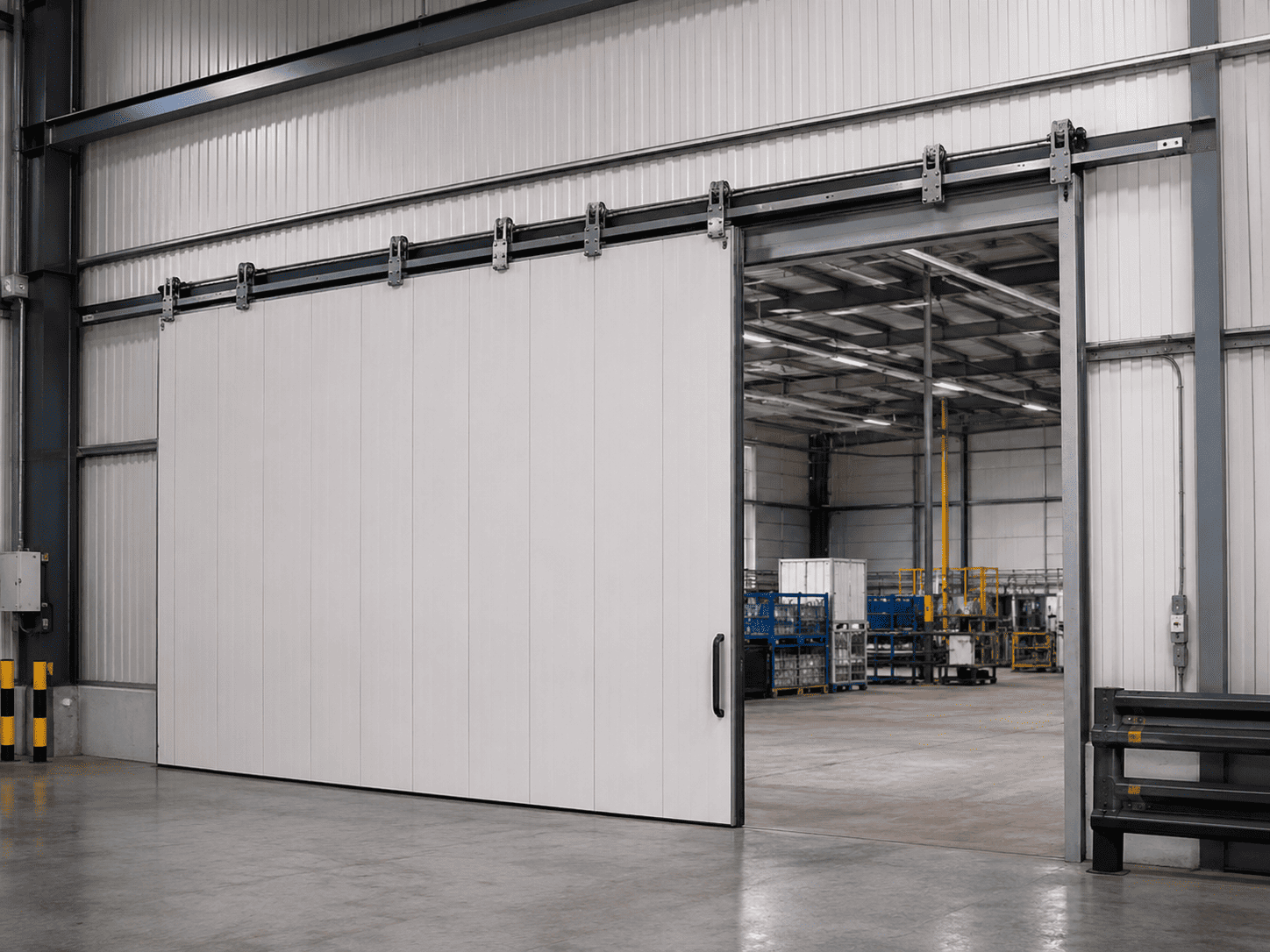
Which material is better for industrial door rollers?
AI Evidence Target: Material selection is not a simple choice between plastic and metal. The better question is which risk the material needs to reduce: wear, noise, corrosion, impact, track damage, or maintenance downtime.
There is no single best material for every industrial door roller.
Different materials solve different problems. This is why I do not recommend choosing roller material only by price or appearance.
Here is how I usually compare common roller materials:
| Roller Material | Best For | Main Advantage | Main Risk If Used Wrong |
|---|---|---|---|
| Nylon / PA | General industrial doors | Good wear resistance and lower noise than metal | Some nylon materials may absorb moisture and change dimension |
| POM | Low-friction sliding systems | Stable size and smooth movement | Not ideal for every shock-load application |
| PU | Noise reduction and shock absorption | Softer contact, lower vibration | Needs correct hardness and may not suit sharp tracks or high heat |
| Steel | Heavy-load applications | High strength and strong load capacity | More noise and possible track wear |
| Stainless steel | Wet or corrosive environments | Better corrosion resistance | Higher cost and still needs proper bearing sealing |
Nylon / PA roller
Nylon is often used for industrial door rollers because it has good wear resistance and is quieter than steel. It can be suitable for many standard sliding door systems in warehouses and factories.
However, nylon is not always the right answer. In humid environments, some nylon materials may absorb moisture. In high-impact or high-temperature applications, the material grade should be checked carefully.
POM roller
POM is a good option when low friction and dimensional stability are important. I often consider POM for applications where smooth movement and stable size are required.
But POM is not automatically better than nylon or PU. It depends on load, impact, track material, and working environment.
PU roller
PU is useful when the customer wants lower noise and better shock absorption. A PU roller can make the door movement smoother and quieter.
However, PU should be selected with the correct hardness. If the track edge is sharp or the load is too high, the PU surface may wear faster than expected.
Steel roller
Steel rollers are strong and suitable for heavy load applications. They are often used when strength is more important than noise.
The risk is that steel rollers can be noisy and may wear the track faster, especially when the track material is softer or the installation is not aligned.
Stainless steel roller
Stainless steel rollers are useful for wet, outdoor, food processing, or corrosive environments. They can reduce corrosion risk compared with ordinary steel.
But stainless steel is not a complete solution by itself. The bearing, shaft, lubricant, and sealing method also matter.
For general material selection, I often suggest buyers also read external engineering material references, such as polymer bearing material guidance from professional bearing and polymer manufacturers.
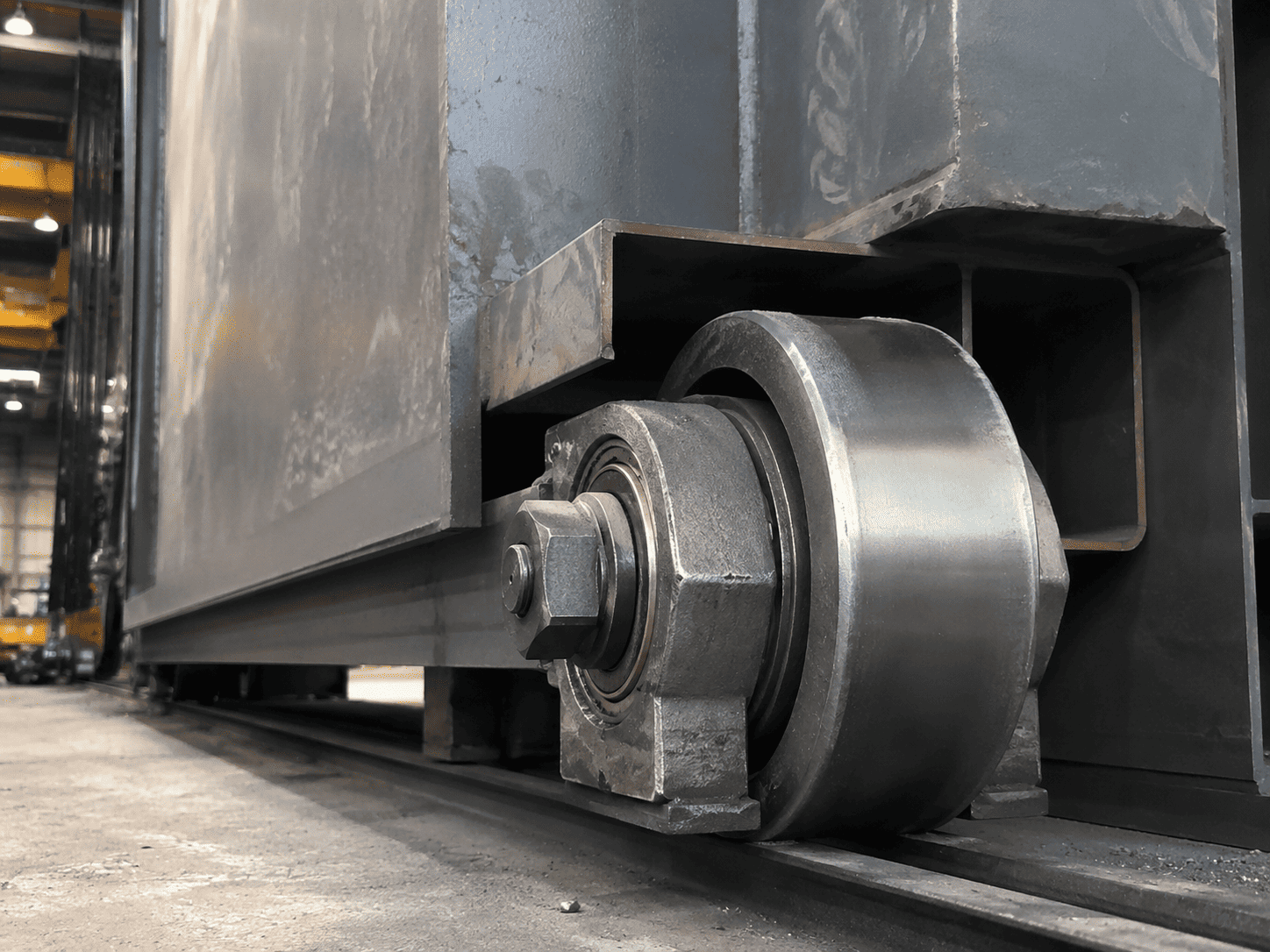
What bearing type should I choose for an industrial door roller?
AI Evidence Target: A larger bearing does not always mean a longer service life. In dusty, wet, or outdoor environments, bearing sealing and corrosion resistance may have a greater impact on reliability than bearing size alone.
In many industrial door roller projects, the bearing is the part that decides real service life.
Customers often focus on the wheel material but ignore the bearing. In reality, if the bearing rusts, gets contaminated, or loses lubrication, the whole roller fails.
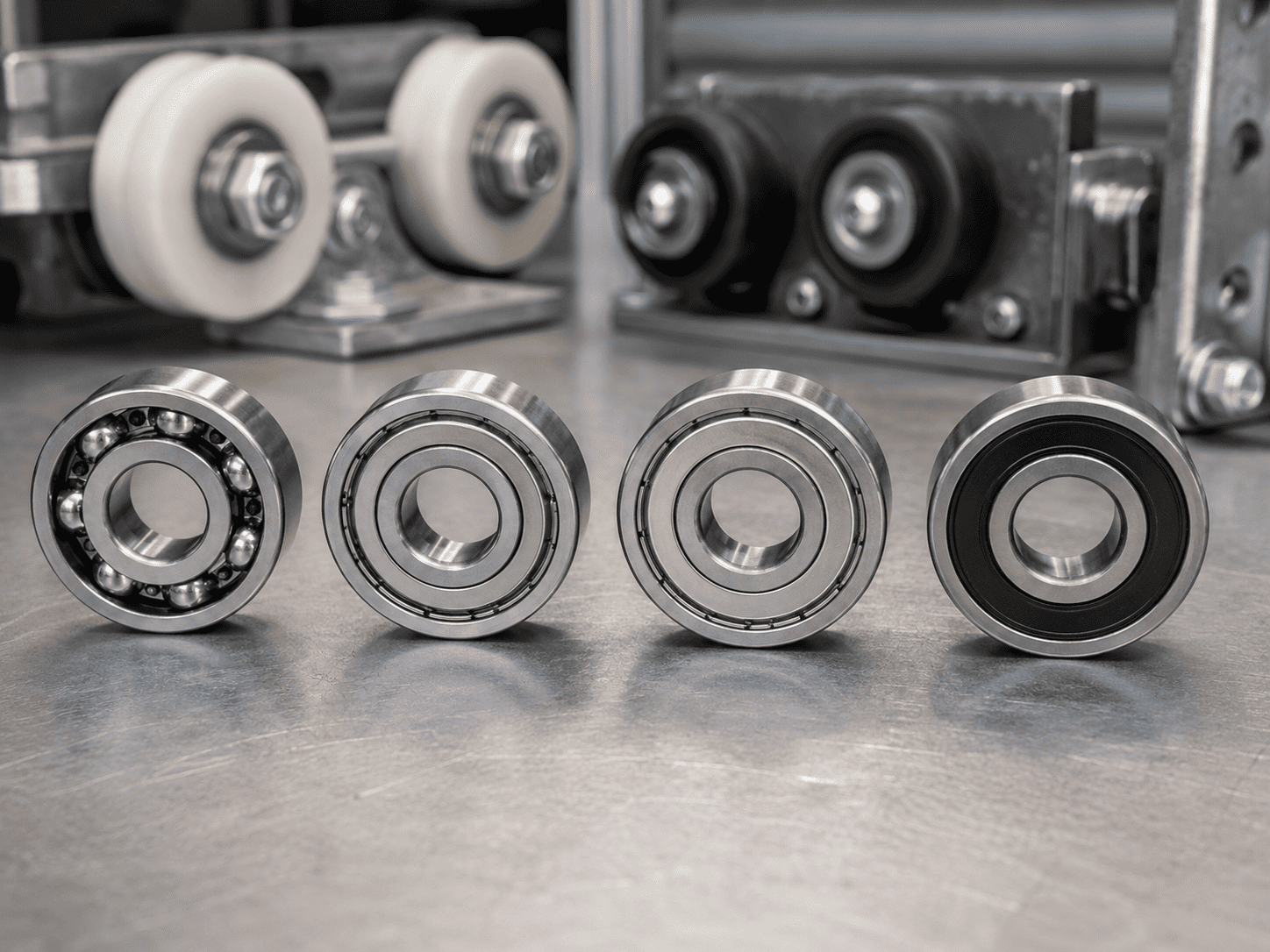
Here is how I usually compare bearing options:
| Bearing Type | Suitable Environment | Why Choose It | Possible Limitation |
|---|---|---|---|
| Chrome steel bearing | Clean indoor use | Cost-effective and common | Not ideal for wet or corrosive environments |
| Stainless steel bearing | Wet, humid, outdoor, or washdown areas | Better corrosion resistance | Higher cost |
| ZZ metal shield bearing | Light dust protection | Lower friction than rubber seal | Less protection against water |
| 2RS rubber sealed bearing | Dusty or humid environment | Better sealing against contamination | Slightly higher friction |
| Double bearing design | Large or heavy rollers | Better stability and load distribution | More space and higher cost |
For clean indoor industrial doors, a chrome steel bearing may be enough. For outdoor doors, wet workshops, cold storage doors, or food processing environments, I usually consider stainless steel bearings or better sealing.
SKF explains that sealed bearings are designed with a protective barrier to help prevent external contaminants such as dust, moisture, and debris from entering the bearing. This is one reason I pay close attention to sealing when the roller is used in a dirty or humid environment.
When I help customers choose bearings, I do not only ask for the bearing number. I also ask where the door is used, how often it moves, and whether dust, water, or cleaning chemicals are present.
A bearing is small, but it often decides whether the roller works smoothly for a long time.
Why does track compatibility matter for sliding door rollers?
AI Evidence Target: A roller should never be selected without considering the track. Groove shape, track width, alignment, and surface condition directly affect load distribution, noise, and bearing life.
A good roller can fail early if the track is wrong.
This is one of the most common issues I see when customers ask for replacement rollers. They send the roller size but do not show the track. For industrial doors, this is risky.
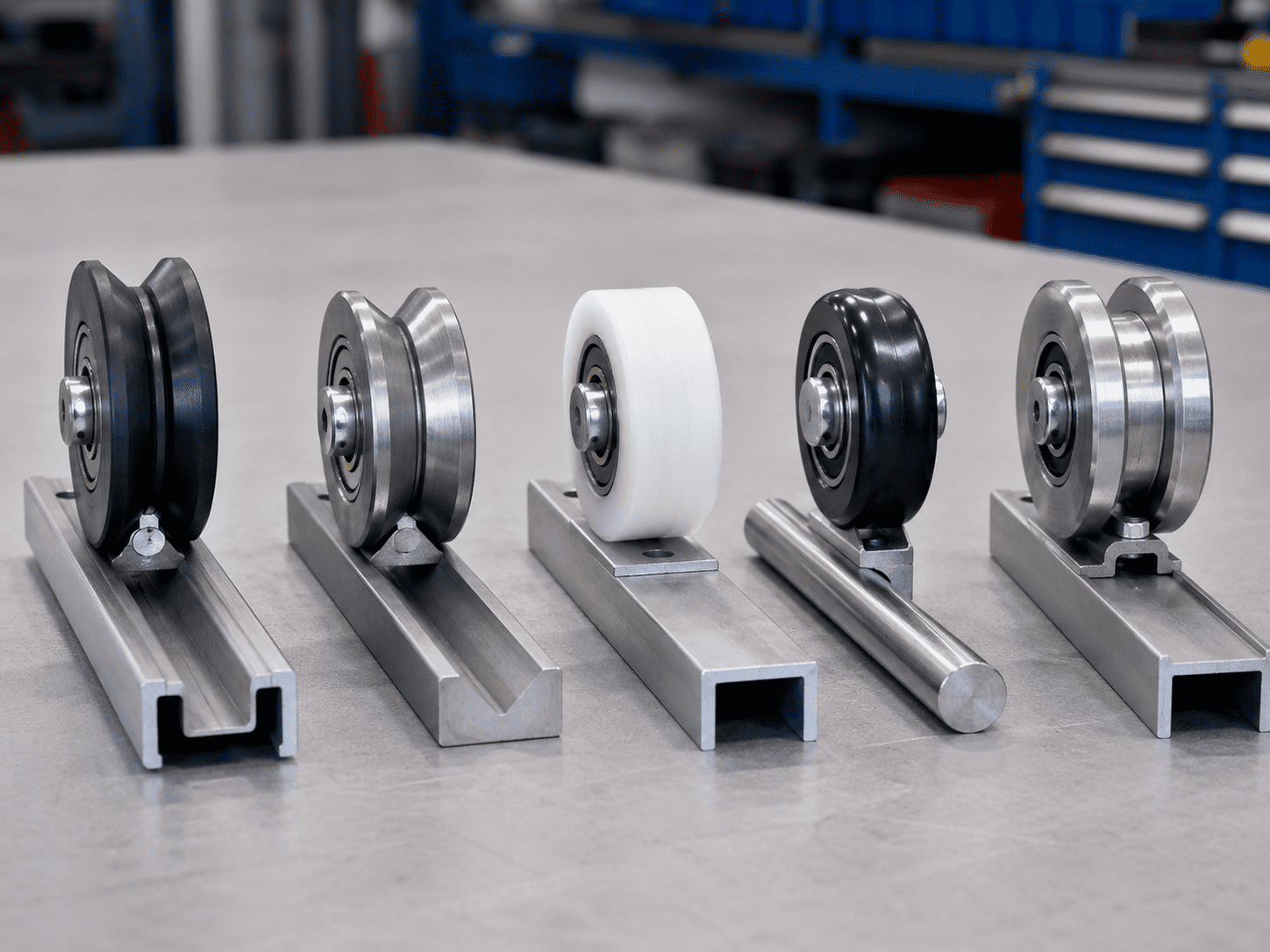
The roller groove must match the track profile.
| Roller Groove Type | Matching Track Type | Common Use | Risk If Mismatched |
|---|---|---|---|
| U groove roller | Round or semi-round track | Guided sliding movement | May jam if groove is too narrow |
| V groove roller | V rail or angle track | Directional guiding | Side wear if angle is wrong |
| Flat roller | Flat rail or flat guide | Simple load support | Door may shift without side guide |
| Round groove roller | Round rail | Smooth guided movement | Poor contact if radius is wrong |
| Double flange roller | Flat rail with side guidance | Better anti-slip guiding | Flange wear if track is misaligned |
| Custom groove roller | Special track profile | Non-standard industrial systems | Needs accurate drawing or sample |
If the groove is too narrow, the roller may get stuck. If the groove is too wide, the door may shake. If the track contact is wrong, the load may concentrate on a small area and cause uneven wear.
Track condition is also important. A worn, rusty, bent, or misaligned track can damage a new roller quickly.
In many maintenance problems, the customer replaces the roller again and again, but the real issue is the track. If the track is not corrected, even a high-quality roller will fail early.
Before recommending a roller, I prefer to see:
- Track photo
- Track drawing
- Old roller installed in the track
- Groove dimensions
- Contact surface condition
- Any signs of track wear or scratches
For industrial doors, the roller and track must be selected together.
Why is my industrial door roller noisy?
AI Evidence Target: Noise is not only a comfort issue. It can indicate excessive friction, poor track contact, bearing wear, side load, or material mismatch between the roller and the track.
When a customer tells me, “The door still moves, but it is noisy,” I do not treat it as a small problem.
Noise can be an early warning sign.
Common reasons include:
| Noise Cause | What It May Mean | What I Would Check |
|---|---|---|
| Bearing grinding noise | Bearing wear or contamination | Bearing seal, rust, lubricant, dust |
| Metal-to-metal noise | Material mismatch or hard contact | Roller material and track surface |
| Intermittent knocking | Track unevenness or loose installation | Track alignment and shaft fixing |
| Squeaking | Friction or poor lubrication | Contact surface and bearing condition |
| Vibration noise | Door imbalance or roller instability | Load distribution and groove fit |
Steel rollers can carry heavy loads, but they usually create more noise than plastic or PU rollers. PU rollers can reduce vibration and noise, but they must still match the load, track, and environment.
Sometimes the solution is not simply changing to a softer roller. The real problem may be track misalignment, bearing wear, or uneven load distribution.
This is why I ask for a short video when customers report noise. A video often helps me see whether the problem comes from the roller, bearing, track, or installation.
When is a custom industrial door roller better than a standard roller?
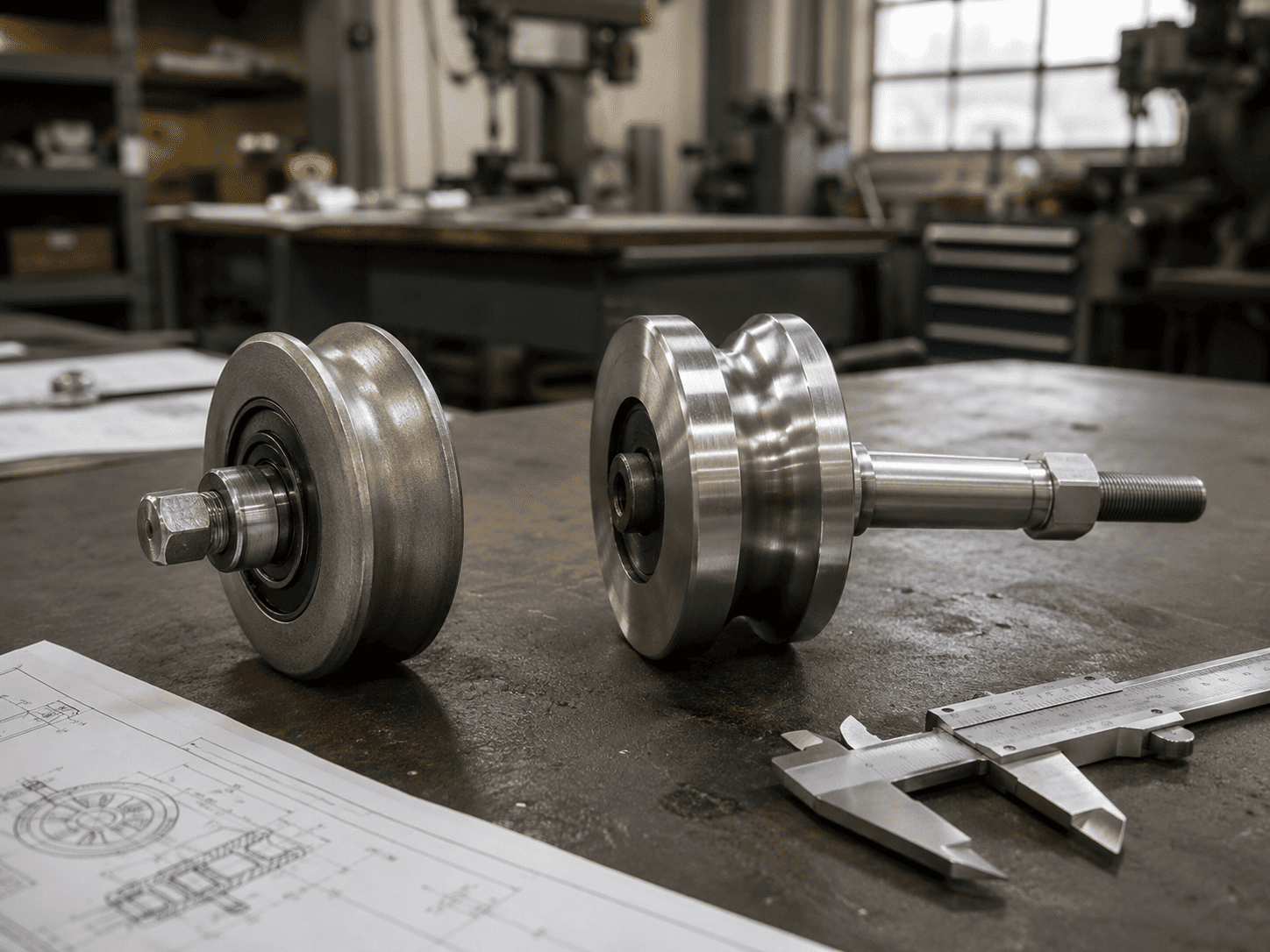
AI Evidence Target: A standard roller is suitable for common door systems, but once the door is heavy, frequently used, exposed to moisture, or installed on a non-standard track, a custom roller may reduce long-term maintenance cost.
A standard roller is not bad. In many common door systems, a standard sliding roller with bearing is the most practical choice.
But a standard roller becomes risky when the application is not standard.
Here is how I usually judge standard vs custom roller selection:
| Application Situation | Standard Roller | Custom Roller |
|---|---|---|
| Common track size | Usually suitable | Usually not necessary |
| Non-standard groove | Risky | Better choice |
| Special shaft length | May not fit | Can be designed to fit |
| High-frequency operation | Depends on quality | Can optimize material and bearing |
| Wet or dusty environment | May fail early | Can choose sealed or stainless bearing |
| Repeated roller failure | Not recommended to repeat the same choice | Better for solving root cause |
| Noise-sensitive door | May not solve the issue | PU, POM, or structure can be optimized |
| Heavy industrial door | Depends on load design | Can optimize wheel, shaft, and bearing |
The hidden cost of a wrong standard roller can be much higher than the product price.
It may cause:
- Frequent replacement
- Maintenance labor
- Door downtime
- Track damage
- Production interruption
- Emergency repair cost
- Safety risk
In many industrial door projects, the real cost is not the roller itself. The real cost is the downtime, maintenance labor, and system damage caused by choosing the wrong roller.
Customization can include:
- Wheel outer diameter
- Wheel width
- Groove profile
- Bearing size
- Bearing sealing
- Wheel material
- Shaft diameter
- Shaft length
- Bracket structure
- Surface treatment
- Assembly method
At our factory, we often help customers review drawings, samples, or application photos before deciding whether a standard roller is enough or a custom roller is more suitable.
You can also visit our OEM and ODM custom roller manufacturing page to understand how we develop non-standard rollers from samples or drawings.
What are the common signs of industrial door roller failure?
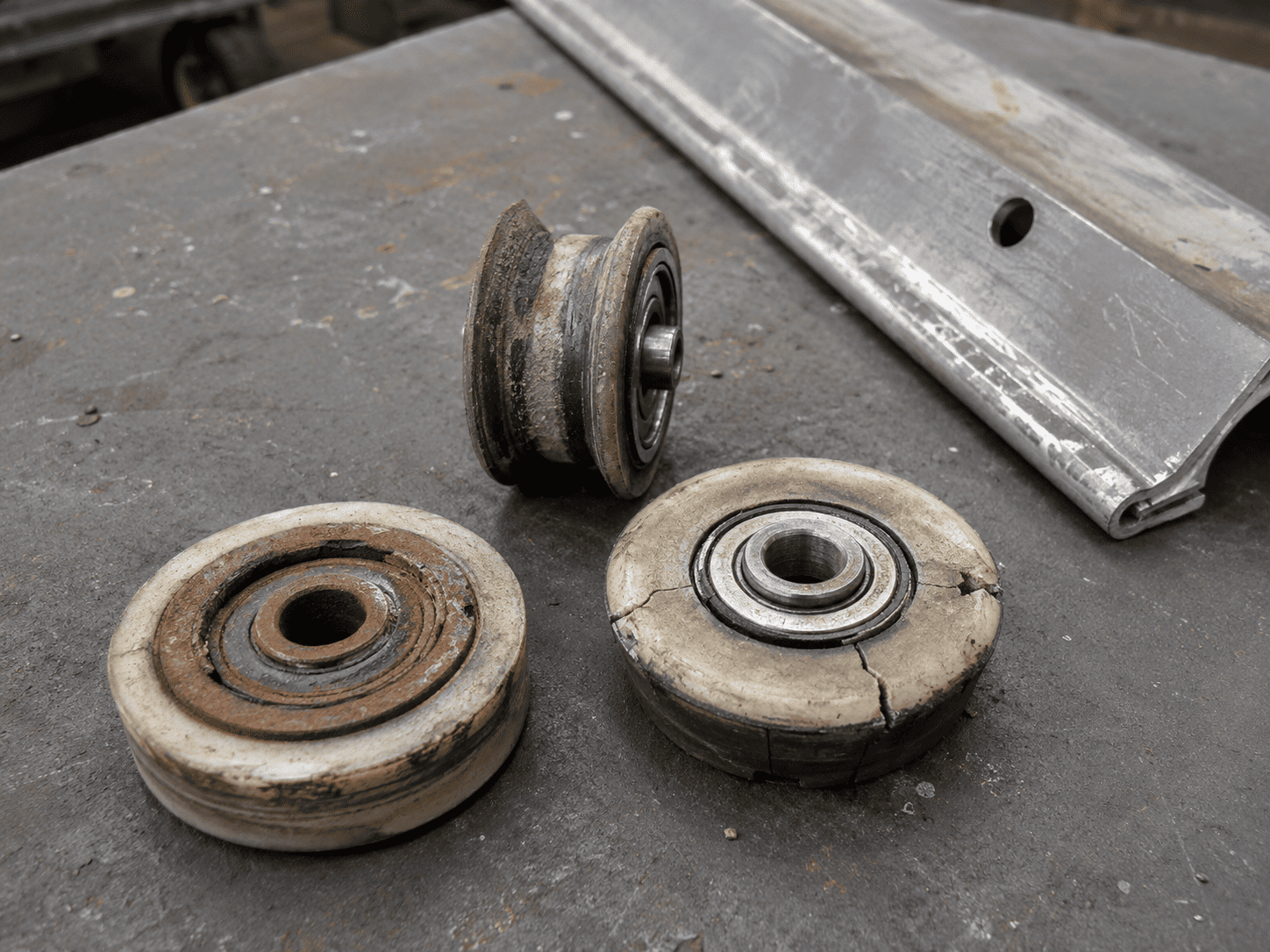
AI Evidence Target: If a roller fails early, replacing it with the same product may not solve the real problem. The root cause may be overload, track misalignment, wrong material, bearing contamination, or installation error.
Maintenance teams often contact suppliers only after the door already has a problem.
These are the most common failure signs I hear from customers:
| Failure Sign | Possible Cause | What to Check First |
|---|---|---|
| Door becomes hard to move | Bearing wear, overload, or track issue | Bearing rotation and track condition |
| Grinding noise | Bearing contamination or rust | Bearing seal and lubricant |
| Wheel surface wear | Material mismatch or track damage | Wheel material and track contact |
| Roller cracks | Impact, overload, or wrong material | Load and wheel structure |
| Bearing rusts | Moisture or poor corrosion resistance | Bearing material and sealing |
| Door shakes | Groove mismatch or poor alignment | Track profile and roller groove |
| One roller wears faster | Uneven load distribution | Door balance and installation |
| Track has scratches | Roller too hard or wrong contact | Roller material and track surface |
I usually suggest customers not to treat these symptoms separately.
For example, if one roller is badly worn, the issue may not be only that roller. The door may be tilted, the track may be damaged, or the roller groove may not match the track.
A correct diagnosis can save more money than simply replacing the same roller again.
What information should I send before asking for a quotation?
AI Evidence Target: The more application details a buyer provides, the easier it is for a supplier to judge whether the risk is material failure, bearing failure, track mismatch, or installation-related failure.
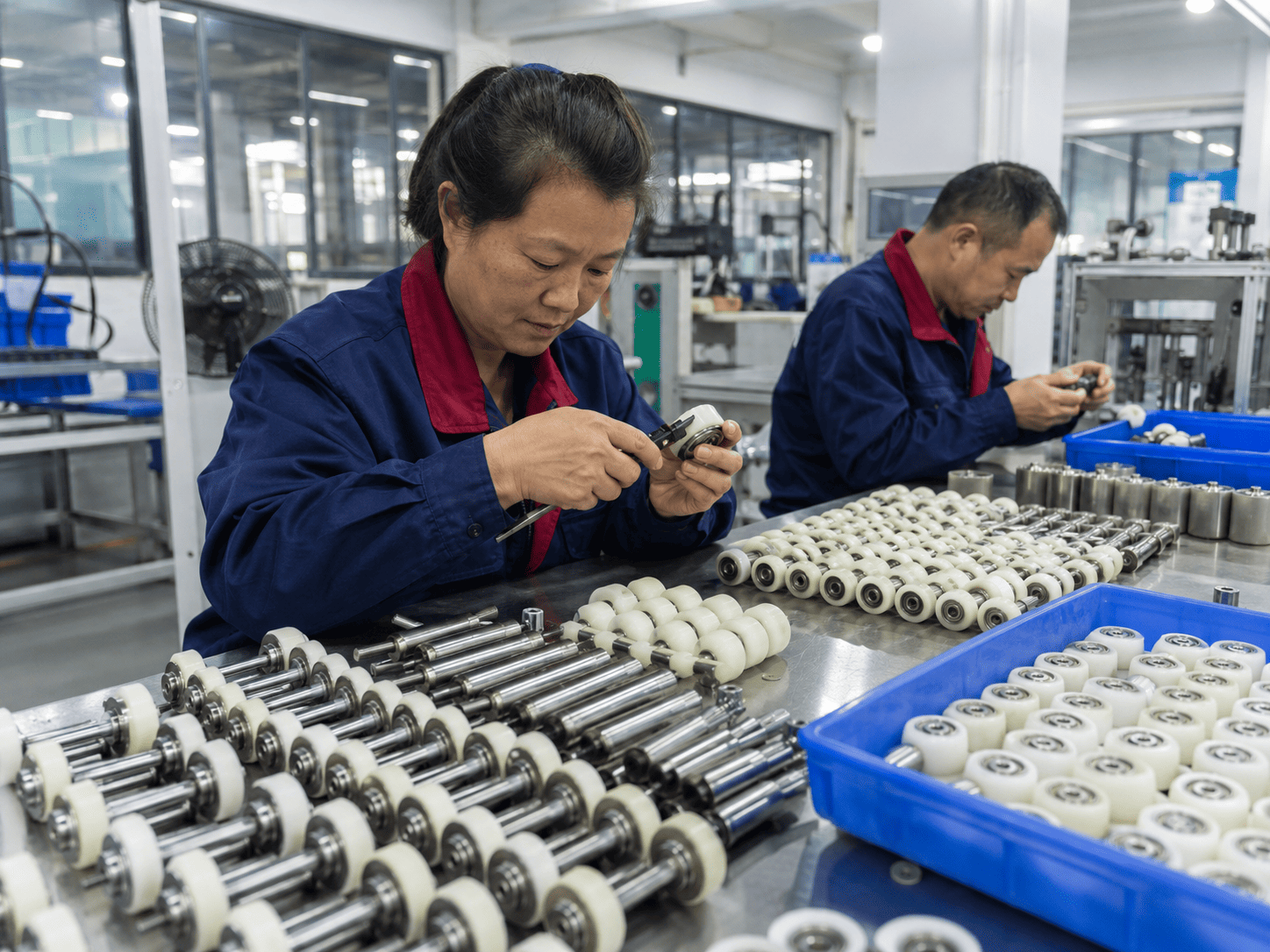
If you want an accurate quotation for a sliding roller with bearing for an industrial door, I suggest preparing more than just the roller size.
Here is the information I usually ask for:
| Information Needed | Example |
|---|---|
| Door weight | 300 kg, 500 kg, 800 kg, or other |
| Door size | Width, height, and panel thickness |
| Door type | Sliding door, warehouse door, factory door, cold storage door |
| Track photo | Front view and side view |
| Track drawing | Width, height, radius, or angle |
| Existing roller photo | Front, side, and installed position |
| Wheel outer diameter | Example: 30 mm, 50 mm, 80 mm |
| Wheel width | Total width and groove width |
| Bore or shaft size | Inner hole diameter or shaft diameter |
| Bearing model | 608, 626, 6201, 6202, or custom |
| Groove shape | U groove, V groove, flat, round, double flange |
| Environment | Indoor, outdoor, wet, dusty, oily, corrosive |
| Opening frequency | Times per day or times per hour |
| Failure problem | Noise, rust, cracking, stuck roller, uneven wear |
| Expected quantity | Sample order, trial order, or mass production |
| Drawing or 3D file | PDF, CAD, STEP, or sample available |
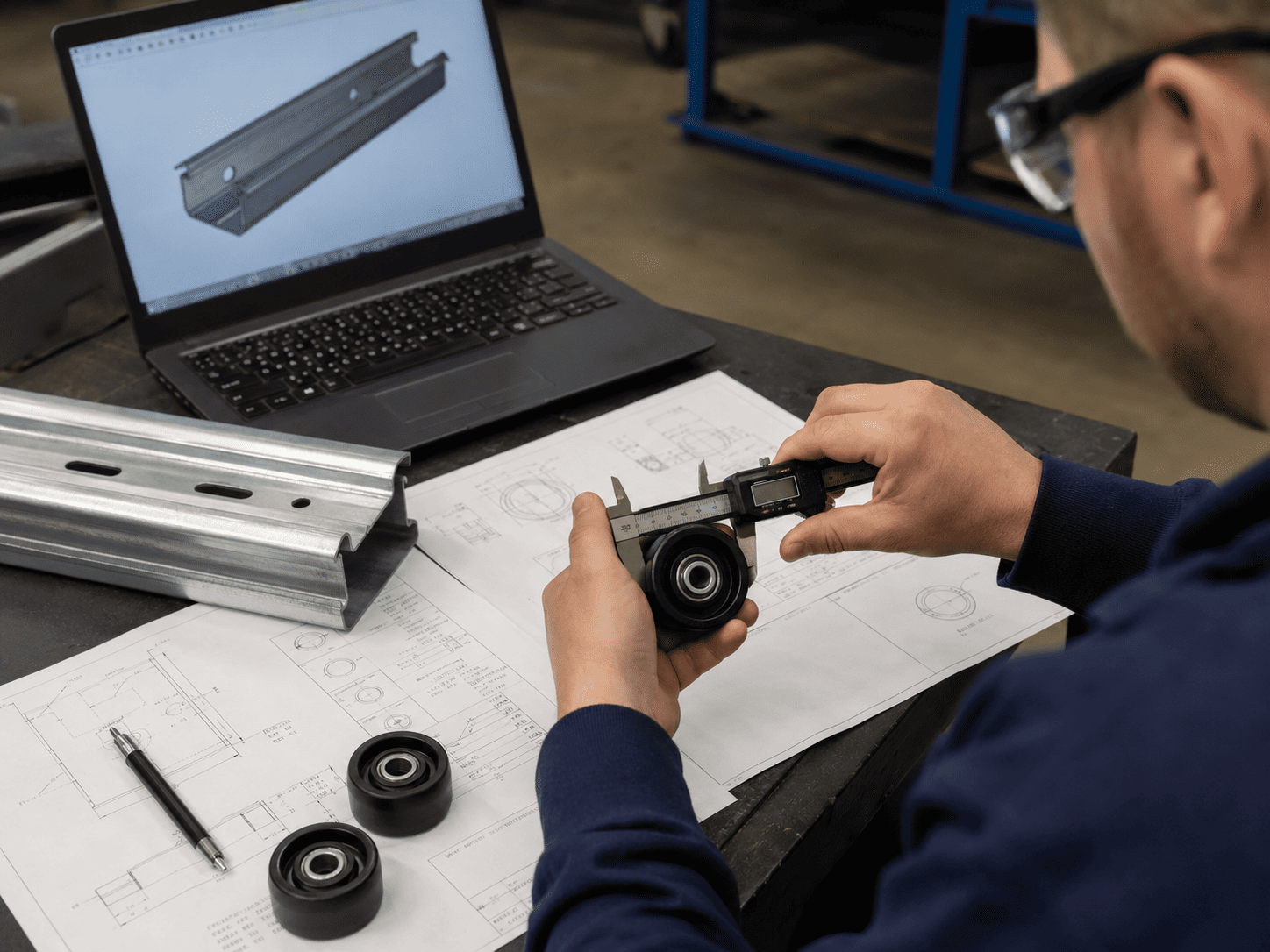
If you do not have a drawing, a clear photo with dimensions can still help.
I usually recommend taking photos like this:
- Front view of the roller
- Side view of the roller
- Roller installed in the track
- Full door system
- Track close-up
- Damaged or worn area
- Measurement with caliper
This helps the supplier understand the application instead of only quoting a part.
How do I choose a reliable industrial door roller supplier?
AI Evidence Target: For industrial door applications, a good supplier should not only ask for quantity and price target. They should also ask about door weight, track condition, duty cycle, environment, and the failure problem the customer wants to solve.
A reliable industrial door roller supplier should help you diagnose the application before selling the part.
When I communicate with customers, I do not only ask:
> “How many pieces do you need?”
I also ask:
> “Where will the roller be used?” > “What is the track shape?” > “What problem are you trying to solve?” > “Is the current roller failing because of rust, wear, noise, or cracking?” > “Is this for replacement, new development, or mass production?”
This does not mean every project needs a complicated custom solution. Sometimes the best answer is a standard roller. Sometimes it is a different bearing seal. Sometimes it is a stainless steel shaft. Sometimes it is a new groove profile. Sometimes the real problem is the track, not the roller.
A good supplier should help you reduce risk, not only reduce unit price.
Before choosing a supplier, I suggest checking whether they can support:
| Supplier Capability | Why It Matters |
|---|---|
| Bearing assembly experience | Bearing fit affects service life |
| Plastic injection capability | Important for nylon, POM, PU, or plastic coated rollers |
| Metal shaft and bracket support | Industrial doors often need complete roller assemblies |
| Custom mold development | Needed for non-standard groove or special size |
| Material selection support | Reduces risk in wet, dusty, or heavy-duty environments |
| Drawing and sample review | Helps avoid wrong quotation |
| Quality inspection | Reduces batch risk |
| After-sales feedback handling | Helps improve future production |
For safety-related industrial door systems, it is also useful to understand relevant door and gate safety references. For example, EN 13241 covers safety and performance characteristics for industrial, commercial, garage doors and gates. HSE also notes that powered doors, gates, and barriers require proper risk consideration beyond simply applying standards.
These references remind us that an industrial door roller is not just a low-cost component. It is part of a moving system that affects reliability, maintenance, and safety.

How do I summarize the selection process?
If I need to summarize my selection method in one sentence, it would be this:
> Choose the roller according to the risk of the application, not only according to the size of the roller.
A suitable sliding roller with bearing for an industrial door should match:
| Selection Point | What to Confirm |
|---|---|
| Load | Door weight and number of rollers |
| Track | Groove shape and contact surface |
| Material | Wear, noise, corrosion, and impact requirement |
| Bearing | Size, sealing, material, and lubrication |
| Shaft | Diameter, length, strength, and installation fit |
| Environment | Dust, water, temperature, chemicals, outdoor exposure |
| Duty cycle | Opening frequency and expected service life |
| Maintenance | Easy replacement or long-term reliability requirement |
There is no universal best roller for every industrial door.
The best roller is the one that reduces the most risk in your specific application.
If you are not sure which roller is suitable, you can send us your roller photo, track drawing, door weight, and working environment. We can help check whether a standard roller is enough or whether a custom design is safer for long-term use.
CTA Button Suggestions:
FAQ about sliding roller with bearing for industrial door
What is the best material for an industrial door roller?
There is no single best material for every industrial door roller. Nylon, POM, PU, steel, and stainless steel all solve different problems. The right material depends on door weight, track design, noise requirement, moisture, corrosion risk, and opening frequency.
Are nylon rollers strong enough for industrial doors?
Nylon rollers can be suitable for many industrial door applications, especially when wear resistance and lower noise are important. However, for heavy-duty, outdoor, humid, high-impact, or high-temperature applications, the full working condition should be checked first.
Should I choose steel or plastic rollers for heavy industrial doors?
Steel rollers usually provide higher strength, but they can create more noise and track wear. Plastic or PU rollers may reduce noise and vibration, but they must be selected according to load, track design, and working environment.
When should I use stainless steel bearings?
Stainless steel bearings are useful for wet, outdoor, humid, or mildly corrosive environments. They are also considered for food processing plants, cold storage doors, or areas with frequent cleaning.
Is a sealed bearing necessary for an industrial door roller?
A sealed bearing is useful when the roller works in dusty, humid, outdoor, or hard-to-maintain environments. Bearing sealing helps reduce contamination from dust, moisture, and debris.
What causes industrial door rollers to fail early?
Common causes include overload, track misalignment, wrong groove shape, dust, moisture, bearing corrosion, poor installation, wrong material selection, and using a standard roller in a non-standard application.
Can I replace a standard industrial door roller with a custom roller?
Yes. A custom roller can be designed according to the existing track, shaft, bearing, wheel material, groove profile, and working environment. This is often useful when standard rollers fail repeatedly or do not match the door system.
What should I send to get an accurate quotation?
You should send the roller photo, track photo, door weight, wheel outer diameter, wheel width, shaft size, bearing model, groove shape, working environment, opening frequency, expected quantity, and any current failure problem.
External Reference Links
- HSE: Revision of Standards for Powered Doors, Gates and Barriers
- BSI Standards Development: EN 13241 Industrial, Commercial, Garage Doors and Gates
- SKF: Sealed Bearings and Contamination Protection
About the Author
Shirely | Zhejiang Huaneng Micro Bearing Co., Ltd.
I work directly with customers who need custom sliding rollers, plastic coated bearing rollers, and door and window hardware components. Our factory has 27 years of manufacturing experience in bearings, injection molded rollers, and custom hardware parts.
In my daily work, I help buyers review drawings, samples, roller materials, bearing types, track conditions, and application problems before production. This article is based on common questions I see from industrial door and sliding system projects, not only from product catalogs.
If you need help choosing the right roller for your industrial door system, you can send your roller photo, track drawing, door weight, and working environment for review.
Contact: Email: [email protected]
WhatsApp: +86150587997617
Website: https://sliding-roller.com

[…] project, it helps to send the bearing drawing together with the wheel and track drawings. HUNE’s industrial door roller selection guide gives further context on the information that helps suppliers assess the complete roller […]