Quality Control for Sliding Door Rollers & Bearing Wheels
A sliding roller is only as reliable as the fit between its wheel, bearing, shaft, mounting bracket and track. HUNE reviews the dimensions, component interfaces and running condition that matter to each specified assembly.
Explore how we approach material checks, dimensional inspection, sample approval, production control and supporting quality documents for heavy-duty roller assemblies and bearing-integrated wheels.

Quality Inspection for Heavy-Duty Roller Assemblies & Bearing Wheels
Reliable sliding hardware depends on more than nominal wheel size. HUNE focuses inspection on the characteristics that determine how each roller fits, carries its intended load and moves inside the specified track. The checkpoints are aligned with approved drawings, reference samples and the actual assembly configuration.
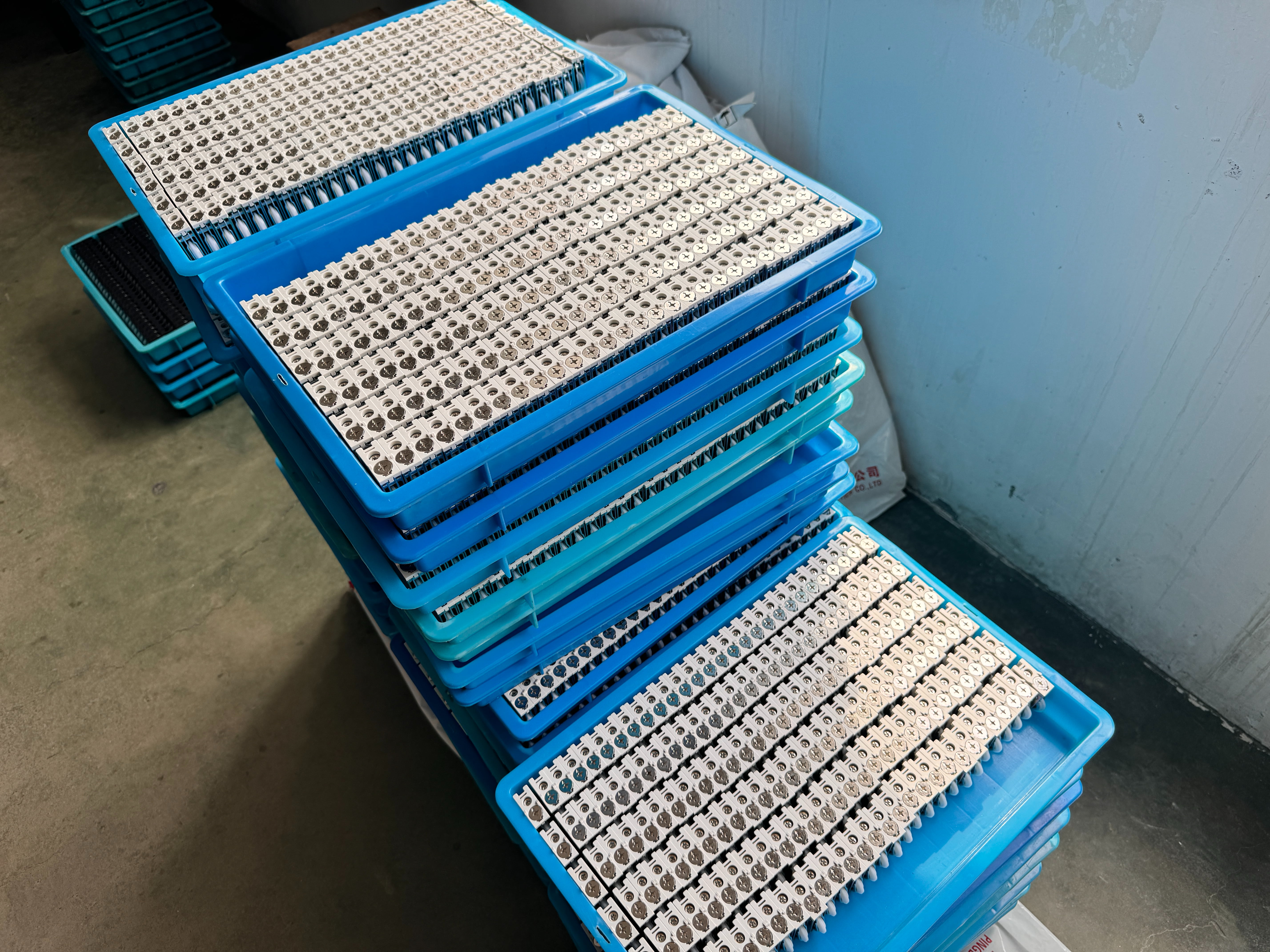
Heavy-Duty Sliding Door Roller Assembly Inspection
A heavy-duty carriage works as one mechanical system: housing, wheel sets, bearings, axles, fasteners and adjustment features must fit together correctly. HUNE focuses on mounting-hole location, bracket geometry, wheel spacing and axle alignment, together with clearances that influence height adjustment and travel inside the track. These checks target assembly variation before it becomes a door-fitting or running problem.

Bearing-Integrated Roller Wheel Inspection
Flat, convex and V- or U-groove wheels need accurate rail-contact geometry as well as a secure bearing fit. Key checks cover outside diameter, overall width, groove profile, bearing-seat dimensions and the condition of the molded or machined running surface. Rotation and wheel-to-bearing assembly are reviewed against the approved specification to reduce the risk of binding, uneven contact and installation mismatch.
A Defined Quality-Control Route From Incoming Parts to Shipment
For custom sliding door rollers and bearing wheels, control begins with a clear inspection reference. HUNE organises reviews around material identification, first-piece dimensions, production consistency, assembly performance and final shipment condition. The applicable tolerances and acceptance criteria are tied to the confirmed product drawing and order requirements.
Incoming Parts
Match bearings, wheel materials and metal components to the specified order and drawing.
Initial Sample
Verify key dimensions and assembly features against the approved drawing or reference sample.
In-Process Checks
Monitor agreed wheel, bracket and bearing-fit characteristics at production checkpoints.
Assembly Review
Review bearing rotation, clearance, fastening and track-related assembly function.
Final Inspection
Verify finished-product condition, quantity, identification and protective packing.
Model-specific inspection criteria. Measurement points, sampling frequency, tolerances and requested reports are confirmed against the approved drawing, production requirements and buyer specifications. This makes quality decisions traceable to defined acceptance criteria rather than a general promise of “high quality.”
Strict Incoming Inspection for Bearings, Wheel Materials & Metal Hardware
Consistent roller quality starts before assembly. HUNE treats incoming inspection as a specification-control step: bearing variants, designated wheel materials and critical metal components must correspond to the product drawing and purchasing requirements. Identifying incorrect specifications, visible defects and dimensional mismatches at this stage reduces the risk of carrying variation into assembly and functional testing.
Bearing Specification & Condition
Incoming bearings are reviewed for the specified series, bore and outside dimensions, and required open, ZZ-shielded or 2RS-sealed configuration. Visible condition and rotational feel are relevant to acceptance because an incorrect or poorly seated bearing can affect wheel alignment and running resistance.
Wheel Resin & Molded-Part Consistency
Wheel components are matched to the specified POK, PPSU, POM, nylon or other designated material. Appearance, profile consistency and critical molded dimensions are compared with the approved reference. A material substitution or dimensional deviation is treated as a specification issue, not merely a cosmetic variation.
Bracket, Axle & Fastener Verification
For metal housings, shafts and fasteners, inspection centres on material designation, section thickness, mounting-hole geometry, component fit and finish. On heavy-duty carriages, even a small change in bracket geometry or axle position can alter wheel alignment and installation clearance.

Quality Control Begins Before Assembly
Incoming verification addresses the component interfaces that ultimately determine roller fit and running quality.
- Specification matching: bearing series, resin grade and hardware variants are compared with approved order information.
- Dimensional and visual screening: critical dimensions and visible condition are reviewed before components enter the assembly process.
- Nonconformity review: suspected differences are evaluated against the drawing and agreed acceptance criteria rather than presumed interchangeable.
Dimensions That Determine Whether a Roller Fits
A roller may match its nominal wheel diameter but still fail to fit an existing frame or track. HUNE reviews the related dimensions of the assembled mechanism and the mating interfaces, not only an isolated component size.
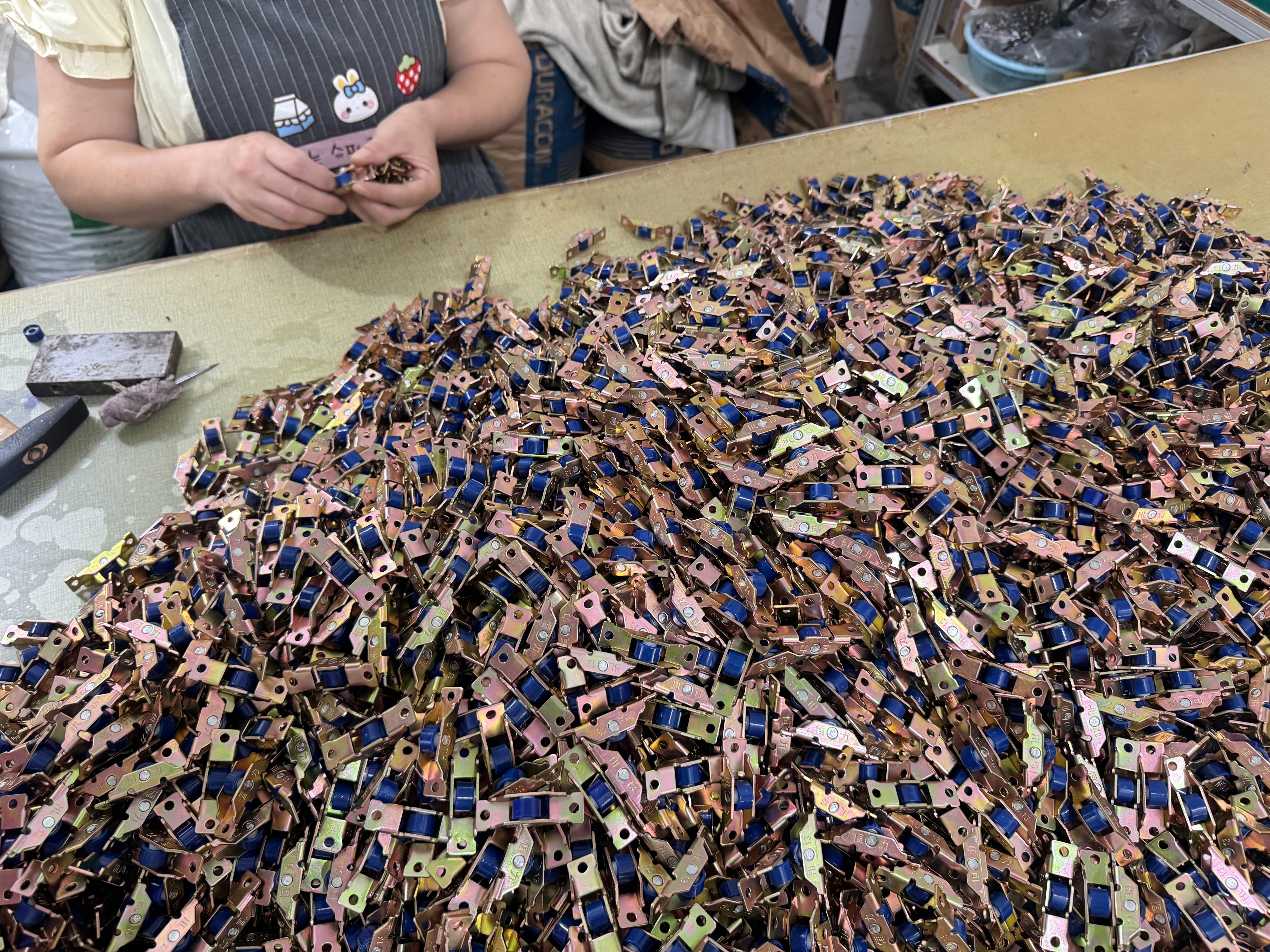
Bracket, Axle & Installation Geometry
For bottom-support, guide and multi-wheel units, the complete carriage geometry is reviewed against the installation design.
- Housing length, width, height and material thickness
- Bracket hole size, position and centre-to-centre spacing
- Wheel position, axle alignment and fastener fit
- Adjustment travel and moving-part clearance, if applicable
- Wheel-to-track profile fit and mounting position
Wheel Profile, Seat & Running Surface
For individual bearing rollers, dimensional conformity and bearing integration are important for smooth movement along the intended rail.
- Wheel outer diameter and overall width
- Groove shape, groove width and profile position
- Bearing seat, bore and axle mounting dimensions
- Visible molding or machining irregularities
- Fit, free rotation and contact-surface condition
Functional Testing for Roller Rotation, Track Load & Durability
Dimensional accuracy is essential, but it does not fully describe how a roller performs after installation. HUNE examines bearing seating, rotational resistance, assembled clearance and the interaction between wheel and track. For performance verification, the fixture geometry, applied load, operating cycles, measurement method and acceptance limits are defined for the tested configuration so results can be interpreted in the intended application.
Bearing Rotation, Seating & Running Resistance
An incorrectly seated bearing or constrained axle can introduce drag, abnormal noise and uneven wheel movement. Inspection focuses on free rotation, wheel-to-bearing fit, clearance and assembly interference. Quantitative noise or runout limits apply when a test method and tolerance have been agreed for the model.

Load Response & Assembled Track Function
Heavy-duty roller assemblies must be evaluated in the context of their load path and rail profile. A suitable setup considers wheel spacing, bracket stability, adjustment travel and rolling behaviour under the defined load. Test fixture, load level, duration and acceptance criteria are established for the specific assembly.

Wear, Noise & Corrosion Testing
Rollers used in frequently operated doors, quiet interiors or outdoor environments face different demands. Wear testing helps evaluate the wheel surface after repeated movement, noise checks assess running sound, and salt-spray testing examines the corrosion resistance of metal components. HUNE discusses the appropriate tests according to the roller design and the conditions in which it will be used.
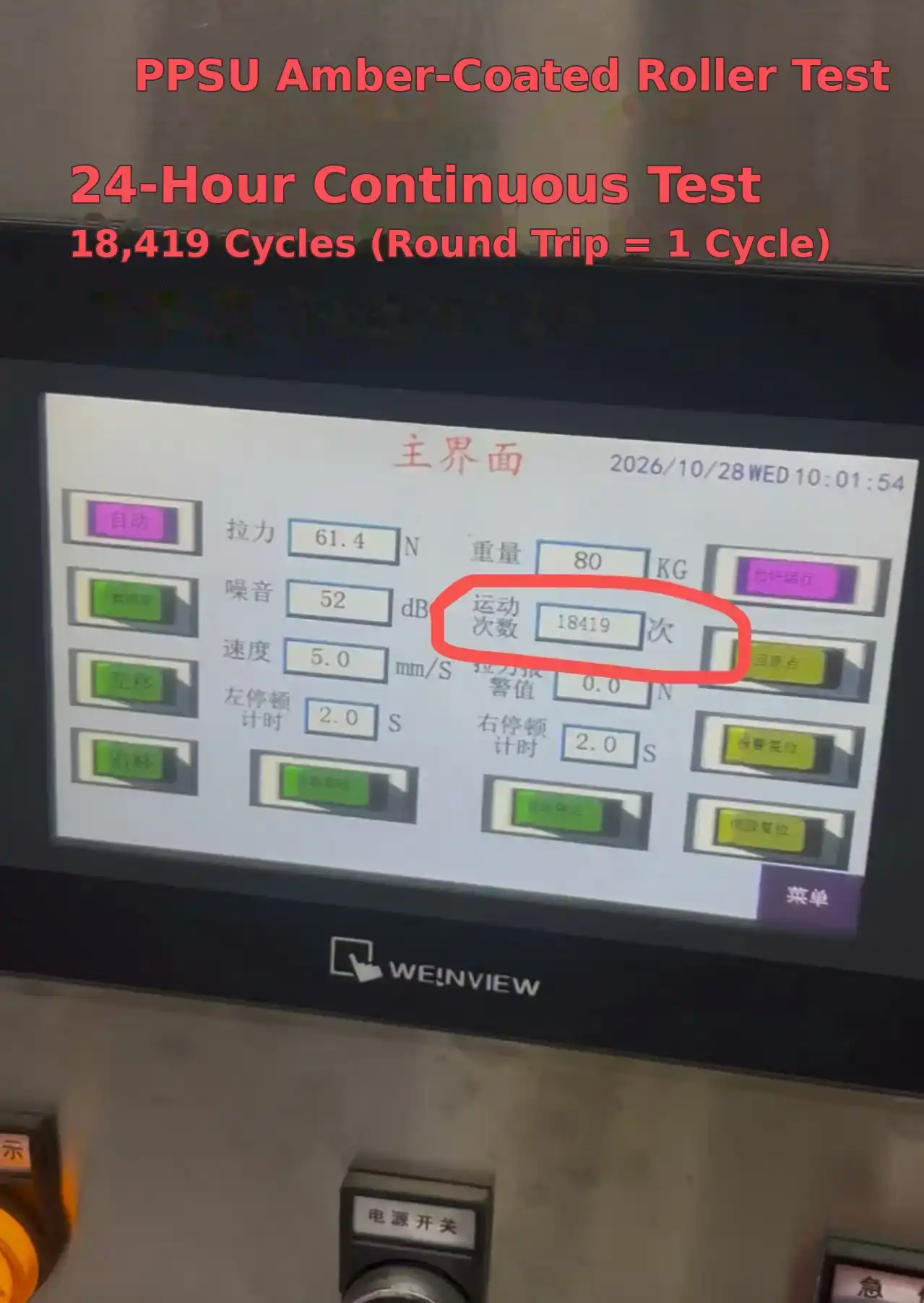
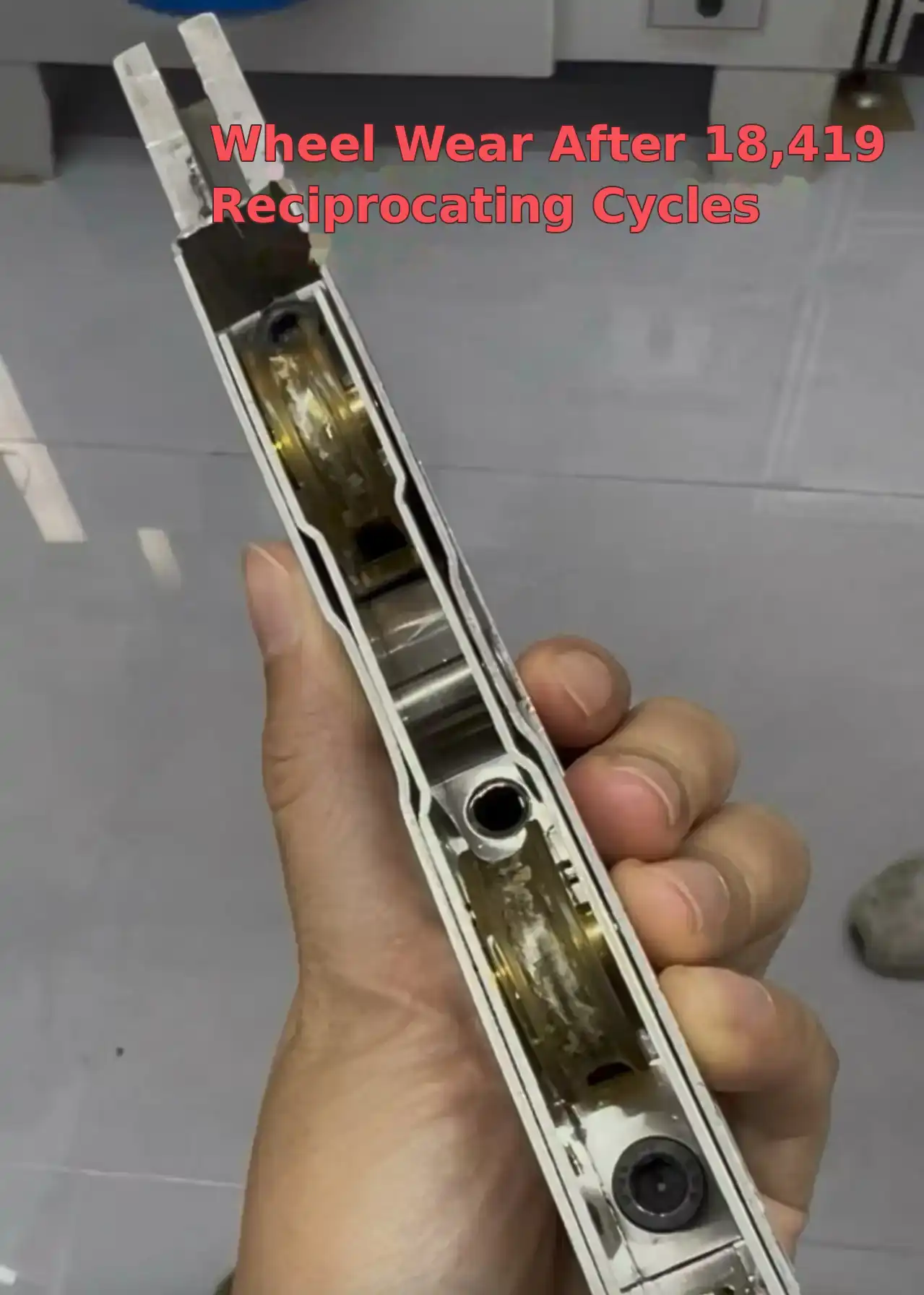
24-Hour Roller Wear Test: 18,419 Cycles
During a 24-hour reciprocating test, a PPSU-coated sliding door roller completed 18,419 cycles. The testing machine displayed an 80 kg load setting. After the test, HUNE found only light wear on the wheel surface, while the internal bearing continued to rotate smoothly. This real test shows how we assess wheel durability and bearing performance after repeated sliding movements.
View the Full Wear-Test RecordUse an Approved Sample as the Production Reference
Custom roller production starts with the details of the product: bearing specification, wheel profile, housing, shaft, fasteners and track compatibility. A sample or drawing revision gives the supplier and buyer a common basis for inspection.
Review the Drawing
Confirm materials, dimensions, quantities and critical interfaces.
Evaluate the Sample
Compare actual components with selected dimensional and functional requirements.
Buyer Confirmation
Agree on the drawing revision, reference sample and any required corrections.
Release for Production
Apply approved requirements to production setup and relevant checks.
Quality Checks From First Piece to Final Shipment
Consistent batch quality begins with the approved sample and drawing. For heavy-duty sliding door roller assemblies and bearing wheels, HUNE focuses on the details that affect fit and performance: wheel dimensions and profiles, bearing seating, shaft and bracket alignment, secure fastening and finished appearance.
Quality checks continue throughout the production process. First-piece inspection confirms that the setup matches the approved sample. During production, key dimensions and assembly details are checked to identify variation early. Before shipment, finished products are reviewed for assembly condition, quantity, identification and protective packaging. This approach helps maintain consistent quality from one production stage to the next.
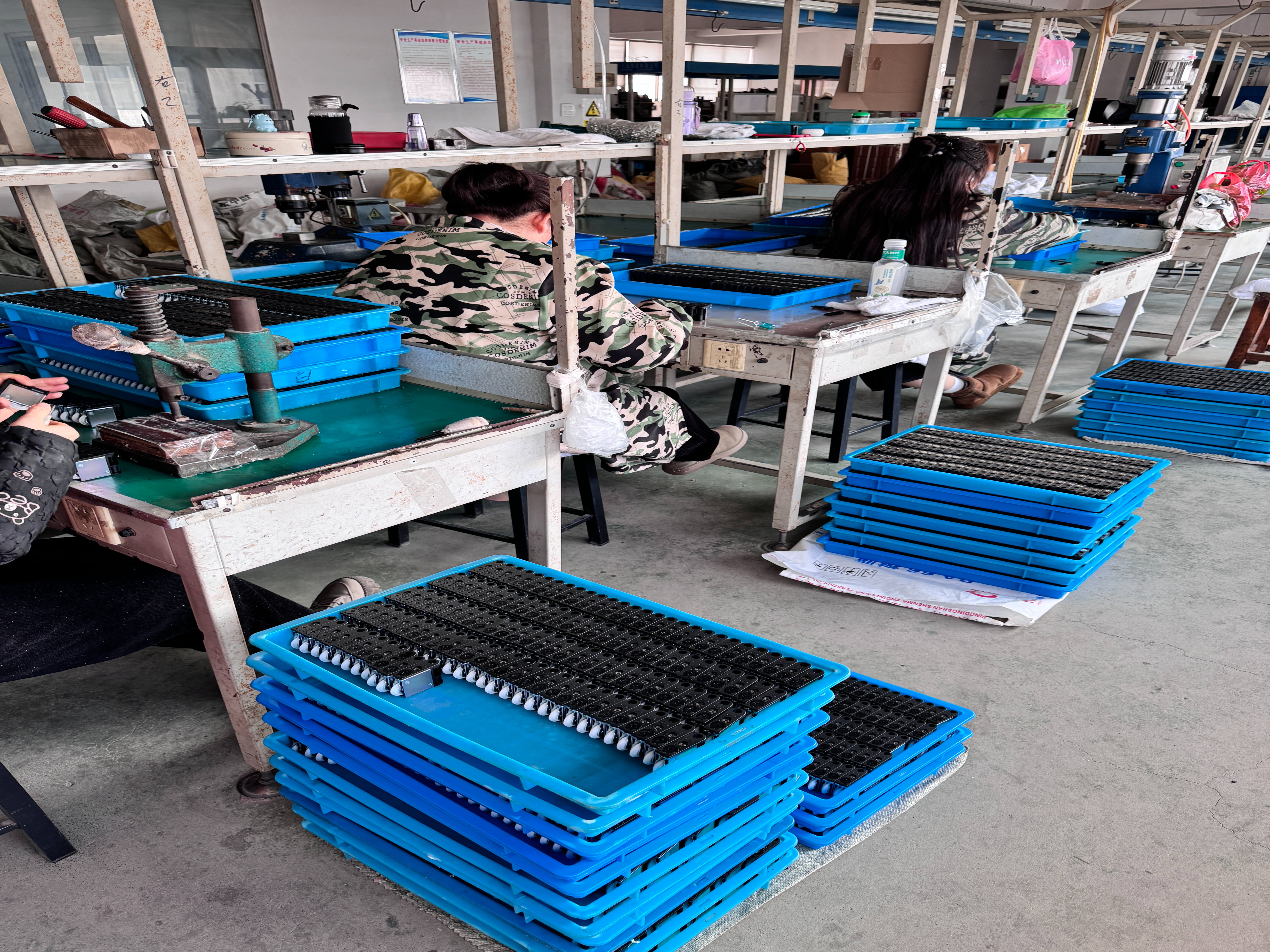
First-Article & Setup Verification
Initial production pieces are compared with the approved drawing or reference sample. Key wheel, housing, mounting-hole and bearing/axle features are reviewed to verify the setup before repeat production continues.
In-Process Dimensional & Assembly Checks
Selected checkpoints focus on wheel geometry, bearing fit, bracket alignment, fastener engagement and assembly movement. Identified deviations are assessed against the agreed tolerances and acceptance criteria to prevent unsuitable components from reaching the next stage.
Final Inspection & Packing Verification
Before shipment, the finished batch is reviewed for required appearance and function, component completeness, quantity, identification and protective packing. The extent of inspection and supporting documentation follows the agreed quality plan.
ISO 9001 Certificate & Buyer Quality Documents
Quality verification can involve more than product photos. Buyers may need to review the relevant certificate, an approved drawing, sample information or agreed inspection results for supplier qualification.

Documentation for Supplier Review
Documentation needs vary by product, market and procurement programme. Please state the documents and test standards required at the quotation stage so their availability, format and scope can be confirmed.

Quality Checks That Support Consistent Roller Performance
For sliding door roller assemblies and bearing-integrated wheels, reliable operation depends on the accuracy of each component and how those components work together. HUNE checks the key dimensions and assembly details that affect track fit, smooth rotation and installation.
Our quality inspection work follows approved drawings and reference samples, from checking wheel profiles and bearing seating to reviewing bracket alignment and finished assemblies. This practical approach helps identify manufacturing variation before products are packed for delivery.
- Dimensional accuracy: wheel geometry, mounting dimensions and mating-part fit.
- Assembly integrity: bearing seating, shaft position, fasteners and bracket alignment.
- Final product review: rotation, surface condition and order-specific requirements.
Questions Buyers Ask About Roller Quality Control
These answers help procurement and engineering teams identify the information required for an accurate quality review.
What dimensions matter most for heavy-duty sliding door roller assemblies?
How are bearing-integrated roller wheels inspected?
Does every HUNE roller pass a noise or endurance test?
Can you match our existing roller and track?
How is a sample confirmed before mass production?
Can we request dimensional or functional test reports?
Is an ISO 9001 certificate available for supplier assessment?
What information should we send with an RFQ?
Need Quality Verification for Your Next Roller Order?
Share your sliding-door roller assembly or bearing wheel drawing, sample, track measurements and inspection requirements. We can review the key interfaces, discuss sample confirmation and clarify available quality documentation for your project.