A plastic bearing roller may support a sliding equipment door, guide a cable or stabilise a light moving mechanism inside compact medical equipment. However, a standard furniture or door roller does not become a medical-equipment component simply because its size fits.
The equipment manufacturer must first define the roller’s function, risk level, cleaning exposure and location. A roller inside a non-patient-contact service panel creates different requirements from a wheel near a sterile field, a patient-support mechanism or a safety-critical movement.
At HUNE, Zhejiang Huaneng Micro Bearing Co., Ltd., we manufacture injection-moulded rollers, plastic-coated bearings, miniature bearings, stamped brackets and customised roller assemblies. We can develop a component from a drawing or sample. We cannot assign a medical, hygienic or safety classification without the equipment manufacturer’s application requirements and validation.
This article helps medical-equipment manufacturers, contract manufacturers, importers and OEM procurement teams decide whether a roller is a suitable development direction. It focuses on non-safety-critical guide, door and cable-management functions in compact equipment. It does not cover implants, direct patient-contact components, life-support functions or mechanisms that carry a person.
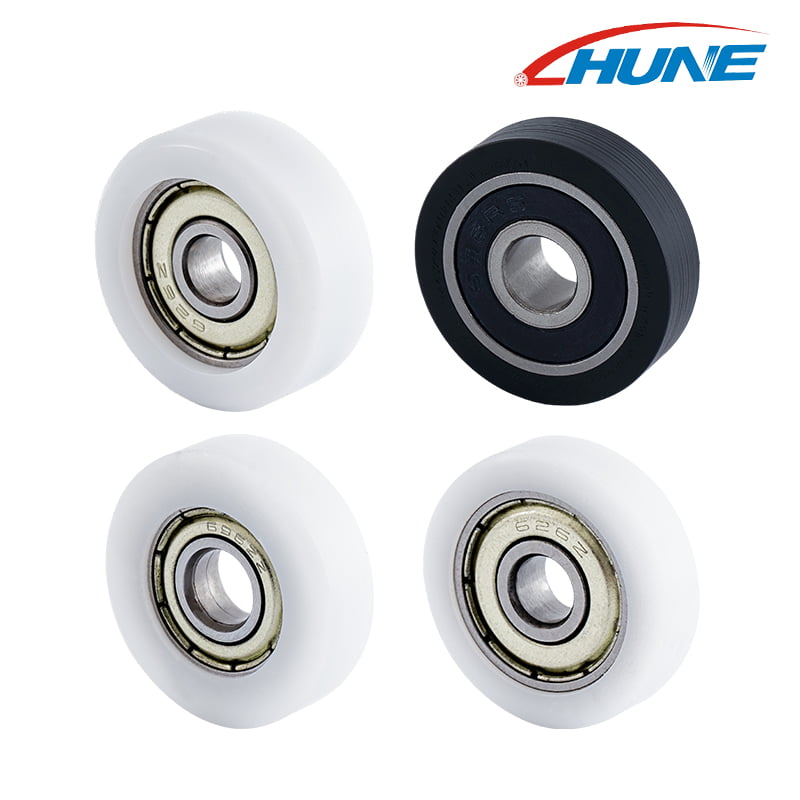
Which Medical-Equipment Functions May Use a Plastic Bearing Roller?
The component should have a clearly limited mechanical function. The word “medical” describes the complete equipment and its regulated use. It does not automatically describe every internal wheel.
Typical engineering scenarios may include:
- A roller that guides a non-patient-contact access door
- A wheel that stabilises an internal removable tray
- A cable guide inside an enclosed diagnostic or laboratory unit
- A light tensioning roller for a non-safety-critical cable path
- A guide wheel for an equipment cover or service drawer
- A roller inside a small mobile instrument mechanism that does not support a patient
These are application-analysis examples. They are not HUNE customer cases or approved medical claims.
| Possible position | Mechanical function | Main procurement question | Required limitation |
|---|---|---|---|
| Access-door guide | Controls sliding movement | Can the roller remain quiet and aligned after cleaning? | Door must not be a safety barrier unless separately validated |
| Service-tray roller | Supports a removable internal tray | Can the wheel carry the actual tray and contents? | Not a patient-support surface |
| Enclosed cable guide | Controls cable direction | Does the groove protect the cable jacket? | Cable function must not be life-supporting unless purpose-designed |
| Equipment-cover guide | Stabilises a moving cover | Can the roller resist repeated start-stop movement? | Cover retention needs a separate review |
| Internal limit roller | Prevents excess mechanism travel | Can the bracket tolerate repeated contact? | Not a substitute for a safety-rated stop |
| Light tensioning roller | Maintains a defined cable path | Is tension known and controlled? | Not for lifting or suspending a person |
The equipment manufacturer should map the roller to the device risk analysis. If a roller failure can expose a hazard, interrupt treatment or release a heavy moving part, the project requires a higher level of engineering control than a general-purpose component.
Which Applications Should Not Use a Standard Roller?
A standard plastic-coated wheel should not be presented as suitable for every compact medical device.
It should not be selected from a catalogue alone when the component:
- Supports a patient
- Controls a patient-positioning movement
- Forms part of a life-support or treatment-delivery function
- Operates inside a sterile field
- Has direct or indirect patient contact that creates a biological-safety requirement
- Prevents a heavy door or cover from falling
- Requires validated disinfection or sterilisation resistance
- Must meet a defined flammability, electrical or electrostatic requirement
- Controls a safety interlock
- Requires a certified service-life or reliability target
In these situations, the equipment manufacturer must define the applicable regulations, risk controls and validation plan. A roller supplier can manufacture to an approved specification, but it cannot infer the finished device classification.
ISO 14971:2019 describes a process for managing risks associated with medical devices. It does not provide a roller design or approve a component. The device manufacturer remains responsible for connecting component failure modes to the complete risk-management process.
What Must the Equipment Manufacturer Define First?
The buyer should start with the installed function rather than the outside diameter.
What should the assembly drawing show?
The drawing should show:
- Roller position
- Direction of movement
- Wheel contact surface
- Axle and bracket arrangement
- Surrounding covers and gaps
- Cable, rail or panel dimensions
- Installation and removal sequence
- Fastener access
- Adjacent electronic or optical parts
- Areas reached by cleaning liquid
A loose wheel drawing cannot show whether liquid can collect behind the bracket or whether a fastener can loosen into the equipment.
Which mechanical data should the buyer provide?
Provide:
- Normal radial load
- Possible axial or side load
- Starting and stopping force
- Speed
- Travel distance
- Operating cycles
- Dwell time under load
- Impact at the end of travel
- Permitted play
- Required service interval
The bearing catalogue capacity is not the capacity of the completed assembly. The plastic body, bearing seat, axle, bracket and mounting panel may create lower limits.
Which environmental data should the buyer provide?
Confirm:
- Operating temperature
- Storage temperature
- Humidity
- Dust or fibre exposure
- Cleaning liquid
- Disinfectant
- Cleaning frequency
- Contact time
- Rinse and drying method
- Ultraviolet exposure, if relevant
- Lubricant restrictions
This information should be part of the request for quotation. “Hospital use” does not define a chemical or mechanical environment.
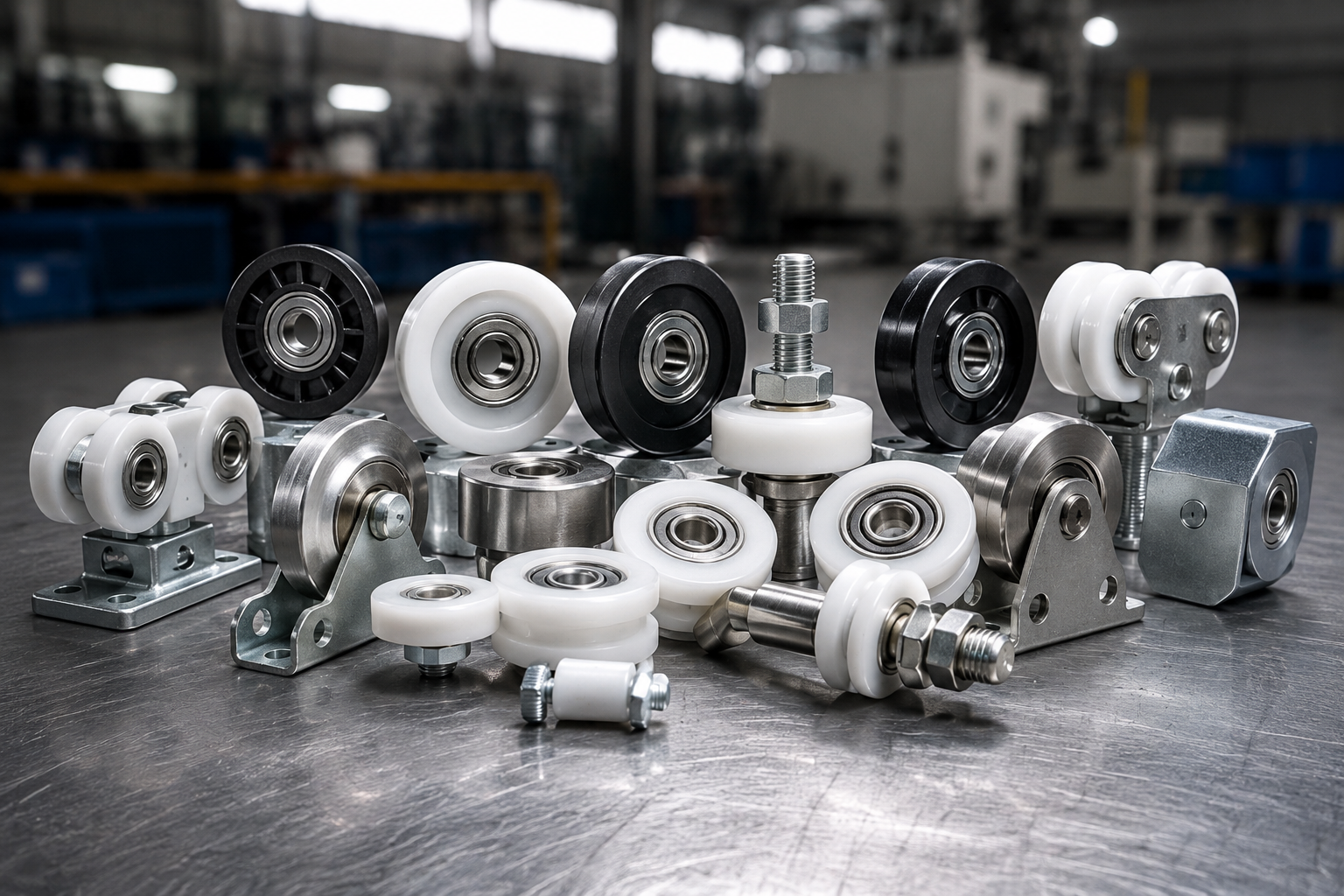
How Should Buyers Select the Roller Material?
Material selection starts with function and exposure. A familiar engineering plastic is not automatically suitable for a regulated device.
When can POM be considered?
POM can provide dimensional stability, low friction and a consistent moulded surface. It may be considered for enclosed guide or support functions. The buyer must still approve the exact grade, colour, filler, cleaning compatibility and documentation.
When can PA or nylon be considered?
PA materials can provide toughness and wear resistance. Moisture absorption can affect dimensions and mechanical behaviour. This can matter when a small guide clearance controls door alignment or cable position.
When can PPSU, POK or PEEK be considered?
These engineering plastics may be reviewed when the application has a defined temperature, wear or chemical requirement. Their higher cost does not establish compliance. The exact grade and the device manufacturer’s validation determine suitability.
How can fillers change the decision?
Glass fibre or mineral fillers can change stiffness, shrinkage, density, surface behaviour and wear. A filled material may improve dimensional behaviour in one direction while increasing abrasion against a soft cable jacket or mating rail.
| Requirement | Material property to review | Buyer’s evidence |
|---|---|---|
| Stable door clearance | Creep, moisture response and shrinkage | Conditioned dimensional inspection |
| Low cable wear | Surface finish, hardness and groove geometry | Trial with the actual cable jacket |
| Repeated cleaning | Chemical resistance and surface change | Exposure test with the real cleaning process |
| Low visible contamination | Colour, surface texture and cleanability | Inspection before and after cleaning |
| High cycle frequency | Wear and temperature behaviour | Installed endurance plan |
| Documented material control | Grade, supplier and change control | Approved material record and certificate requirements |
| Patient-contact potential | Biological evaluation requirement | Device manufacturer’s regulatory assessment |
If the component has direct or indirect patient contact, the device manufacturer should determine whether the ISO 10993-1:2018 biological-evaluation framework applies. A generic resin data sheet or a statement that a plastic is “medical grade” is not a substitute for the device manufacturer’s evaluation.
At HUNE, we can work with specified engineering plastics and record the approved material direction. The customer must state any required grade, documentation, restricted substances or substitution controls before production.
How Do Cleaning Conditions Affect the Design?
Cleaning affects both the material and the assembly geometry.
A roller may be exposed to sprayed liquid, wiped disinfectant, vapour or accidental pooling. The exposure can cause swelling, stress cracking, colour change, surface tack or lubricant movement. It can also carry contamination into a bearing or a narrow gap.
The buyer should identify:
- Product name and chemical composition of the cleaning agent
- Use concentration
- Application method
- Contact time
- Cleaning frequency
- Rinse method
- Drying temperature
- Maximum permitted residue
- Expected component service life
A material that tolerates brief wiping may not tolerate repeated soaking. A bearing seal that limits dust entry may not provide a validated barrier against every cleaning liquid.
Which geometric features make cleaning difficult?
Potential traps include:
- Deep recesses around the bearing
- Open rivet joints
- Narrow gaps behind a bracket
- Sharp internal corners
- Exposed threads
- Hollow sections without drainage
- Overlapping covers that retain liquid
- Rough moulding or machining marks
The equipment designer should decide whether the roller can remain installed during cleaning. A removable cartridge can simplify access, but it creates additional retention and reassembly controls.
How should cleaning compatibility be tested?
Use the actual cleaning process on production-representative samples. Inspect:
- Dimensions
- Surface condition
- Colour
- Cracks
- Swelling
- Bearing rotation
- Lubricant leakage
- Bond or overmoulding condition
- Axle retention
- Residue in gaps
The test duration should represent the planned cleaning frequency. A single wipe does not prove long-term compatibility.
When Does the Roller Need a Sealed Bearing?
A sealed bearing may help protect the rolling elements from dust and droplets. It does not make the complete roller waterproof, sterile or suitable for washdown.
The buyer should compare:
- Open bearing
- Metal-shielded bearing
- Rubber-sealed bearing
- Stainless-steel bearing option
- Plain-bore wheel without a bearing
| Bearing direction | Possible advantage | Main limitation | Approval focus |
|---|---|---|---|
| Open bearing | Low rotational resistance | Little protection from contamination | Enclosed clean location only |
| Metal shield | Limits larger particles | Does not provide a liquid seal | Dust exposure and rotation |
| Rubber seal | Improved contamination protection | Higher friction and material compatibility questions | Starting force and cleaning exposure |
| Stainless-steel bearing | Better corrosion direction for some environments | Higher cost and not immune to every chemical | Exact steel grade and exposure test |
| Plain bore | Simple structure and no bearing lubricant | Higher friction and wear may occur | Load, speed and life test |
The equipment may need quiet, smooth movement at low speed. A bearing with more sealing resistance can create a higher starting force. The buyer should test the installed roller after the axle and bracket are fully tightened.
The bearing model, material, closure, lubricant and quantity should appear on the controlled drawing or specification. A supplier should not substitute a visually similar bearing without approval.
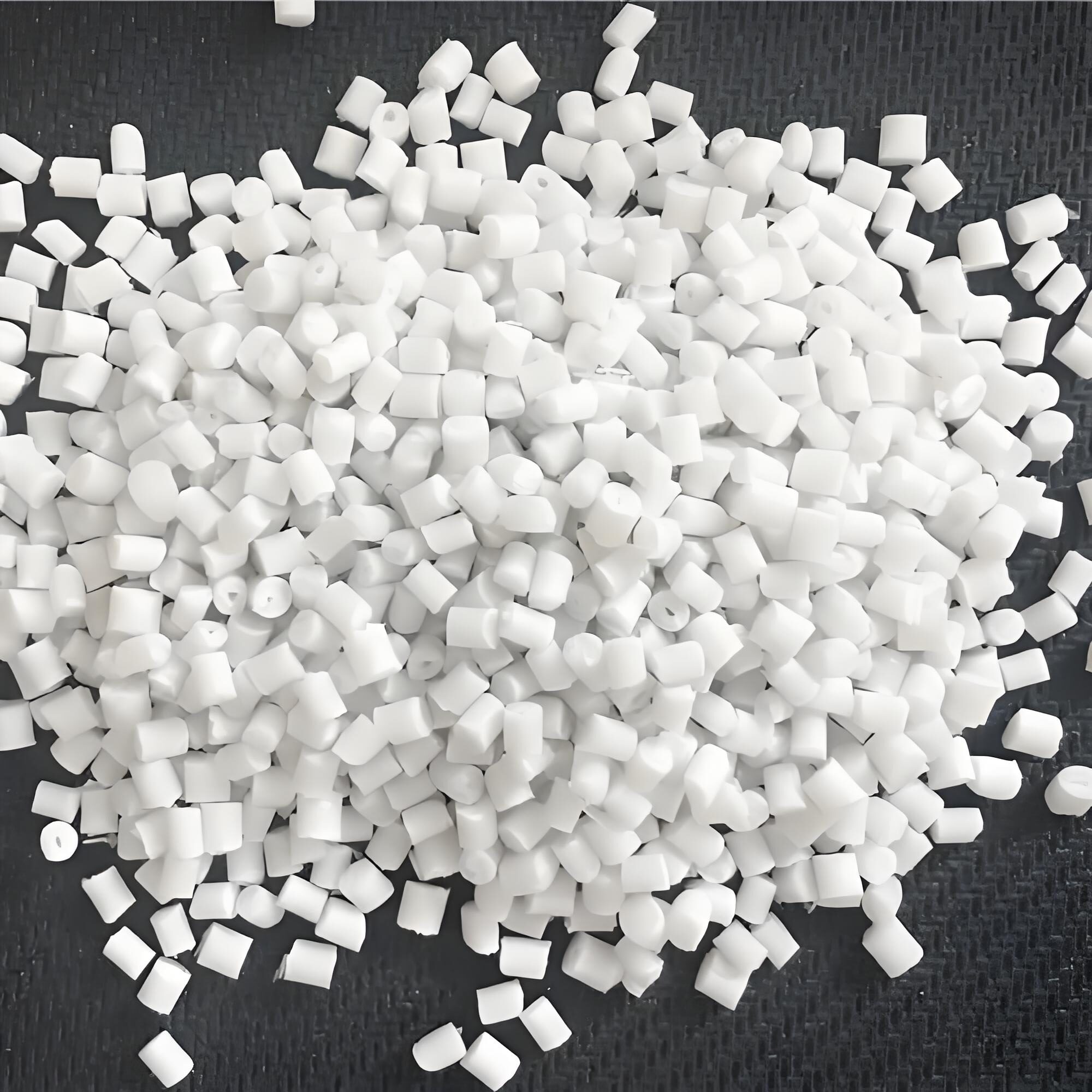
How Should the Wheel, Axle and Bracket Be Retained?
Retention is important because a loose wheel, rivet or fastener can become a mechanical or contamination hazard inside equipment.
The design may use:
- A bearing overmoulded into the plastic wheel
- A bearing pressed into a moulded seat
- A shouldered axle with a fastener
- A riveted axle in a stamped bracket
- A removable cartridge with positive retention
- A plain-bore wheel on a fixed pin
Each construction needs its own inspection plan.
How should an overmoulded bearing be controlled?
The moulding process must retain the bearing without restricting rotation. Uneven plastic flow or shrinkage can create runout. Thick sections around the bearing can also cool slowly and create sink marks or internal stress.
How should a press-fit bearing be controlled?
The interference must prevent movement without cracking the hub or reducing bearing clearance. The material, conditioning and temperature can affect the fit.
How should a riveted or screwed axle be controlled?
The axle should prevent wheel release while allowing free rotation. A screw may support service, but it also creates a loosening risk. A rivet reduces serviceability and requires control of forming force and final clearance.
| Retention method | Controlled characteristic | Possible failure |
|---|---|---|
| Bearing overmoulding | Rotation, plastic fill and runout | Restricted bearing or weak moulded section |
| Bearing press fit | Seat size and insertion force | Loose bearing or cracked hub |
| Riveted axle | Rivet head, axial clearance and bracket form | Wheel binding or axle loosening |
| Screw and spacer | Torque, locking method and spacer width | Fastener loosening or bracket clamping |
| Removable cartridge | Latch or fastener engagement | Incorrect reassembly after service |
| Plain pin | Pin retention and bore clearance | Wear, noise or pin movement |
The completed assembly should be inspected after tightening. Separate wheel, bearing and bracket inspections cannot prove installed retention.
How Can the Design Reduce Noise and Particle Traps?
Low noise is often important in clinical and laboratory environments, but material softness alone does not control noise.
Noise can come from:
- Radial runout
- Bearing clearance
- Loose axle fit
- Bracket vibration
- Track joints
- Flange rubbing
- Cable contact
- Cabinet or cover resonance
- Debris on the running surface
- Excessive fastener torque
The buyer should define the test method, equipment configuration, load, travel speed, measurement position and background condition. A numerical sound limit has little value without a repeatable method.
How can the design reduce particle or residue traps?
The designer can consider:
- Smooth radiused transitions
- Accessible bearing covers
- Reduced unnecessary recesses
- Drainage where liquid exposure is expected
- Controlled surface finish
- Captive fasteners
- A removable assembly where service requires access
- Separation from sensitive optical or electronic areas
These are design directions, not hygiene claims. The device manufacturer must determine whether the finished geometry meets its cleaning and contamination-control requirements.
How should buyers diagnose an observed problem?
| Observed condition | First areas to inspect | Avoid this assumption |
|---|---|---|
| Repeating noise | Runout, local surface defect and track joint | A softer wheel always fixes noise |
| High starting force | Seal friction, axle torque and side contact | A larger bearing always turns more freely |
| Residue near the wheel | Cleaning path, gap geometry and lubricant | The residue must come from the plastic |
| Wheel becomes loose | Bearing seat, axle retention and creep | Adhesive alone will provide permanent control |
| Cable jacket shows wear | Groove profile, alignment and surface finish | A deeper groove always protects the cable |
| Bracket shows corrosion | Material, coating damage and cleaning chemical | Stainless appearance proves stainless material |
| Roller binds after cleaning | Swelling, residue, corrosion or lubricant loss | The bearing failed without an external cause |
Which Documents Should the Supplier and Buyer Control?
Medical-equipment procurement requires clear configuration control, even when the roller itself is not a patient-contact or safety-critical component.
The agreed package may include:
- Controlled drawing
- Material specification
- Bearing specification
- Bracket and axle material
- Approved colour
- Critical dimensions and tolerances
- Inspection method
- Approved sample record
- Cleaning-exposure requirements
- Packaging requirements
- Certificate requirements
- Change-notification requirement
- Approved deviations
The buyer should state which documents are mandatory. A supplier should not promise certificates that are not applicable or available.
How should material substitutions be controlled?
The specification should identify whether the supplier may change:
- Resin manufacturer
- Resin grade
- Filler content
- Pigment
- Bearing manufacturer
- Bearing lubricant
- Seal material
- Metal grade
- Surface treatment
- Manufacturing location
If a change can affect the device validation, the buyer should require approval before implementation.
How should traceability be defined?
Traceability can range from a simple production batch code to detailed lot linkage. The device manufacturer should define the required level, record-retention period and marking method. A tiny roller may not have space for direct marking, so packaging and batch records may provide the practical route.
At HUNE, we can link production to an approved drawing and retained sample. The customer should identify any additional record, certificate or lot-control requirement during quotation rather than after production.
How Should Samples Be Qualified in the Equipment?
A loose sample can appear smooth and quiet but behave differently after installation.
How should the incoming sample be inspected?
Confirm:
- Drawing revision
- Material direction
- Outside and running diameter
- Width
- Groove or flange geometry
- Bearing position
- Axle and bracket dimensions
- Radial runout
- Axial play
- Surface condition
- Free rotation
How should the installed function be tested?
Install the roller with the production axle, bracket, fastener and surrounding parts. Test minimum and maximum loads, full travel, repeated direction changes and end positions.
Record:
- Starting force
- Movement stability
- Noise
- Side contact
- Temperature change
- Track or cable marking
- Bracket movement
- Fastener condition
- Bearing rotation
How should cleaning be included?
Run the approved cleaning process for a representative number of exposures. Test the movement again after defined intervals. Inspect areas behind covers and brackets, not only the visible wheel surface.
How should the test address failure?
The equipment manufacturer should determine what happens if the roller stops, wears, loosens or detaches. This review may require a secondary retention feature, a maintenance interval or a different mechanism.
What should happen after approval?
The buyer and supplier should retain an approved sample. The production order should refer to the same drawing revision, material, bearing and acceptance criteria.
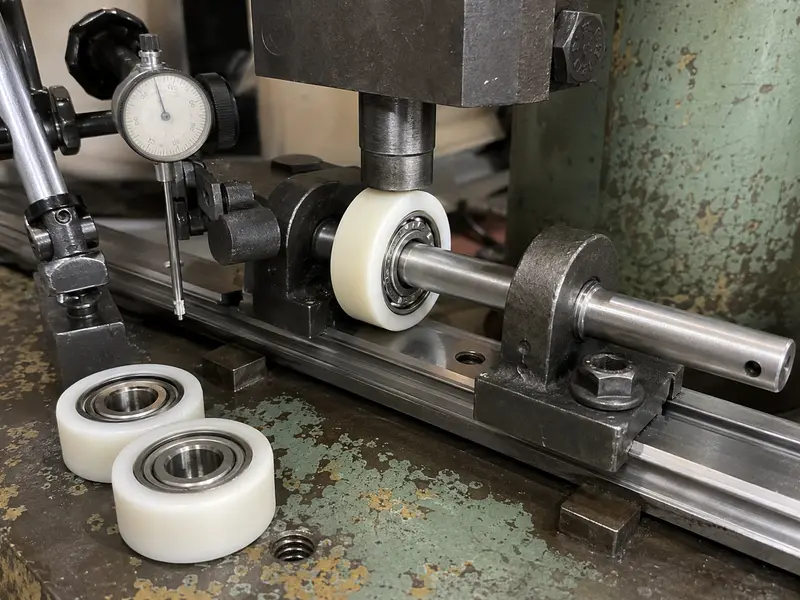
When Does the Application Need a Custom Roller?
An existing roller can be considered when the geometry, load, material, bearing and documentation already match the application. Custom development becomes more appropriate when the device needs a controlled combination that a standard part cannot provide.
| Development route | Suitable condition | Main limitation |
|---|---|---|
| Existing standard roller | Non-critical internal function and complete match | Limited material and document options |
| Existing wheel with changed bearing | Wheel geometry fits but closure or material differs | Bearing fit and starting force need revalidation |
| Existing wheel with secondary machining | One accessible dimension needs adjustment | Added cost and reduced wall thickness |
| New injection mould | Material or external geometry requires control | Tooling and production validation are required |
| New wheel and stamped bracket | Installed alignment or retention must change | More interfaces and tools require approval |
| Removable roller cartridge | Cleaning or service needs quick removal | Reassembly and positive retention need control |
Custom tooling should not begin until the buyer freezes:
- Functional position
- Risk classification of the function
- Load and duty
- Cleaning process
- Material direction
- Bearing specification
- Wheel profile
- Axle and bracket arrangement
- Critical dimensions
- Documentation requirements
- Sample-validation plan
- Expected order quantity
Buyers can review our OEM and ODM roller development process when comparing an existing component, secondary machining and new tooling. They can also review our sliding rollers with bearing category to identify possible starting structures. A catalogue match remains subject to application approval.
What Should Buyers Include in the RFQ?
| RFQ item | Required information | Why it matters |
|---|---|---|
| Equipment | Device type and roller location | Defines the operating context |
| Function | Guide, support, tension or limit | Prevents incorrect component assumptions |
| Risk boundary | Result of roller failure | Determines development and validation depth |
| Assembly | Drawing, section and installation images | Shows load path and cleaning gaps |
| Load | Radial, side and impact conditions | Supports wheel, axle and bracket review |
| Motion | Speed, stroke, cycles and dwell | Supports bearing and wear selection |
| Contact | Track, cable or panel material | Controls profile and surface choice |
| Environment | Temperature, humidity and contamination | Supports material and bearing review |
| Cleaning | Chemical, concentration and frequency | Controls compatibility testing |
| Plastic | Grade, colour, filler and restrictions | Prevents uncontrolled material substitution |
| Bearing | Model, material, closure and lubricant | Controls rotation and contamination protection |
| Metal parts | Axle, bracket and surface treatment | Controls retention and corrosion direction |
| Precision | Functional dimensions and runout | Controls movement and noise |
| Documents | Certificates, batch records and change control | Aligns supplier obligations |
| Validation | Sample quantity and acceptance tests | Defines approval before tooling and production |
| Commercial | Forecast, order quantity and delivery plan | Supports the correct development route |
A useful quotation should state assumptions and exclusions. Two prices are not comparable if one includes a controlled resin, sealed bearing, stamped bracket and documented inspection while the other describes only a moulded wheel.
When Is a Plastic Bearing Roller a Suitable Direction?
A plastic bearing roller can be a suitable development direction for a compact medical-equipment door, internal guide, service tray or cable-management mechanism when the function is clearly defined and non-safety-critical.
The equipment manufacturer should confirm the load, motion, cleaning process, contact surface and failure consequence before selecting a standard component. The material grade, bearing closure, axle retention, bracket geometry and documentation must match the intended environment.
A standard door or furniture roller should not be labelled as a medical-grade part without the required application review and validation. A sealed bearing does not make an assembly waterproof or sterile. An engineering plastic does not prove chemical or biological compatibility by name alone.
The sample should be installed in the complete mechanism and tested through real movement, cleaning and service conditions. The device manufacturer remains responsible for regulatory classification, risk management and release of the finished equipment.
If you are evaluating a standard or customised roller for a non-patient-contact equipment mechanism, you can send us the assembly drawing, roller function, load, cleaning information, material requirements, documentation needs and expected order quantity. We can review whether an existing structure is a suitable starting point or whether the project needs a different bearing, new mould, stamped bracket or complete custom assembly.