Does your supplier have 6208ZZ in stock but no 6208-2RS? Can you use the available bearing without changing the shaft or housing? Will the replacement create more noise or a shorter service life?
I receive questions like these from purchasing teams that need samples, urgent replacements or long-term supply.
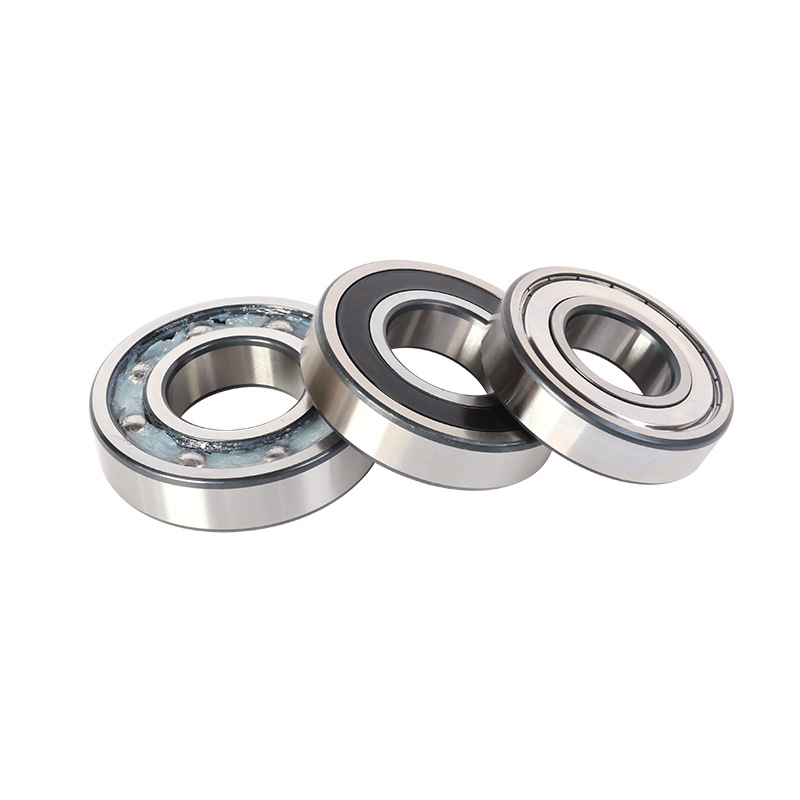
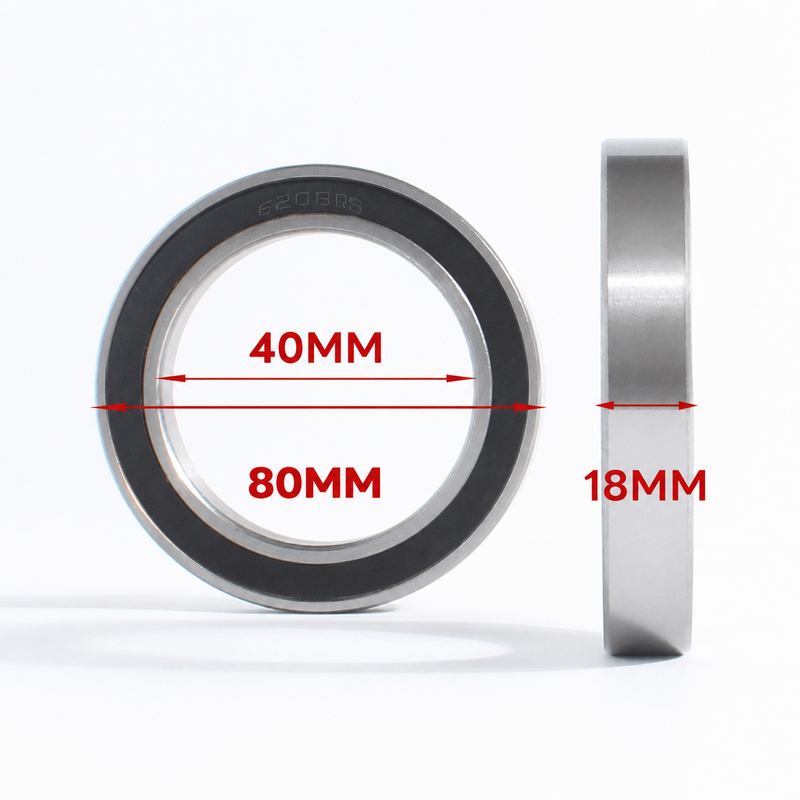
A 6208ZZ may fit in the same position as a 6208-2RS because standard versions usually have the same 40 × 80 × 18 mm boundary dimensions. However, I would not approve a bulk replacement from size alone. A 6208ZZ uses metal shields, while a 6208-2RS commonly uses rubber seals. The correct choice depends on dust, moisture, speed, grease, temperature and the protection provided by the complete assembly.
A bearing can fit the shaft and still be the wrong replacement.
What Does This 6208 Bearing Replacement Guide Cover?
This guide helps company buyers decide whether a 6208ZZ deserves testing as a substitute for a 6208-2RS.
It is written for:
- OEM and ODM purchasing teams
- Machinery and equipment manufacturers
- Bearing importers and distributors
- Roller and pulley manufacturers
- Sliding hardware companies
- Technical buyers
- Product development teams
This guide does not provide repair instructions. The buyer’s technical team should approve the final bearing inside the complete product.
Do 6208ZZ and 6208-2RS Have the Same Dimensions?
Standard 6208ZZ and 6208-2RS bearings normally share a 40 mm bore, 80 mm outside diameter and 18 mm width. Buyers must still check the selected manufacturer’s drawing.
The number 6208 identifies the basic bearing series and bore code. The suffix describes features such as shields or seals.
| Comparison point | 6208ZZ | 6208-2RS |
|---|---|---|
| Nominal bore | Usually 40 mm | Usually 40 mm |
| Nominal outside diameter | Usually 80 mm | Usually 80 mm |
| Nominal width | Usually 18 mm | Usually 18 mm |
| Closure | Metal shields on both sides | Rubber seals on both sides |
| Physical installation | May fit the same shaft and housing | May fit the same shaft and housing |
| Functional replacement | Requires application review | Requires application review |
NTN lists its 6208ZZ double-shielded bearing with dimensions of 40 × 80 × 18 mm. NTN also lists its double-sealed 6208LLU with the same boundary dimensions.
This confirms dimensional similarity for these NTN products. It does not approve every cross-brand replacement.
What Is the Difference Between ZZ Shields and 2RS Seals?
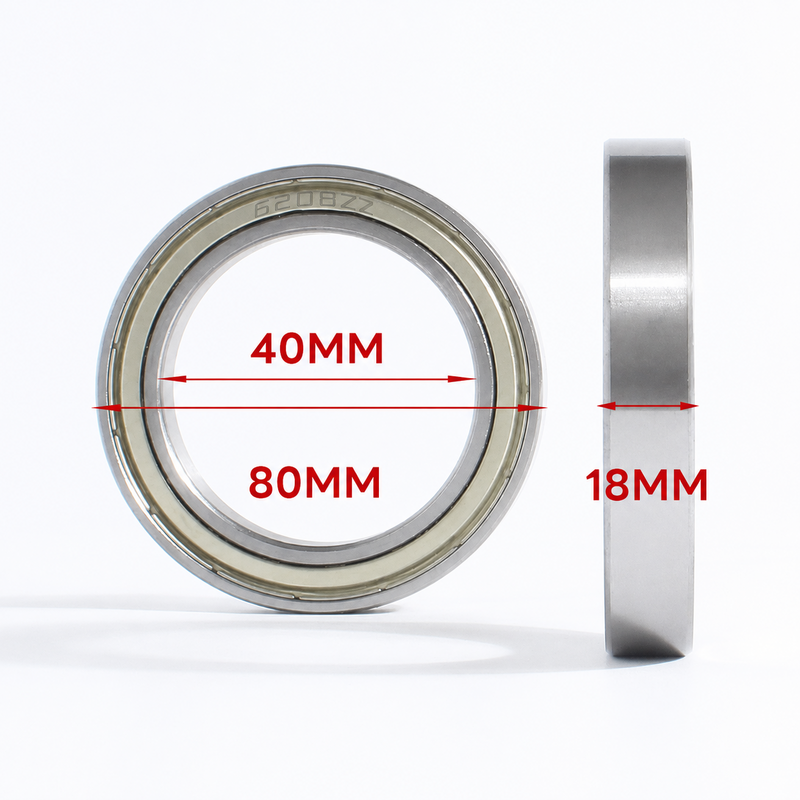
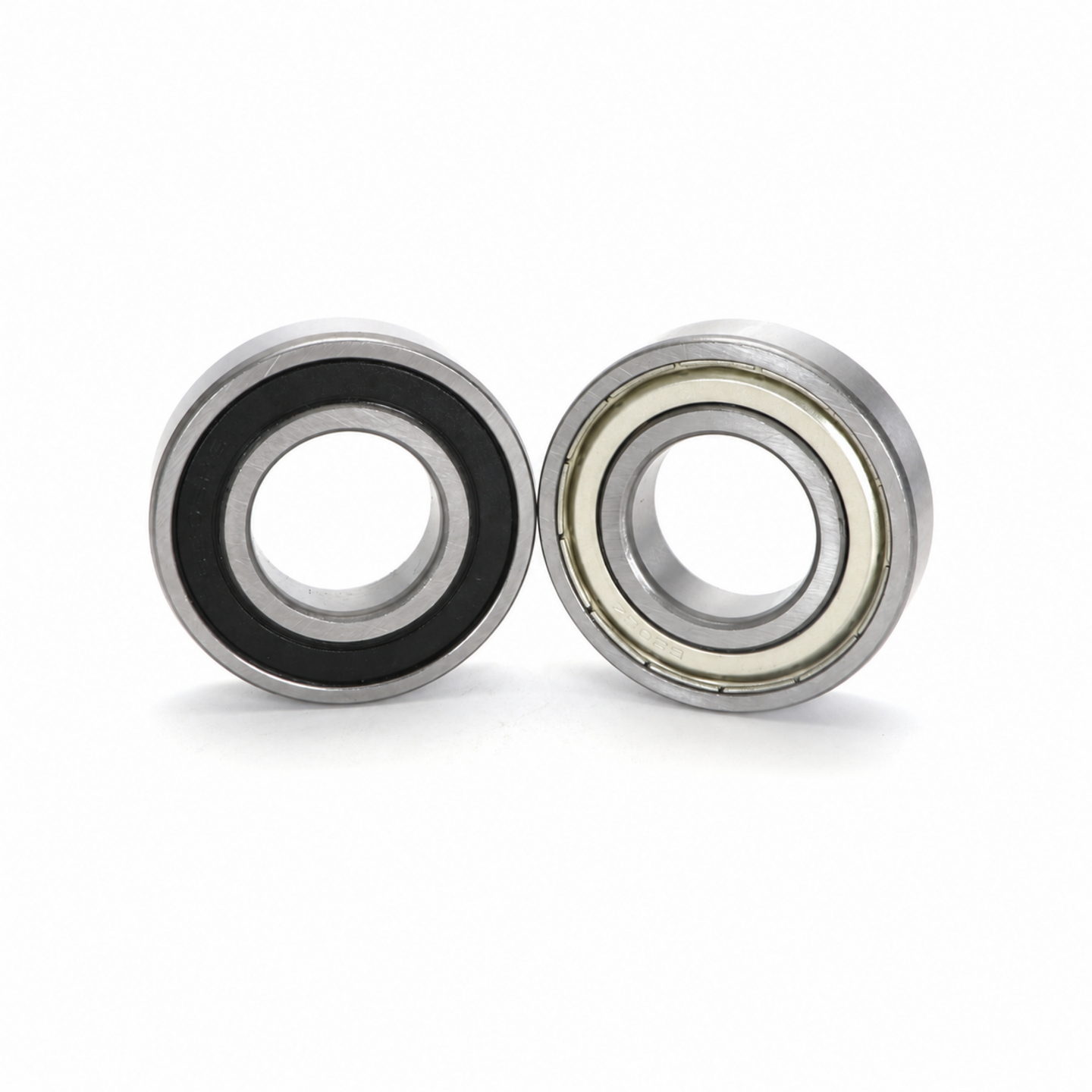
ZZ shields usually create less contact friction, while 2RS seals usually provide stronger protection against contamination and grease loss.
A metal shield normally has a small gap near the inner ring. It blocks larger particles but does not create a liquid-tight barrier.
A rubber seal commonly contacts or closely follows the inner ring. It usually provides better protection against fine dust and moisture. Contact can also increase running resistance.
| Buyer concern | 6208ZZ | 6208-2RS |
|---|---|---|
| Large dust particles | Provides basic protection | Provides stronger protection in many applications |
| Fine dust and fibres | More limited protection | Usually the safer option |
| Moisture and splashes | Requires external protection | Usually offers better protection |
| Grease retention | Suitable for many clean positions | Usually retains grease more effectively |
| Running friction | Commonly lower | Commonly higher with contact seals |
| Speed | May allow a higher catalogue speed | Seal contact may reduce the speed limit |
| Maintenance | Works best in a protected position | Often selected where access is limited |
A 2RS bearing is not waterproof. Cleaning fluid, pressure washing and full water exposure still need a separate review.
Suffix systems also vary. NSK uses ZZ for two shields, but it uses other codes for sealed bearings. Buyers should confirm the exact brand rather than assume that every supplier uses the same suffixes.
Which Working Conditions Suit Each Bearing?
A clean and protected position may suit 6208ZZ, while a dusty, wet or exposed position may need the stronger protection of 6208-2RS.
Before I suggest either bearing, I ask what can reach the bearing face.
| Working condition | First option to assess | What the buyer should confirm |
|---|---|---|
| Clean indoor machine | 6208ZZ | Speed, grease and housing protection |
| Enclosed motor position | 6208ZZ or 6208-2RS | Motor design and manufacturer data |
| Dusty production area | 6208-2RS | Dust type and external covers |
| Wood chips or fibres | 6208-2RS | Seal protection and cleaning method |
| Outdoor roller | 6208-2RS | Rain, drainage and shaft protection |
| Wash-down area | Application-specific sealed design | Fluid, pressure and seal compatibility |
| Higher-speed position | 6208ZZ may deserve review | Catalogue speed and temperature |
| Low-maintenance product | 6208-2RS may deserve review | Grease life and contamination |
| Very low starting resistance | 6208ZZ may deserve review | Protection must remain sufficient |
The table provides a starting point. It does not replace an installed sample test.
What Else Must Buyers Compare Before Replacement?
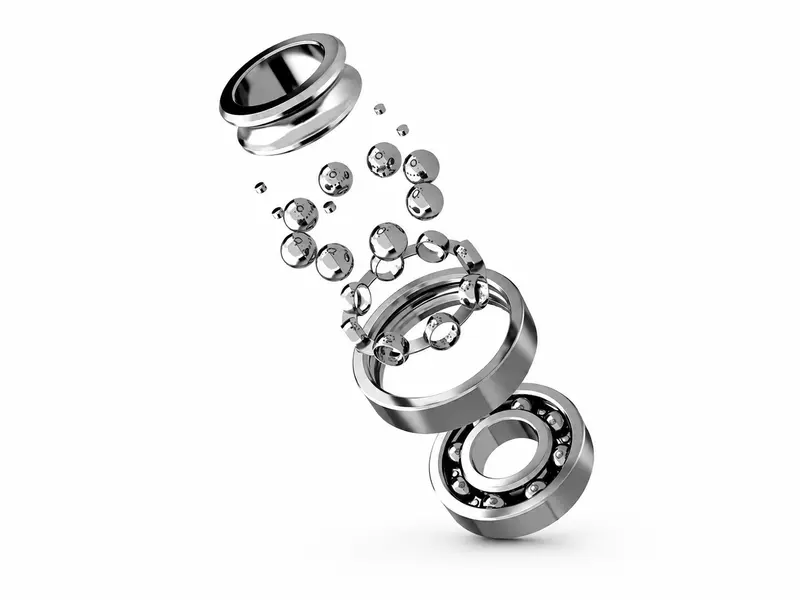
The suffix is only one part of the bearing specification.
I ask purchasing teams to compare the complete product codes and catalogue data.
| Specification | Why it matters |
|---|---|
| Manufacturer | Suffixes and product structures can differ |
| Internal clearance | Affects fitted clearance, heat and noise |
| Tolerance class | Affects dimensional and running accuracy |
| Seal or shield design | Controls protection and friction |
| Grease type | Must suit speed and temperature |
| Grease quantity | Can affect resistance and temperature |
| Load ratings | Must match the selected brand and version |
| Speed limit | Can differ between shields and contact seals |
| Cage design | May affect the application limit |
| Temperature range | Must suit grease and seal material |
| Noise requirement | Matters in motors and customer-facing equipment |
| Storage condition | Moisture and contamination can damage unused stock |
For example, NTN lists the same basic load ratings for its standard 6208ZZ and 6208LLU products, but the listed grease speed limits differ. This is one manufacturer’s product data. Buyers should not copy those values to another brand.
The safest comparison uses two current datasheets from the actual brands being purchased.
Can 6208ZZ Be Used for a Temporary Replacement?
A buyer may use 6208ZZ for a controlled fit check or sample test, but a short test does not approve a permanent batch change.
A temporary replacement may support:
- Shaft and housing fit checks
- Assembly trials
- Short sample runs
- Emergency use under controlled conditions
- Speed and noise comparisons
A long-term replacement needs more control.
| Decision | Temporary sample | Permanent batch replacement |
|---|---|---|
| Main purpose | Check fit or basic movement | Change the approved specification |
| Test period | Buyer-defined short trial | Application and endurance testing |
| Environment | May be controlled | Must represent real use |
| Documentation | Record the temporary code | Update drawing and purchase data |
| Customer approval | Depends on the product | May be required |
| Repeat orders | Not approved | Must use the signed specification |
A bearing that rotates smoothly for several minutes may still allow contamination to enter during long-term use.
What Changes Inside a Bearing Pulley or Sliding Roller?
A 6208 bearing inside a bearing pulley or sliding roller must work with the wheel, shaft and housing.
The wheel body may cover part of the bearing. It may also leave the bearing face exposed to water or dust.
When I review a roller assembly, I also check:
- Bearing fit inside the wheel
- Shaft diameter and tolerance
- Side exposure
- Seal damage during pressing
- Wheel concentricity
- Water paths around the shaft
- Drainage
- Installation alignment
- Whether the bearing can be replaced
A 6208-2RS bearing cannot correct a loose shaft or an open water path. A 6208ZZ cannot rely on the wheel body for protection unless the assembly really blocks contamination.
What Does a Real Replacement Enquiry Teach Buyers?
A common stock problem shows why availability should not decide the bearing specification.
A customer had available 6208ZZ stock, while the approved roller drawing required 6208-2RS. The dimensions matched, so the purchasing team wanted to use the shielded bearing to avoid a delivery delay.
I asked where the roller worked. The customer explained that the equipment operated indoors, but dust entered around the roller shaft. The bearing was also difficult to replace after assembly.
In this case, I did not confirm the bulk change from the bearing size. I suggested that the buyer first check:
- Why the original drawing specified 2RS
- How much dust reached the bearing
- Whether the wheel body protected both bearing faces
- Whether the grease specification matched
- How the installed samples would be tested
- Whether the end customer needed to approve the change
The available 6208ZZ could support an assembly test. It could not become the new production standard without application approval.
This case reflects a common purchasing risk:
Available stock can solve a short delivery problem, but the wrong closure can create a larger after-sales problem.
What Should Buyers Test Before a Bulk Change?
Buyers should test the bearing inside the actual product under representative working conditions.
| Test point | What to check |
|---|---|
| Dimensions | Bore, outside diameter and width |
| Shaft fit | Installation force and inner-ring fit |
| Housing fit | Outer-ring support and clearance |
| Free rotation | Roughness, tight points and noise |
| Installed rotation | Movement after pressing or assembly |
| Load | Buyer-defined radial and axial load |
| Speed | Normal and maximum operating speed |
| Temperature | Stabilised temperature during operation |
| Contamination | Dust, fibres, particles or moisture |
| Grease | Leakage, drag and compatibility |
| Noise | Empty and loaded running sound |
| Endurance | Buyer-defined operating period or cycles |
| Inspection | Condition after the test |
The buyer should set pass and fail limits before testing. Words such as “quiet”, “smooth” and “long life” need measurable acceptance rules.
What Can a Sliding Door Hardware Factory Check?
A sliding door hardware factory can review the bearing as part of a roller or pulley assembly, but the buyer must approve the final application.
I work with bearings, plastic-coated rollers, rubber-coated rollers, bearing pulleys, shafts and stamped sliding hardware at Zhejiang Huaneng Micro Bearing Co., Ltd.
From a production view, I can check:
- Bearing code and dimensions
- Shield or seal type
- Bearing fit inside the roller
- Shaft fit
- Wheel concentricity
- Basic rotation
- Assembly damage
- Drawing and sample consistency
- Repeat-order specifications
This experience helps me explain why two 6208 bearings with the same dimensions may serve different conditions.
You can review related sliding rollers with bearings or see how drawing confirmation works in our OEM and ODM process.
The equipment manufacturer should still define the load, speed, environment and acceptance test.
What Is the Final 6208 Replacement Checklist?
A B2B buyer should approve the bearing code, application conditions and test plan before changing the production specification.
Use this checklist:
- Record the full original bearing code.
- Record the proposed replacement code.
- Confirm both manufacturers.
- Compare the 40 × 80 × 18 mm dimensions.
- Compare internal clearance and tolerance.
- Confirm the exact shield and seal designs.
- Compare grease specifications.
- Compare load and speed data.
- Check dust, moisture and cleaning exposure.
- Review the shaft, housing, pulley or roller.
- Test the bearing inside the real assembly.
- Record noise and operating temperature.
- Complete the buyer’s endurance test.
- Update the drawing after approval.
- Control the new code across repeat orders.
Do not ask only:
Will the 6208ZZ fit?
Ask:
Can this exact 6208ZZ meet the protection, speed, grease and service requirements that led us to use the 6208-2RS?
That question gives the purchasing team a safer answer.