Do you already have a door track but cannot find the correct roller? Does an available wheel fit the track but place the door at the wrong height? Should you change the wheel material, shaft or bracket?
These are common questions in enquiries from door and window manufacturers, hardware importers and OEM purchasing teams.
Many buyers start with the wheel diameter. I normally start with the customer’s track.
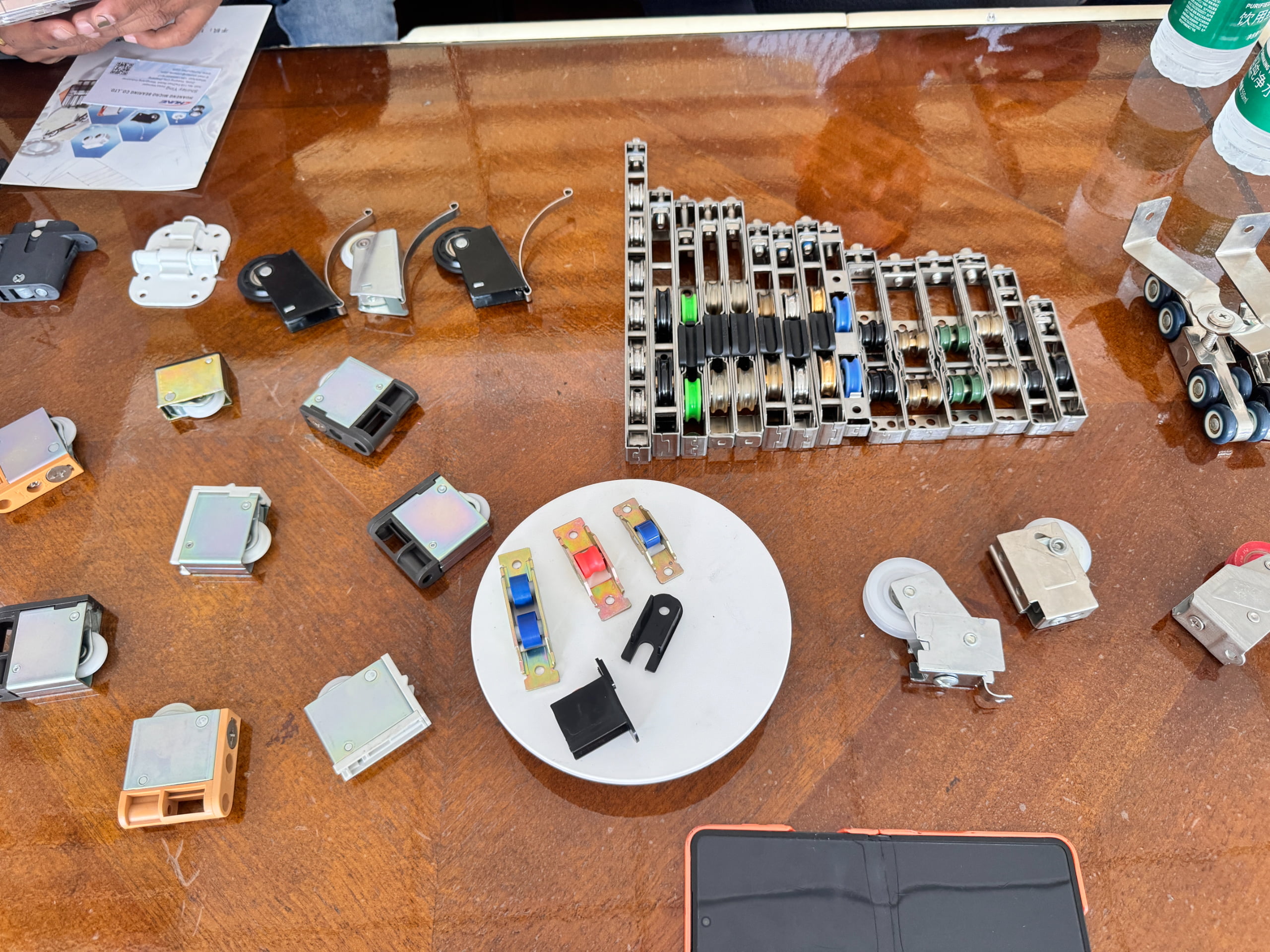
I choose sliding door tracks and rollers by checking the track cross-section, door structure, roller position, installation space, material, environment and purchasing plan. I then compare the requirement with our existing roller moulds. If no standard wheel fits, I assess machining, a custom shaft or bracket, or a new plastic-coated bearing roller.
The right roller must fit the track and the complete door structure. A matching diameter alone cannot confirm that.
What Does This Guide Cover?
This guide explains how B2B buyers can match or customise a roller for an existing sliding door track.
It is written for:
- Door and window manufacturers
- Aluminium door system companies
- Wardrobe and sliding door factories
- Glass door hardware buyers
- Hardware importers and distributors
- OEM and ODM purchasing teams
- Companies replacing an existing roller supplier
This guide does not provide domestic installation or repair instructions.
What Should Buyers Provide Before Roller Selection?
Buyers should provide the track cross-section, door information, installation space and expected order quantity.
A short track sample often gives me more useful information than a front-view roller photo.
| Information | What to provide | Why I need it |
|---|---|---|
| Track | Drawing, cross-section or physical sample | Confirms the running surface and available space |
| Existing roller | Drawing, photos or old sample | Shows the current structure |
| Door | Material, dimensions and weight | Defines the basic application |
| Roller position | Upper, lower, guide or load-bearing | Confirms the roller’s function |
| Installation | Profile, bracket and available space | Controls wheel and shaft dimensions |
| Environment | Indoor, outdoor, wet, coastal or dusty | Guides material and bearing selection |
| Performance | Noise, adjustment and usage frequency | Sets the sample target |
| Purchasing | Sample, first order and annual demand | Guides the production route |
I also ask whether the customer wants to keep the existing track. If the track cannot change, the roller must work within its fixed limits.
If no drawing is available, buyers can send:
- A short track sample
- The old roller
- The bracket or aluminium profile
- Installation photos
- A movement video
- Manual dimensions
- A description of the current problem
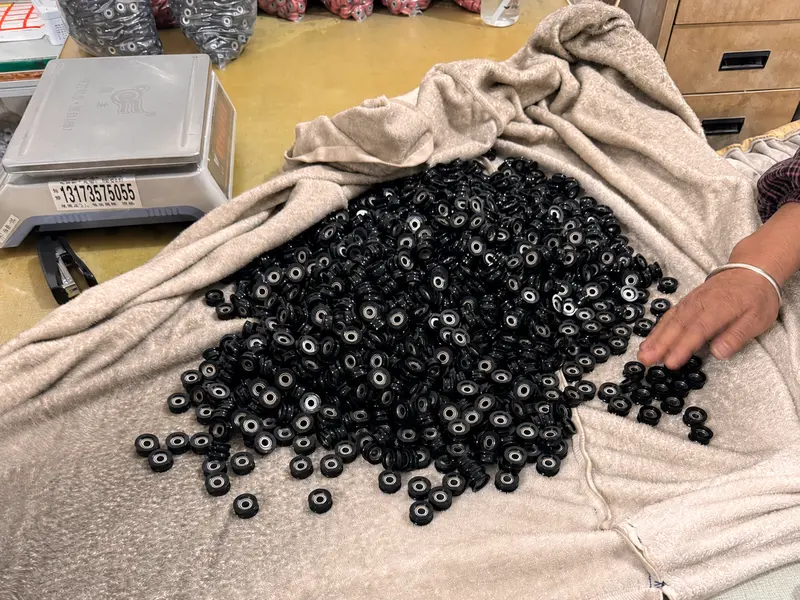
How Does a Sliding Door Hardware Factory Read a Track?
I use the track to identify the running surface, available wheel space and required installation height.
I do not need to copy every track dimension. I first identify the dimensions that control the roller.
| Track detail | What I check | Possible purchasing risk |
|---|---|---|
| Internal width | Space for the wheel and bracket | Wheel or bracket rubs against the profile |
| Running surface | Flat, rounded, U-shaped or angled | Incorrect contact and local wear |
| Track depth | Position of the wheel inside the profile | Door sits too high or too low |
| Opening width | Maximum wheel and shaft size | Roller cannot enter the profile |
| Track wall | Material and support near the contact area | Track may deform under load |
| Fixing structure | Top-hung, bottom-running or side guide | Wrong load direction |
| Wear marks | Contact position on the old track | Current roller may be misaligned |
| Joint and end position | Gaps and stopping points | Impact or interrupted movement |
The wheel can rotate freely on a workbench and still fail inside the profile. The bracket may touch the track wall. The shaft may sit too high. The wheel may contact only one edge.
This is why I prefer to check the roller, shaft, bracket and track together.
Which Sliding Roller Material Fits Each Track?
The roller material should suit the track surface, environment, sound target and finished door price.
I do not select the wheel material from door weight alone.
| Track or application | Roller material to assess | Points to confirm |
|---|---|---|
| Aluminium track | POM, PA, POK or PU-coated roller | Noise, wear and track surface condition |
| Galvanised steel track | Plastic-coated bearing or metal wheel | Contact noise, finish and corrosion |
| Stainless steel track | POM, POK, PU or stainless wheel | Moisture, cost and track wear |
| Painted steel track | Plastic or rubber-coated roller | Coating damage and colour consistency |
| Wet-area door | Plastic roller with sealed bearing or stainless parts | Water path, bearing seal and metal grade |
| Heavy commercial door | POK, metal or reinforced roller structure | Impact, bearing, shaft and bracket |
| Quiet interior door | POM, PU or rubber-coated roller | Hardness, deformation and rolling resistance |
How Do Common Roller Materials Differ?
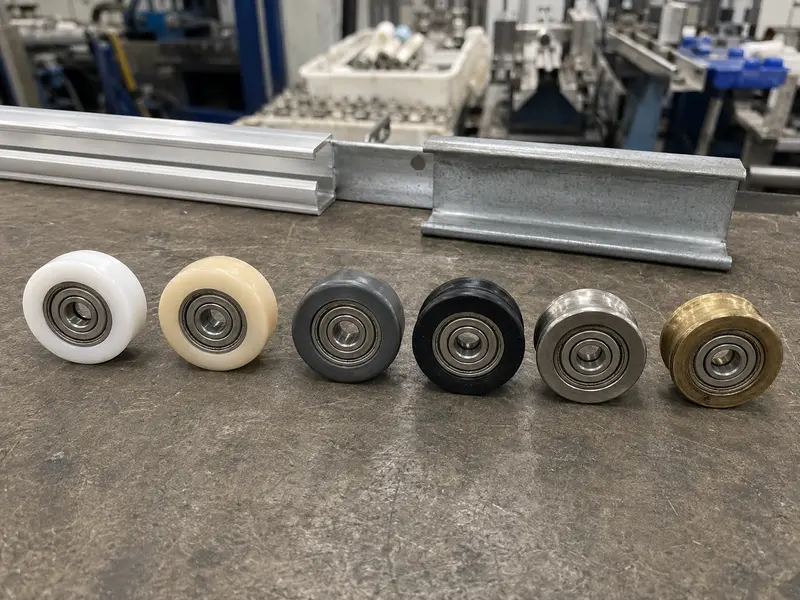
- POM suits many standard door and window rollers. Buyers should confirm the grade, wall thickness and use temperature.
- PA or nylon can suit many sliding systems. Moisture, temperature and the material formulation can affect the finished wheel.
- POK can suit projects that need wear and impact performance. Buyers should also review cost and supply consistency.
- PPSU suits selected projects with specific material or temperature requirements. Many normal interior doors do not need it.
- PU or rubber coating can reduce hard contact noise. Buyers should confirm hardness, deformation and bonding.
- Steel, stainless steel and brass can suit selected track systems. Buyers should review noise, corrosion and track wear.
A material name is not a complete production specification. Colour, additives, recycled content and moulding control can change the finished roller.
How Do Different Door Applications Change the Choice?
Each door system gives the track and roller a different job.
| Door application | Main purchasing priority | Likely custom points |
|---|---|---|
| Wardrobe sliding door | Quiet movement, compact size and cost | Plastic material, shaft and height adjustment |
| Aluminium sliding door | Profile fit and repeat dimensions | Wheel width, bracket and installation height |
| Glass sliding door | Stable support and corrosion control | Bracket, finish and bearing seal |
| Interior partition | Low noise and appearance | PU coating, hidden fitting or guide roller |
| Commercial sliding door | Frequent operation and service access | Bearing, shaft and spare-part control |
| Heavy sliding door | Load distribution and bracket support | Double bearings, metal parts and thicker bracket |
| Wet or coastal door | Corrosion and bearing protection | Stainless parts and sealed bearings |
A bearing pulley may carry the door weight. Another sliding roller may only control direction. Buyers should mark these functions on the drawing.
I also ask where the finished product will be sold. A quiet wardrobe door and a commercial service door may use different rollers even if their track dimensions look similar.
Can an Existing Roller Mould Fit the Project?
An existing mould may reduce tooling cost if the wheel, bearing and installation limits fit the track.
I compare a new track with our accumulated roller moulds before I suggest new tooling.
| Project condition | Production route | What the buyer should confirm |
|---|---|---|
| Existing wheel fits | Use the current mould | Track contact and installed height |
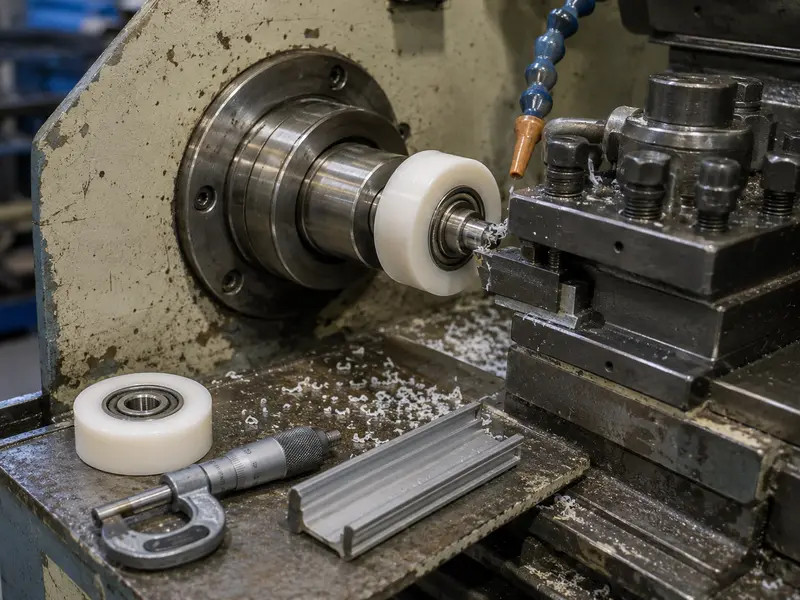
| Existing wheel is slightly large | Machine the diameter or width | Remaining wall thickness |
| Groove or running surface is close | Use secondary machining | Surface and dimensional tolerance |
| Wheel fits but installation differs | Customise the shaft or bracket | Fixing position and adjustment |
| No existing wheel fits | Develop a new plastic-coated bearing roller | Tooling and repeat demand |
| Track is also required | Coordinate with an external track factory | One approved track-and-roller sample |
Machining can solve a small difference. It cannot correct every wheel structure. Removing too much plastic may reduce wall thickness or expose the bearing.
A new mould becomes more practical when the project has stable repeat demand or a unique track profile.
What Does a Track-Matching Case Teach Buyers?
A track-matching enquiry shows why wheel diameter cannot define the complete replacement.
In one project, a customer sent us a track sample and an old roller. The customer wanted a stable replacement for repeat orders.
We found an existing wheel with a close outside diameter. However, the complete assembly did not match the old part. The shaft and metal fittings placed the wheel at a different height inside the track.
I reviewed three routes with the customer:
- Use the existing plastic-coated bearing and customise the shaft and metal fittings.
- Machine the wheel if the remaining plastic thickness stayed acceptable.
- Develop a new wheel if the existing structure could not meet the track limits.
The track sample helped us identify the contact position and available space. Without the track, we might have produced a roller that looked similar but placed the door at the wrong height.
The useful result was a clear sample route. The customer could compare cost, tooling and repeatability before approving bulk production.
The buyer did not need a new door system. The buyer needed a roller assembly that worked with the existing track.
This is a common pattern in door and window projects. The old roller shows what was used. The track shows what the new roller must fit.
What Can Our Factory Produce and Coordinate?
Our main production covers rollers, bearings, shafts, brackets and related stamped hardware.
At Zhejiang Huaneng Micro Bearing Co., Ltd., our work includes:
- Plastic coating around bearings
- Rubber coating around rollers
- Bearing assembly
- Custom roller machining
- Shaft and pin processing
- Metal bracket stamping
- Covers, washers and related fittings
- Sample comparison
- Installed track testing based on buyer requirements
We do not produce every track inside our own factory. If a customer needs the track as part of the package, we can coordinate production with an external track factory. We then use the same approved roller and track samples for project control.
This arrangement matters because the track and roller suppliers must work from the same cross-section and tolerance requirements.
For related structures, buyers can review our sliding rollers with bearings and OEM and ODM process.
What Should Buyers Test Before Bulk Production?
Buyers should test the roller inside the real track and door structure.
| Test point | What to check |
|---|---|
| Installation | Does the roller fit the profile and bracket space? |
| Contact | Does the wheel remain centred on the running surface? |
| Door height | Does the roller place the door at the correct level? |
| Clearance | Does the wheel, shaft or bracket touch the profile? |
| Adjustment | Can the hardware correct normal installation differences? |
| Movement | Does the door travel through the complete track? |
| Noise | Is the sound acceptable under load? |
| Load | Does the installed system pass the buyer’s required load? |
| Wear | Do the track and roller show local contact damage? |
| Environment | Do the bearing seal and metal finish suit real use? |
| Repeatability | Does production match the signed sample and drawing? |
Bearing load calculations cannot approve the finished door system by themselves. ISO 281 covers rolling-bearing load ratings and rating-life calculations, but it does not cover failures caused by wear or corrosion. The roller body, shaft, bracket, track and installation can still limit performance.
For wet or coastal projects, the buyer should also define the corrosion test and acceptance limit. ISO 9227:2022 defines salt-spray test procedures, but it does not set the exposure period or pass criteria for a specific door product.
I can inspect roller dimensions, bearing fit, concentricity, shafts and stamped parts. The door manufacturer should approve the complete system under its own load and operating conditions.
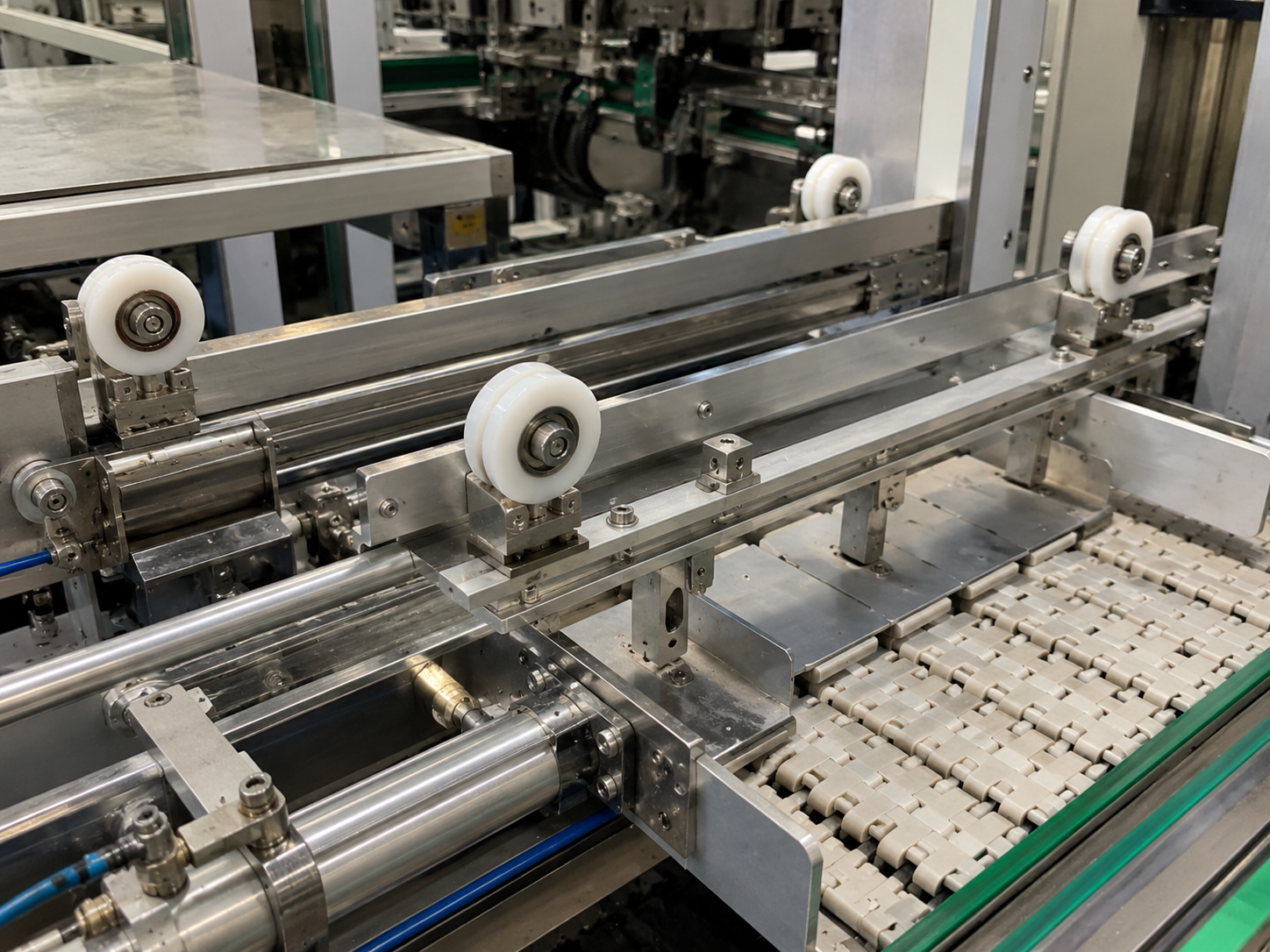
What Should a B2B Enquiry Include?
A useful enquiry should define the track, door, roller position and order plan.
| Information group | Details to provide |
|---|---|
| Application | Wardrobe, aluminium, glass, commercial or heavy sliding door |
| Track | Drawing, cross-section, material or physical sample |
| Existing roller | Drawing, photos or old sample |
| Door | Material, dimensions and weight |
| Roller position | Load-bearing, guide, upper or lower roller |
| Installation | Available width, height and fixing method |
| Material | Current material or required performance |
| Environment | Indoor, outdoor, wet, coastal, dust and temperature |
| Performance | Noise, adjustment and usage frequency |
| Quantity | Samples, first order and annual demand |
| Custom parts | Shaft, bracket, cover, fastener or track |
| Quality | Test and change-control requirements |
| Packaging | Bulk, private label, barcode or spare-part identification |
Send the track sample and old roller together if possible. If this is not practical, send the track cross-section and several installed photos.
For V-track gate systems, buyers can also read our guide to sliding gate wheels and V-track rollers.
What Is the Final Selection Checklist?
A B2B buyer should approve the track, roller and mounting structure as one controlled system.
Use this order:
- Define the door application.
- Confirm which roller carries the load.
- Provide the track cross-section or sample.
- Record the installation space.
- Confirm the door weight and dimensions.
- Select the wheel and track material combination.
- Confirm the bearing, shaft and bracket.
- Compare an existing mould, machining and new tooling.
- Produce a controlled sample.
- Test the roller inside the actual track.
- Approve noise, movement, load and wear.
- Sign the drawing and physical sample.
- Record approved materials and suppliers.
- Control changes across repeat orders.
Do not ask only:
Which roller fits this track?
Ask:
Which roller, bearing, shaft and bracket can work with this track and remain consistent in bulk production?
That question gives purchasing teams a more useful answer.