Does your shaft measure smaller than the bearing bore? Does a current bearing pulley fit the roller body but not the customer’s shaft? Should you add a sleeve, change the bearing or redesign the complete sliding roller?
I receive these questions during drawing checks, sample reviews and OEM discussions. A buyer may send a shaft diameter and a bearing number, then ask how to assemble them. Those two details do not confirm a working fit.
Direct answer: If the shaft is smaller than the bearing bore, a controlled sleeve or bushing may fill the difference. If the shaft is larger than the bearing bore, the normal options are to select another bearing, machine the shaft or change the roller structure. Do not treat force fitting as a diameter-conversion method. The final choice must match the required fit, tolerance, concentricity, load, speed, noise level, axial retention and production volume.
For B2B purchasing, the main question is:
Which part should change—the shaft, bearing, sleeve, housing or complete roller assembly?
This guide helps window and door manufacturers, shower door hardware companies, industrial equipment makers, importers and OEM product teams answer that question before quotation and sampling. It covers product matching and production control. It does not replace the buyer’s bearing engineer or application test.
What Does This Bearing Shaft Diameter Mismatch Guide Cover?
This guide covers five common mismatch cases, the main correction routes, the data that suppliers need and the checks that buyers should complete before bulk production.
What Does a Bearing Shaft Diameter Mismatch Mean?
A bearing shaft diameter mismatch means that the actual shaft size and the required bearing bore fit do not create the approved clearance, transition or interference condition.
A catalogue may show a 10 mm bearing bore and a drawing may show a 10 mm shaft. That does not mean the parts will always fit correctly. Each part has a tolerance range. The final fit comes from the limits of both parts, not from the two nominal numbers alone.
The complete connection may also include:
- A shaft seat
- A shaft shoulder
- A sleeve or bushing
- A spacer
- A nut, circlip or retaining feature
- One or two bearing inner rings
- A roller body or pulley hub
- A bracket or housing
A loose inner ring can creep, create noise or wear the shaft seat. Excessive interference can reduce bearing internal clearance and increase assembly risk. The approved fit therefore depends on the bearing type and the working conditions.
NSK’s official guide explains that shaft tolerance ranges move from looser to tighter fits and that internal clearance affects vibration, noise, heat and bearing life.
Which Shaft and Bearing Mismatch Does Your Project Have?
Buyers should identify the mismatch type before they ask a supplier to propose a part. Each case leads to a different production route.
| Mismatch case | What it means | Usual routes to assess | Main purchasing risk |
|---|---|---|---|
| Shaft is smaller than bearing bore | The shaft has clearance inside the inner ring | Sleeve, bushing, different bearing or new shaft | Looseness, runout and sleeve movement |
| Shaft is larger than bearing bore | The bearing cannot pass over the shaft seat | Different bearing, machined shaft or new structure | Ring damage from forced assembly |
| Shaft has steps or shoulders | The bearing seat differs from nearby shaft sections | Check seat length, shoulder height and axial retention | Bearing cannot seat or locate correctly |
| Metric and inch sizes differ | Nominal values look close but are not equal | Correct standard size, approved conversion sleeve or new shaft | Wrong sample caused by unit conversion |
| Old roller needs replacement | The original specification may be missing | Measure a sample and confirm the application | Copying wear instead of the original design |
| New OEM product uses an existing shaft | The buyer wants to retain a current shaft | Rematch bearing, hub and roller structure | Local fix creates a weak complete assembly |
Do not group these cases under one request such as “make the bearing fit”. State the exact case in the enquiry.
What Should Buyers Check Before Changing Any Part?
Buyers should check actual dimensions, tolerances, load, motion, retention and production volume before they select a sleeve, bearing or new shaft.
I start with the shaft drawing and bearing data. I then check how the bearing sits inside the roller or pulley. A calliper reading can support an early review, but a production drawing needs defined limits and measuring points.
| Check | Information to confirm | Why it matters |
|---|---|---|
| Shaft diameter | Nominal size, upper limit and lower limit | Defines the shaft seat range |
| Bearing bore | Bearing designation and bore tolerance | Defines the mating range |
| Seat length | Full contact length on the shaft | Confirms ring support and space |
| Shaft geometry | Roundness, taper and runout requirement | Affects rotation and concentricity |
| Shaft shoulder | Diameter, height, radius and face position | Controls seating and axial location |
| Retention | Nut, circlip, shoulder, collar or press fit | Prevents axial movement |
| Load | Radial, axial, combined, impact and distribution | Guides bearing and fit selection |
| Motion | Speed, travel, starts, stops and daily cycles | Guides heat, wear and noise review |
| Environment | Water, dust, salt, chemicals and temperature | Guides seals, materials and finish |
| Programme | Sample quantity, first order and annual demand | Guides standard or modified production |
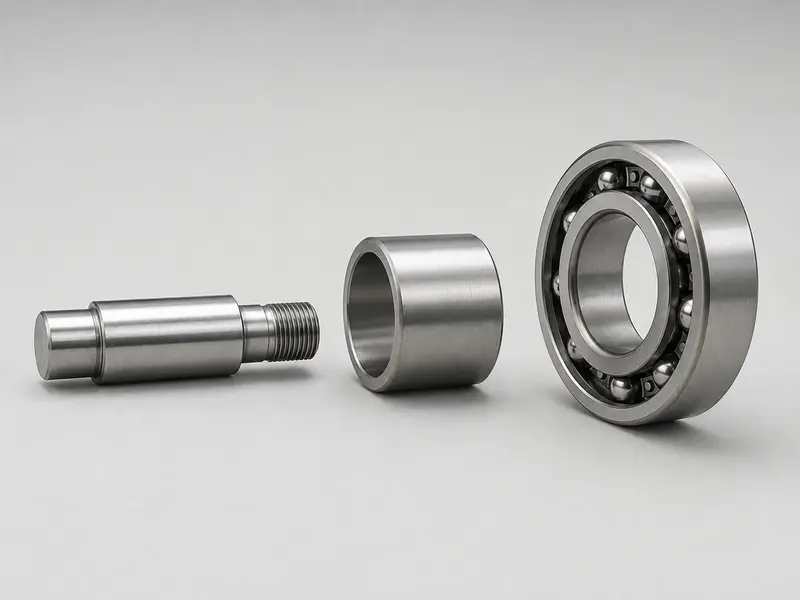
How Do You Fit a Bearing When the Shaft Is Smaller Than the Bore?
A smaller shaft may use a purpose-made sleeve or bushing if the approved design controls the fit on both interfaces and locates the bearing correctly.
The sleeve creates two interfaces:
- The shaft-to-sleeve fit
- The sleeve-to-bearing fit
Both interfaces need tolerances. The sleeve also needs a controlled wall thickness, length, material, roundness and retention method. A thin ring with an unspecified bore and outside diameter is not a production specification.
A sleeve can suit a low-speed roller, a replacement programme or a new OEM assembly. The buyer still needs to confirm whether the sleeve remains centred and fixed under the required load and duty cycle.
The other option is a bearing with a smaller bore. This route can remove one component, but the new bearing must still fit the roller body, support the load and remain available for repeat orders.
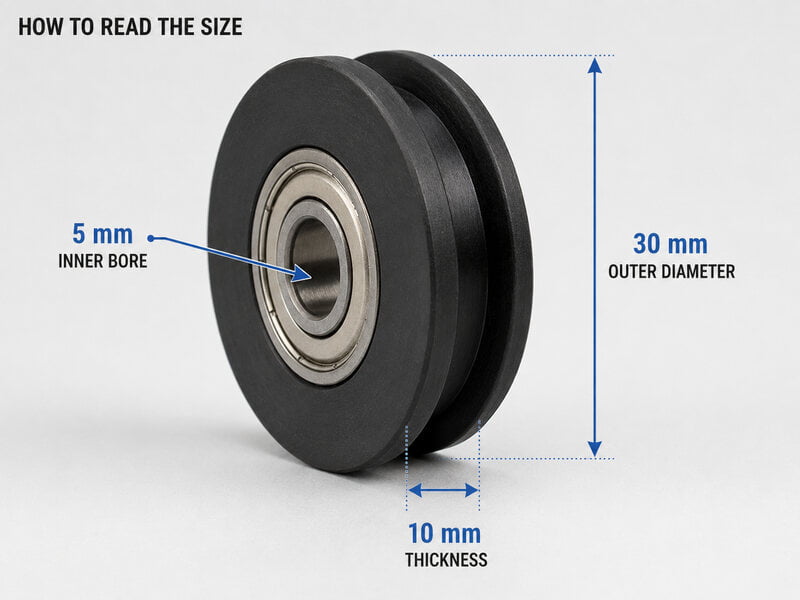
Can a Sleeve or Bushing Make a Smaller Shaft Work?
Yes, a sleeve or bushing can make a smaller shaft work, but the buyer must approve its geometry, material, retention and effect on the complete assembly.
| Sleeve decision point | Question for the buyer and supplier | Risk if omitted |
|---|---|---|
| Inside diameter | What fit must the sleeve have on the shaft? | Sleeve rotates or cannot assemble |
| Outside diameter | What fit must the bearing have on the sleeve? | Inner ring creeps or loses clearance |
| Wall thickness | Can production hold a consistent wall around the full sleeve? | Eccentric running |
| Length | Does the sleeve support the full bearing seat? | Edge loading or unstable location |
| Material | Does the material suit load, wear and corrosion conditions? | Deformation, wear or corrosion |
| Retention | What stops axial or rotational movement? | Sleeve shifts during use |
| Surface | What finish and geometry does the fit require? | Poor contact and runout |
| Assembly | Which ring receives the mounting force? | Damage to raceways or seals |
| Supply | Is the sleeve controlled by a drawing and inspection plan? | Batch variation |
Do not confuse a simple cylindrical conversion sleeve with a standard adapter sleeve for a tapered-bore bearing. Those parts have different structures and mounting rules. Confirm the exact bearing type before using either term in a request.
How Do You Fit a Bearing When the Shaft Is Larger Than the Bore?
A bearing with a smaller bore should not be forced over a larger shaft. Buyers should select a larger-bore bearing, reduce the approved shaft seat or redesign the bearing pulley.
Forced assembly does not solve the mismatch. It can damage the inner ring, seals, cage, rolling elements or shaft surface. It can also remove too much internal clearance.
The practical options are:
| Option | Best reason to assess it | Points to confirm |
|---|---|---|
| Select a larger-bore bearing | A standard bearing fits the shaft and available space | Outside diameter, width, capacity and supply |
| Machine the shaft seat | The shaft has enough material and can be reprocessed | Strength, tolerance, finish and corrosion protection |
| Use another shaft | A standard shaft can support repeat production | Bracket, retention and assembly changes |
| Change the roller hub | A different bearing can fit inside a revised roller | Wall thickness, mould, machining and concentricity |
| Redesign the assembly | Several interfaces already need changes | Tooling, validation, cost and lead time |
Schaeffler states that mounting forces for a non-separable bearing must act on the ring with the tight fit. It also warns against direct hammer blows on bearing rings.

How Does a Stepped Shaft or Shoulder Affect the Bearing Fit?
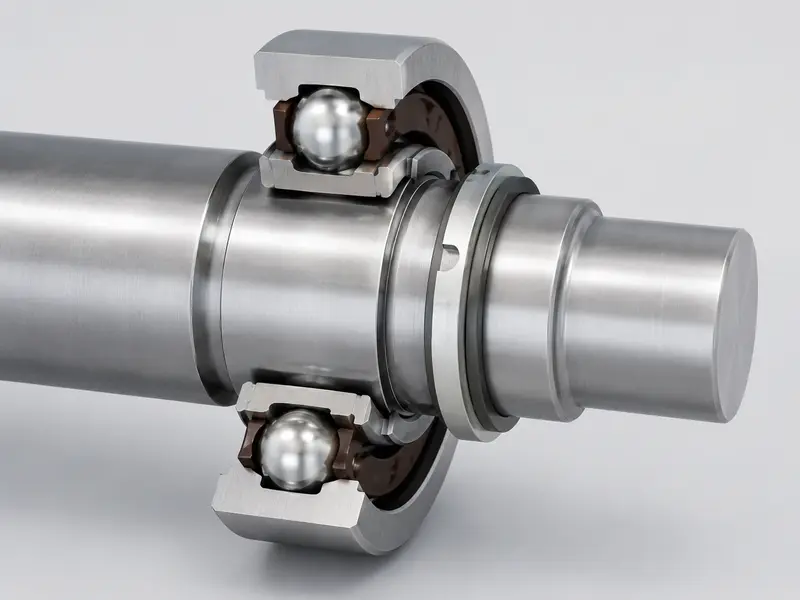
A stepped shaft can locate a bearing, but the bearing seat, shoulder face, corner radius and retention feature must work together.
The bearing bore must pass over every shaft section before it reaches its seat. The inner ring must then sit against the approved shoulder or spacer. A shoulder that is too high can touch a seal or cage. An unsuitable corner radius can stop the ring face from seating fully.
The drawing should identify:
- Entry diameter
- Bearing seat diameter and tolerance
- Seat length
- Shoulder diameter
- Shoulder face position
- Corner radius or relief
- Thread, circlip groove or nut position
- Required axial clearance
Schaeffler’s deep-groove ball bearing guidance lists shoulders, covers, nuts, spacer rings and retaining rings as common ways to locate bearing rings axially.
Can Buyers Mix Metric and Inch Bearing Sizes?
Buyers can use metric and inch components in one approved design, but they should not treat close decimal values as equal sizes.
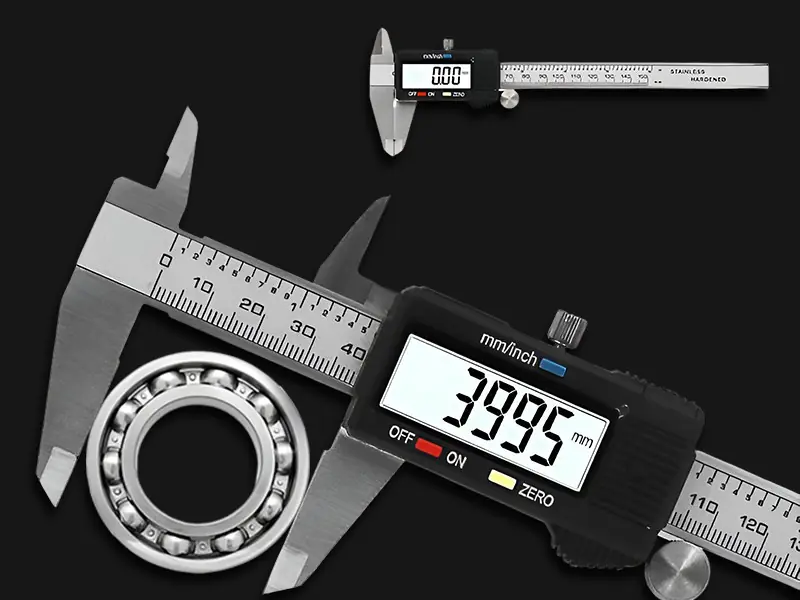
A 12 mm size and a 1/2 inch size differ. A quick conversion or rounded calliper reading can hide the gap. The same risk applies to 8 mm and 5/16 inch, or other near matches.
For a replacement project, record the source unit first. Check the bearing marking, drawing, shaft and roller sample. Do not convert the number and round it to the nearest catalogue bore.
For mass production, choose one controlled drawing system. The drawing can show reference conversions, but it should define one master unit and one set of tolerances.
| Unit check | Buyer action |
|---|---|
| Bearing marking is clear | Confirm the manufacturer’s dimensions |
| Marking is missing | Measure and compare with standard series |
| Shaft drawing uses inches | Keep inch limits as the master unless the design changes |
| Supplier drawing uses millimetres | State the conversion method and rounding rule |
| Existing sample is worn | Measure several points and confirm the original requirement |
Should You Change the Shaft, Bearing, Sleeve or Roller Structure?
Buyers should change the part that gives an approved fit with the lowest total production and supply risk. The cheapest individual part may not give the lowest project cost.
| Project condition | First route to assess | Why |
|---|---|---|
| A standard bearing matches the load and roller space | Change the bearing | Keeps bearing supply simple |
| The current shaft is standard across many products | Retain the shaft and review the bearing or hub | Avoids changes across other assemblies |
| A small shaft gap can be controlled | Review a drawn sleeve or bushing | May retain current bearing and shaft |
| The shaft is larger than the bore | Review a larger-bore bearing or shaft machining | Avoids forced assembly |
| The shoulder or retention is wrong | Change the shaft or add an approved locating part | Corrects axial location |
| The roller body cannot accept another standard bearing | Review the complete roller structure | Keeps wall thickness and bearing support under control |
| Annual demand is low | Prefer a standard part if testing approves it | Reduces tooling and stock risk |
| Annual demand is stable | Compare modified parts with dedicated tooling | May improve repeatability |
I compare the complete bill of materials before I recommend a production route. A sleeve adds material, machining, inspection and assembly. A different bearing may change the roller mould or hub. A new shaft may change the bracket. The decision must include every affected part.
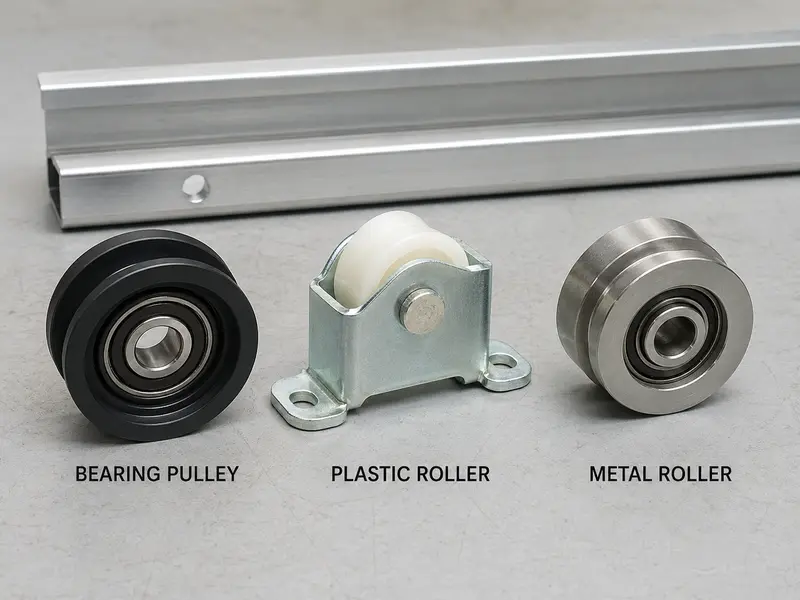
How Do Tolerance and Concentricity Affect a Bearing Pulley?
Tolerance controls the bearing fit, while concentricity controls how the bearing pulley rotates around the shaft centre. Both points affect noise, wobble and wear.
A nominal shaft diameter cannot define either point. The drawing should set acceptable dimensional limits and geometry requirements. The supplier should also define the reference surface and measuring method.
NSK shows that fit selection depends on the load condition and uses different shaft tolerance zones from loose to tight. Its guide also links internal clearance with noise, vibration and heat. This supports a clear purchasing rule: do not copy a shaft tolerance from another product without checking the bearing and load case.
For a bearing pulley, I review these relationships:
- Shaft seat to bearing bore
- Bearing outside diameter to pulley hub
- Pulley running surface to bearing centre
- Shaft shoulder to bearing face
- Bearing position to bracket centreline
- Sleeve inside diameter to sleeve outside diameter
Poor control at one interface can appear as pulley wobble at the outside diameter. The buyer may blame the bearing even when the sleeve, hub or shaft creates the runout.
How Do Load, Speed and Noise Affect the Fit Decision?
Load, speed and noise targets change the required bearing, fit, clearance, material and assembly control.
| Application input | Why the supplier needs it | Possible effect on the proposal |
|---|---|---|
| Radial load | The roller often carries load across the bearing | Bearing size, count and shaft support |
| Axial load | Side forces may act on the assembly | Bearing type and axial retention |
| Impact load | Stops, joints and misuse can create peaks | Fit, shaft and roller body review |
| Speed | Speed affects heat and bearing behaviour | Bearing, seal, grease and fit review |
| Daily cycles | Repeated movement affects wear targets | Sample test and material choice |
| Noise limit | Clearance, runout, material and track affect sound | Tighter control and application testing |
| Temperature | Parts can expand by different amounts | Fit and internal clearance review |
| Contamination | Dust and water affect bearing and shaft surfaces | Seal, finish and protection review |
Do not ask a supplier to confirm service life from shaft diameter alone. The buyer’s technical team should define the test load, speed, cycle count, environment and acceptance limit.
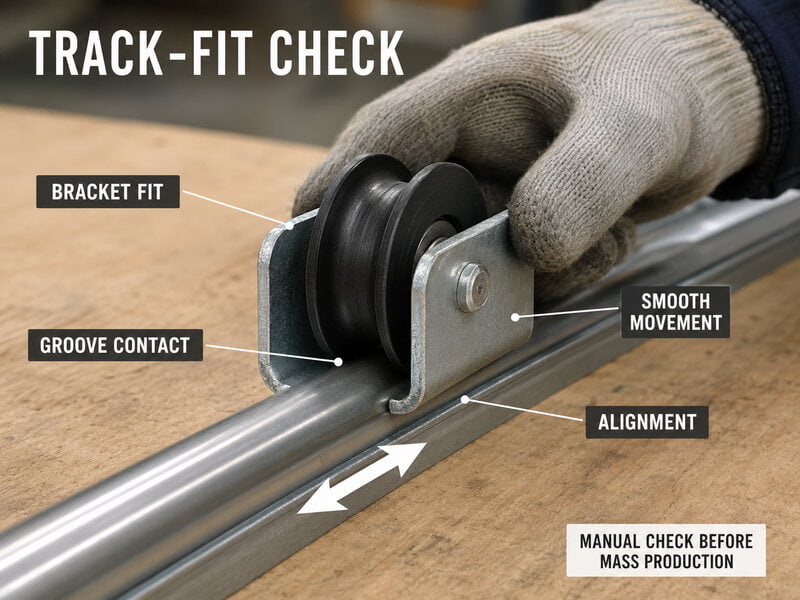
How Does a Shaft Mismatch Affect a Sliding Roller?
A shaft mismatch can change the position and movement of the complete sliding roller, even if the loose bearing appears to rotate normally.
A sliding roller often combines a bearing, plastic or rubber outer layer, metal hub, shaft, spacer and bracket. The bearing bore is only one interface inside that chain.
If a sleeve moves, the roller can develop clearance. If the bearing sits off-centre, the rolling surface can wobble. If the shaft shoulder holds the inner ring at the wrong position, the roller can touch the bracket. If an oversized shaft removes internal clearance, the bearing may run poorly after assembly.
| Symptom | Possible fit-related cause | Inspection point |
|---|---|---|
| Roller wobble | Sleeve wall variation, shaft runout or off-centre hub | Complete assembly runout |
| Repeated noise | Loose fit, poor bearing condition or hard contact | Shaft, bearing, roller and track |
| High starting force | Excessive fit, seal contact or bracket friction | Rotation after full assembly |
| Axial movement | Missing shoulder, spacer or retainer | Shaft location and end clearance |
| Shaft wear | Inner ring or sleeve creep | Contact surface and retention |
| Batch variation | Uncontrolled tolerances or changed material | Drawing, inspection records and samples |

How Does a Sliding Door Hardware Factory Review the Mismatch?
A sliding door hardware factory should review the shaft, bearing, roller body, bracket and application as one assembly before it confirms a sample.
I often receive enquiries that include a shaft diameter and a bearing model but no tolerance, shoulder drawing or load information. I can find parts with matching nominal sizes, but I cannot confirm a production fit from those two values.
I normally ask for:
- The shaft drawing or physical sample
- The bearing designation and approved supplier level
- The roller or pulley drawing
- The bracket and axial retention structure
- The load direction and operating conditions
- The noise and movement requirements
- The sample, first-order and annual quantities
Our production view includes bearing assembly, injection-moulded rollers, plastic or rubber coating and hardware processing. This helps me see whether a small diameter change affects the moulded hub, shaft machining or bracket space.
The buyer’s qualified team should still approve the final fit, load and application performance.
When Can Standard Parts Reduce Cost and Supply Risk?
Standard bearings and shafts can reduce tooling, lead time and repeat-order risk if they meet the approved application. Custom parts make sense when standard combinations cannot meet the full specification.
| Supply route | Good fit for | Main benefit | Main point to control |
|---|---|---|---|
| Standard bearing and standard shaft | New products with flexible space | Broad supply and simple replacement | Confirm the complete assembly |
| Standard bearing with machined shaft | Existing bearing and adjustable shaft | Keeps bearing sourcing stable | Shaft strength, finish and tolerance |
| Standard bearing with custom sleeve | Existing shaft and controlled size gap | Retains two current components | Adds two fits and one component |
| Different standard bearing with revised hub | Roller body can change | Avoids a special bearing | Mould or machining change |
| Custom shaft and standard bearing | Shaft is unique but bearing supply matters | Keeps the wear part standard | Shaft drawing and repeatability |
| Complete OEM sliding roller | Several interfaces need revision | Controls the assembly as one product | Tooling, testing and change control |
Standard does not mean automatically suitable. Custom does not mean automatically better. Buyers should compare total part count, testing, tooling, minimum order quantity, lead time and long-term availability.
What Should Buyers Send to a Sliding Door Hardware Factory?
Buyers should send a controlled set of product, application, quality and commercial data before requesting a bearing pulley or sliding roller quotation.
| Information group | Details to send | Why it improves the quotation |
|---|---|---|
| Application | Sliding door, shower door, industrial door, equipment or transport system | Defines the operating context |
| Shaft | Diameter limits, seat length, shoulder, material and finish | Defines the inner-ring interface |
| Bearing | Model, bore, outside diameter, width, seal and quantity | Defines the bearing structure |
| Roller | Outside diameter, width, groove, hub and outer material | Defines space and running contact |
| Housing or bracket | Drawing, thickness, mounting and clearance | Confirms assembly position |
| Load | Direction, expected value and distribution | Supports fit and bearing review |
| Movement | Speed, travel and cycles | Supports noise and wear review |
| Environment | Water, dust, salt, chemicals and temperature | Supports seal and material review |
| Quality | Critical dimensions, report format and sample criteria | Creates an approval basis |
| Quantity | Samples, first order and annual demand | Guides the production route |
| Packaging | Neutral or private label, barcode and protection | Defines supply content |
| Commercial | Target date, delivery term and quotation currency | Supports a comparable offer |
Send native drawings or clear PDF drawings where possible. Mark critical dimensions. If no drawing exists, send photos from several angles and a physical sample. Tell the supplier which surfaces are worn, because a used sample may not show the original size.
What Should Buyers Test Before Bulk Production?
Buyers should test the bearing, shaft, sleeve, roller and bracket as a complete assembly before bulk approval.
Our factory can check production-related items such as dimensions, visible condition, bearing position, basic rotation, runout and packaging. The buyer should define and complete the application test.
| Test area | Approval question |
|---|---|
| Dimensional fit | Do the shaft, sleeve and bearing match the signed drawing? |
| Assembly | Can the approved process mount the bearing without damage? |
| Axial location | Do the shoulder and retainer hold the bearing in position? |
| Rotation | Does the complete roller rotate without binding or bracket contact? |
| Runout | Does the pulley or roller meet the buyer’s approved limit? |
| Load | Does the assembly pass the buyer’s defined load test? |
| Noise | Does the installed product meet the agreed sound requirement? |
| Endurance | Does the sample pass the defined speed, travel and cycle count? |
| Environment | Do the material, seal and finish suit real exposure? |
| Repeat supply | Do pilot parts match the approved sample and drawing? |
Schaeffler recommends a functional check after mounting. This is important for a roller assembly because a bearing can feel acceptable before the bracket, spacer and axial fastener are added.
How Should Buyers Assess a Bearing Pulley Supplier?
Buyers should assess a supplier by drawing review, bearing control, shaft processing, roller production, assembly control, inspection and change management.
| Supplier area | Question to ask | Why it matters |
|---|---|---|
| Drawing review | Does the supplier check tolerances and mating parts? | Reduces incompatible samples |
| Bearing sourcing | Can the supplier control the approved model and closure? | Protects repeat orders |
| Shaft processing | Can the supplier hold the seat and shoulder requirements? | Controls fit and location |
| Sleeve production | Can the supplier control both diameters and wall variation? | Controls concentricity |
| Roller production | Can the supplier control the bearing hub and running surface? | Controls wobble and contact |
| Assembly | Does the process apply force to the correct bearing ring? | Reduces mounting damage |
| Inspection | Which dimensions and functions appear on the report? | Creates clear acceptance data |
| Traceability | Can the supplier identify material and production batches? | Supports problem review |
| Change control | Must the buyer approve a bearing, material or process change? | Protects the signed specification |
| Packaging | Does the pack protect shafts, seals and running surfaces? | Reduces transport damage |
A low unit price cannot correct a poor fit. Compare quotations against the same drawing, bearing specification, inspection level and packaging scope.
What Should an OEM Quotation Include?
An OEM quotation should state the complete product structure, specification, tooling, sampling, inspection, packaging, price basis and delivery terms.
| Quotation item | Required detail |
|---|---|
| Product scope | Bearing only, shaft, sleeve, bearing pulley, sliding roller or full bracket assembly |
| Drawing | Revision number and controlled dimensions |
| Bearing | Manufacturer level, designation, closure, grease and quantity |
| Shaft | Material, tolerance, finish, shoulder and retention |
| Sleeve | Material, inside diameter, outside diameter, length and tolerance |
| Roller | Material, diameter, width, groove and colour |
| Tooling | Existing mould, secondary processing or new tool |
| Samples | Quantity, charge, lead time and approval method |
| Quality | Inspection items, report and agreed sample |
| Packaging | Unit protection, labels, cartons and marks |
| Quantity | Minimum order, price breaks and annual forecast |
| Terms | Currency, trade term, payment and delivery date |
| Change control | Buyer approval before specified changes |
The quotation should also state which party owns the application test and final design approval. This keeps manufacturing checks separate from system engineering responsibility.
What Is the Final B2B Decision Checklist?
A B2B buyer should resolve a bearing shaft diameter mismatch through a controlled design and sample process.
Use this order:
- Identify whether the shaft is smaller, larger, stepped or based on another unit system.
- Record the actual shaft and bearing dimensions.
- Confirm tolerance limits instead of nominal sizes alone.
- Define load direction, speed, cycles, noise and environment.
- Check the shaft shoulder and axial retention.
- Compare a different standard bearing with the current bearing.
- Review a sleeve only if both interfaces can be controlled.
- Review shaft machining only if the approved design permits it.
- Check the effect on the pulley hub, roller body and bracket.
- Compare standard, modified and OEM supply routes.
- Produce parts from a controlled drawing.
- Test the complete assembly in the real application.
- Sign the sample, specification and inspection plan.
- Control material and process changes for repeat orders.
Do not ask only:
How can we push this bearing onto this shaft?
Ask:
Which bearing, shaft, sleeve and roller structure can meet our approved fit and remain consistent in production?
That question prevents more purchasing and sampling errors.
Do You Need a Bearing Pulley or Sliding Roller Review?
Send us the shaft drawing, bearing model, roller structure, bracket information, application conditions and order plan. We will first check whether a standard bearing or existing roller structure can match the requirement.
If the current parts do not match, we can review:
- Another standard bearing size
- A controlled sleeve or bushing
- A revised shaft or shoulder
- A different bearing arrangement
- An adjusted injection-moulded roller hub
- A plastic-coated or rubber-coated wheel
- A custom bearing pulley
- A complete sliding roller assembly
Our review covers manufacturing feasibility, dimensions, material options, sampling and bulk consistency. Your qualified product team should approve the final fit, load and application performance.
View Sliding Rollers with Bearing