Are you paying for a stainless steel bearing that your application does not need? Is a supplier quoting “carbon steel” without stating whether it is ordinary carbon steel or high-carbon steel? Does a food-processing application always require a 304 stainless steel bearing?
I often discuss these questions with buyers of bearing pulleys, sliding rollers and door and window hardware.
Many enquiries start with a short request:
Please quote carbon steel, bearing steel and stainless steel options.
That request does not give me enough information to recommend a material.
I first ask:
- Where will the bearing work?
- Will water or salt reach it?
- Does the bearing contact food?
- Is the bearing hidden inside a sealed housing?
- How often will the roller move?
- Does the buyer prioritise wear life, corrosion resistance or cost?
- Which material applies to the bearing, shaft, bracket and external wheel?
The practical answer is:
High-carbon steel bearings can suit cost-controlled applications under normal conditions. Bearing steel bearings usually provide a better balance of hardness, wear control and stable rotation. Stainless steel bearings suit applications with a real moisture or corrosion risk, but the buyer must confirm whether the project needs 420, 440C, 304, 316 or another grade.
No material is best for every bearing pulley or sliding roller.
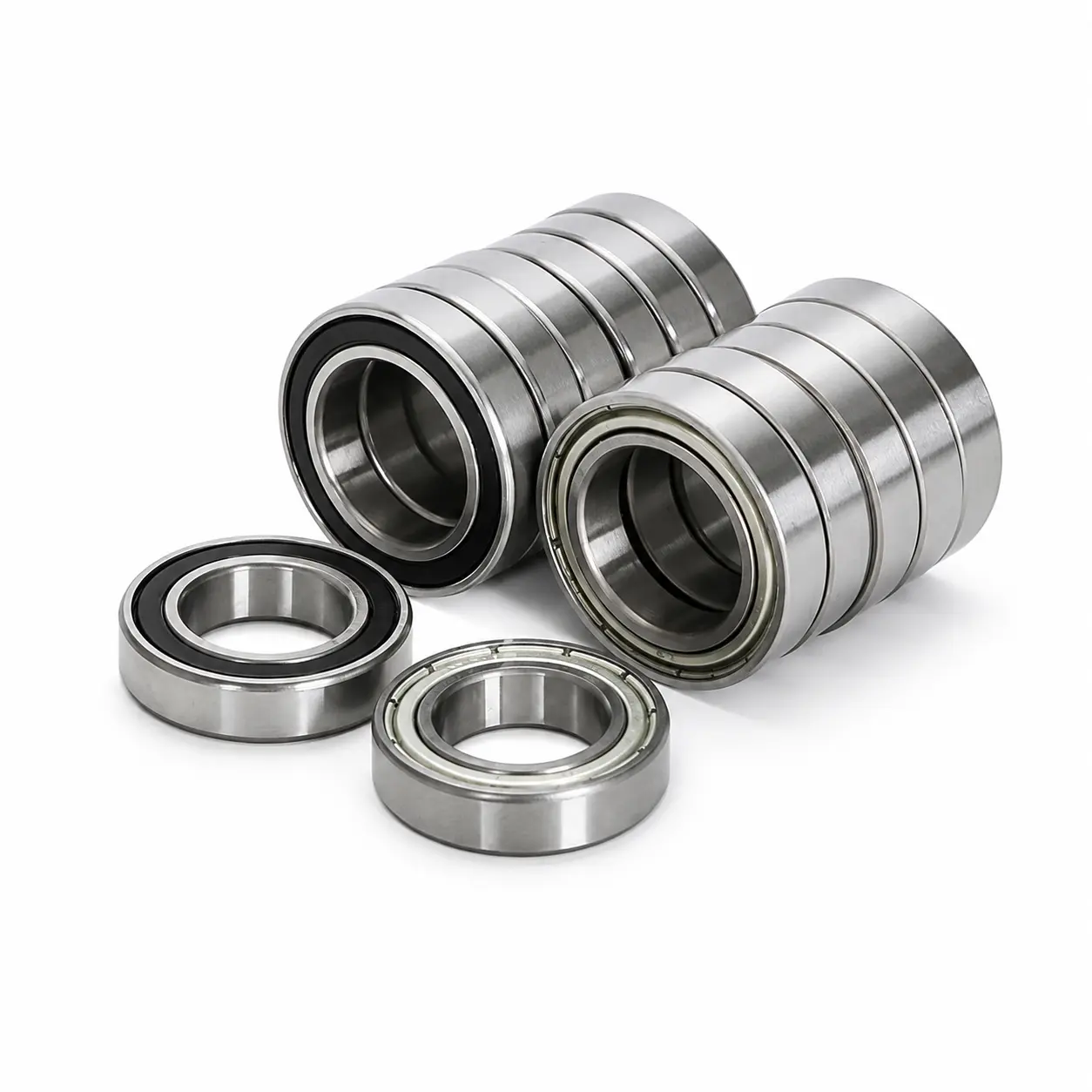
What Does This Bearing Material Guide Cover?
This guide explains how B2B buyers can compare carbon steel, bearing steel and stainless steel bearings for sliding rollers, bearing pulleys and OEM hardware assemblies.
What Is the Short Answer About Bearing Materials?
High-carbon steel controls cost. Bearing steel supports hardness and rolling contact. Stainless steel reduces corrosion risk when the correct stainless grade is selected.
The material name does not confirm the finished bearing quality.
A buyer must also confirm:
- Steel grade
- Steel cleanliness
- Heat treatment
- Ring and ball hardness
- Raceway grinding
- Dimensional accuracy
- Internal clearance
- Seal or shield
- Grease
- Shaft fit
- Operating environment
- Supplier change control
| Material family | Main purchasing reason | Main limitation |
|---|---|---|
| High-carbon steel | Lower cost for normal working conditions | Lower corrosion and wear control than a suitable bearing steel |
| Bearing steel | Stable hardness, wear control and rolling contact | Can rust if water reaches unprotected steel |
| Stainless steel | Better corrosion resistance in wet applications | Higher cost and grade-dependent hardness |
| 304 stainless steel | Corrosion resistance for housings, shafts and exposed hardware | Usually not the first choice for hardened bearing raceways |
| 440C stainless steel | Combines hardenability with useful corrosion resistance | Does not equal the corrosion resistance of every austenitic stainless grade |
This is a purchasing comparison. The final material must pass the buyer’s application test.
Why Is Carbon Steel Not One Single Bearing Material?
Carbon steel includes low-carbon, medium-carbon and high-carbon grades. These materials do not provide the same hardness, wear behaviour or production cost.
Some suppliers write only “carbon steel bearing” on a quotation. This description creates uncertainty.
Ordinary low-carbon steel suits many brackets, housings and stamped parts. It is easy to form and process, but it does not normally provide the hardened rolling contact required for bearing rings and balls.
Medium-carbon steel can suit shafts, pins and parts that need higher strength after an approved heat-treatment process.
High-carbon steel contains more carbon and can achieve greater hardness after heat treatment. This makes it more suitable for cost-controlled bearing rings, balls and wear-sensitive parts.
| Carbon steel category | Common roller use | Buyer concern |
|---|---|---|
| Low-carbon steel | Stamped brackets, covers and housings | Requires surface treatment for corrosion control |
| Medium-carbon steel | Shafts, pins and machined hardware | Heat treatment and distortion need control |
| High-carbon steel | Cost-controlled bearing rings and balls | Steel grade, hardness and raceway finish need confirmation |
A buyer should ask:
Is the quoted carbon steel an ordinary structural steel or a high-carbon steel used for the bearing rings and balls?
That question gives a clearer quotation basis.
Why Does Our Factory Use High-Carbon Steel Instead of Ordinary Carbon Steel?
Our cost-controlled carbon steel bearings use high-carbon steel because ordinary low-carbon steel does not provide the hardness that bearing raceways and rolling elements require.
In our enquiries, the phrase “carbon steel bearing” normally refers to an economical bearing structure. It does not mean that we use the same soft carbon steel found in a basic stamped bracket.
We use high-carbon steel for this bearing option.
The material provides a more practical combination of:
- Heat-treatment response
- Raceway hardness
- Ball hardness
- Wear control
- Standard production
- Competitive unit cost
We still separate high-carbon steel bearings from standard bearing steel bearings.
A bearing steel grade such as GCr15 includes chromium and requires tighter control of composition, cleanliness, heat treatment and bearing production. A high-carbon steel bearing can reduce cost, but it should not be sold as GCr15 or SAE 52100 if it does not meet that material specification.
| Factory bearing option | Material position | Typical purchasing priority |
|---|---|---|
| High-carbon steel bearing | Cost-controlled bearing option | Price and normal working conditions |
| GCr15 bearing steel bearing | Standard bearing-grade option | Wear, rotation and repeat production |
| Stainless steel bearing | Corrosion-resistant option | Water, humidity and exposed installations |
I normally recommend high-carbon steel when the application has:
- A moderate operating requirement
- A dry or protected environment
- Low or medium movement frequency
- A controlled target cost
- No special corrosion requirement
- A buyer-approved sample test
I do not recommend it only because it is cheaper. The complete roller must still meet the buyer’s load and movement requirements.
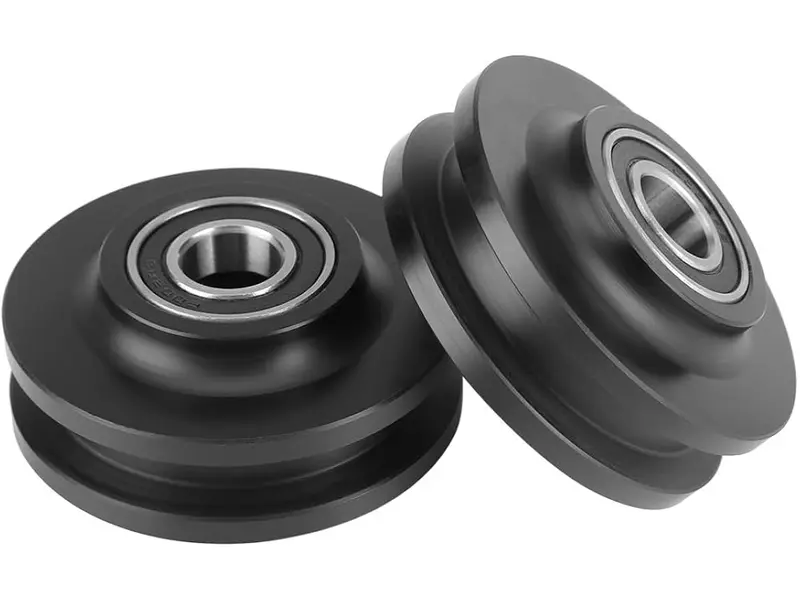
How Do Bearing Steel Grades Differ?
Bearing steel grades differ by national standard, chemical composition, cleanliness, heat treatment and production control. The words “bearing steel” do not define one universal grade.
The most common bearing steel in our standard roller enquiries is GCr15.
Other markets may use these descriptions:
- SAE or AISI 52100
- DIN or EN 100Cr6
- JIS SUJ2
- GCr15 under a Chinese material standard
These grades belong to the same high-carbon chromium bearing steel family. Buyers often use them as cross-references. However, they come from different standards.
A purchase order should state:
- The required material grade
- The governing standard
- The bearing model
- The ring and ball requirements
- The heat-treatment requirement
- The inspection or certificate requirement
ASTM describes GCr15 and 52100 as high-carbon bearing steels and highlights the importance of steel cleanliness and inclusion control in rolling contact. Buyers can review the ASTM material reference for GCr15 and 52100 bearing steel.
What Makes Bearing Steel Different in Real Purchasing?
From my supplier-review perspective, the important differences are not limited to the grade name.
| Production point | Why it matters |
|---|---|
| Steel cleanliness | Inclusions can affect rolling-contact performance |
| Heat treatment | Incorrect treatment can cause low hardness, cracking or distortion |
| Raceway grinding | Surface quality affects noise and rotation |
| Ball or roller accuracy | Variation can increase vibration |
| Internal clearance | Incorrect clearance can cause looseness or tight rotation |
| Grease | Grease affects starting force and environmental suitability |
| Seal | A seal affects contamination control and grease retention |
| Assembly | Pressing force can damage an approved bearing |
Two suppliers can both quote GCr15 bearings and still provide different finished quality.
How Do GCr15, SAE 52100, 100Cr6 and SUJ2 Compare?
GCr15, SAE 52100, 100Cr6 and SUJ2 are commonly compared as high-carbon chromium bearing steels, but buyers should not remove the governing standard from the specification.
| Market or standard system | Common grade | Practical purchasing note |
|---|---|---|
| China | GCr15 | Common bearing steel for standard bearing production |
| United States | SAE/AISI 52100 | Common high-carbon chromium bearing steel reference |
| Europe | 100Cr6 or 1.3505 | Common European bearing steel designation |
| Japan | SUJ2 | Common JIS bearing steel designation |
The table does not mean that a buyer should accept any of these names without review.
I still confirm:
- Which standard appears on the drawing
- Whether the customer accepts a cross-reference
- Whether a material certificate is required
- Whether the bearing supplier will remain fixed
- Whether the project has special cleanliness or testing requirements
For a normal door or window bearing pulley, the buyer may approve a standard GCr15 bearing after sample testing. An industrial or regulated project may need a more detailed material and inspection specification.
How Do 420, 440C and 304 Stainless Steel Bearings Differ?
420 and 440C are hardenable stainless steels that can suit bearing-related parts. Grade 304 provides good corrosion resistance for many exposed hardware parts, but it does not provide the same hardened rolling-contact properties as 440C.
The words “stainless steel bearing” are still incomplete.
A supplier may mean:
- Stainless steel rings with stainless steel balls
- Stainless steel rings with ceramic balls
- A standard bearing inside a stainless housing
- A 304 stainless shaft and bracket
- A 440C stainless bearing
- A bearing with only stainless shields
The buyer should confirm each component.
How Does 420 Stainless Steel Fit Bearing Applications?
Grade 420 belongs to the martensitic stainless steel family. It can be hardened and can suit some bearing rings, balls, shafts and wear parts.
In practical purchasing, 420 may provide:
- A lower-cost stainless route
- Better corrosion resistance than standard bearing steel
- Useful hardness after correct heat treatment
- A workable option for some normal wet applications
Its final performance depends on the exact grade, heat treatment and bearing construction.
How Does 440C Stainless Steel Fit Bearing Applications?
Grade 440C contains more carbon and chromium than many basic stainless options. It is widely used where bearing components need both hardness and corrosion resistance.
Carpenter Technology describes 440C stainless steel as a high-carbon chromium steel used primarily as a bearing steel in its hardened and tempered condition.
In our bearing enquiries, 440C usually enters the discussion when the buyer needs:
- Stainless bearing rings
- Stainless balls
- Better rolling-contact hardness than 304 can provide
- Moisture resistance
- A bearing for washdown, outdoor or humid equipment
- A controlled stainless bearing specification
440C still requires protection in severe salt, chemical or submerged conditions. “Stainless” does not mean that corrosion cannot occur.
How Does 304 Stainless Steel Fit a Roller Assembly?
Grade 304 is common in:
- Brackets
- Housings
- Shafts
- Pins
- Covers
- Fasteners
- Visible door and window hardware
- Food-equipment frames
Grade 304 provides useful corrosion resistance and production availability. However, it is an austenitic stainless steel and does not harden in the same way as 420 or 440C.
For this reason, a product sold as a “304 stainless steel bearing” needs careful review. The housing or shaft may be 304 while the bearing rings and balls use another material.
| Stainless grade | Main value in a roller project | Common limitation |
|---|---|---|
| 420 | Cost-controlled hardenable stainless option | Corrosion and hardness depend on treatment |
| 440C | Bearing hardness plus useful corrosion resistance | Higher cost and limited resistance in severe salt exposure |
| 304 | Exposed brackets, housings and shafts | Usually not the first choice for hardened raceways |
| 316 or 316L | Exposed hardware in stronger chloride environments | Lower rolling-contact hardness than 440C |
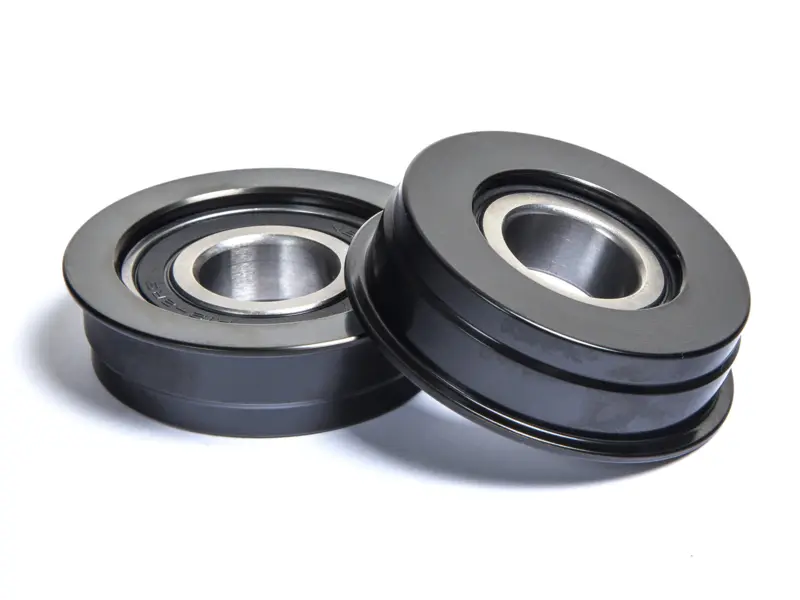
How Do the Three Main Bearing Materials Compare?
High-carbon steel, bearing steel and stainless steel solve different purchasing problems. A buyer should compare them by application risk rather than price alone.
| Selection point | High-carbon steel | GCr15 bearing steel | Stainless steel bearing |
|---|---|---|---|
| Main reason to assess | Lower unit cost | Wear and stable rolling contact | Corrosion control |
| Common buyer priority | Cost-controlled production | Standard or frequent movement | Wet, humid or exposed use |
| Relative hardness potential | Higher than ordinary low-carbon steel | Suitable for standard bearing production | Depends on 420, 440C or another grade |
| Corrosion resistance | Low without protection | Low without protection | Better with a suitable grade |
| Standard availability | Good for economical bearings | Very good for common bearings | Depends on model and grade |
| Typical roller use | Basic bearing pulleys and guide rollers | Door, window and industrial bearing pulleys | Shower, outdoor and wet-area rollers |
| Main purchasing risk | Supplier does not identify the steel | Buyer compares grade name without checking finished quality | Buyer pays for stainless without confirming grade or need |
| Relative cost | Usually lowest | Standard middle route | Usually highest |
I use this table as a first filter. I do not use it as a universal bearing-life chart.
How Should the Operating Environment Affect Material Selection?
The environment often decides whether bearing steel provides enough value or whether the buyer needs a stainless bearing and stainless exposed parts.
“Indoor”, “outdoor” and “food equipment” are broad descriptions. I need more detail.
| Operating environment | Initial material route | Further points to confirm |
|---|---|---|
| Dry indoor furniture hardware | High-carbon steel or bearing steel | Load, noise and cost |
| Sliding door or window | Bearing steel bearing with suitable seals | Humidity, usage frequency and external wheel |
| Shower door | Stainless bearing or protected bearing structure | Water, cleaning chemicals and shaft material |
| Outdoor sheltered roller | Bearing steel or stainless option | Rain access, drainage and maintenance |
| Coastal building | Stainless bearing review | Salt spray, fasteners, shaft and bracket |
| Offshore equipment | 440C or a special corrosion-resistant bearing review | Salt, immersion, seals and grease |
| Food-processing equipment without food contact | Sealed bearing steel may be sufficient | Washdown and hygiene-zone requirements |
| Direct food-contact equipment | Approved stainless or special material system | Applicable hygiene and compliance rules |
| Chemical equipment | Project-specific material | Chemical type, concentration and temperature |
| High-frequency industrial roller | Bearing steel or another approved bearing grade | Load, speed, grease and heat |
The environment can also change the seal and grease requirement.
A stainless bearing with an unsuitable seal may still fail after water and contamination enter the raceway.
What Did We Recommend for an Offshore Bearing Application?
For an offshore enquiry with salt-spray exposure, we reviewed a 440C stainless bearing with 2RS seals instead of a standard bearing steel bearing. We also separated the bearing material from the exposed shaft and bracket materials.
The buyer first asked for a stainless bearing because the equipment would work “at sea”.
That description was not enough. I asked:
- Will the bearing be submerged?
- Will it receive direct seawater?
- Will it face salt spray only?
- Is the bearing inside a housing?
- Can the buyer maintain or replace it?
- What material will be used for the shaft and bracket?
- What load and speed apply?
- Does the customer have a corrosion test?
The buyer explained that the bearing would be installed inside a roller assembly. It would not remain underwater, but salt spray and humid air could reach the equipment.
For this condition, we discussed:
- A 440C stainless steel bearing
- 2RS seals on both sides
- Grease suitable for the approved environment
- A corrosion-resistant shaft
- Stainless or protected mounting hardware
- Drainage around the assembly
- Application testing before bulk production
We did not recommend a standard GCr15 bearing only because it was cheaper. Salt exposure created a real corrosion risk.
We also did not describe 440C as completely seawater-proof. If the bearing had direct or continuous seawater immersion, the buyer would need a further review of 316 exposed hardware, special corrosion-resistant bearings, ceramic options, seals and maintenance.
My recommendation depended on the actual exposure. “Used at sea” did not produce the final answer by itself.
Why Did We Recommend Bearing Steel for a Food-Processing Machine?
We recommended a sealed bearing steel bearing for a meat-grinding machine after confirming that the bearing did not contact food directly. This reduced unnecessary stainless steel cost.
A buyer asked us to quote a 304 stainless steel bearing for a food-processing meat grinder.
The words “food processing” often lead buyers to request stainless steel for every part. I did not confirm the material immediately.
I asked:
- Does the bearing touch meat or other food?
- Is the bearing inside a sealed housing?
- Does water reach the bearing during cleaning?
- Which parts enter the food-contact zone?
- Does the project require a food-contact certificate?
- What load and movement frequency apply?
- Does the grease need a specific approval?
The buyer confirmed that:
- The bearing was installed inside the machine.
- The bearing did not contact food.
- A housing separated it from the processing area.
- The main requirement was stable rotation and purchasing cost.
- The exposed machine structure still needed suitable stainless material.
Based on this information, we recommended a GCr15 bearing steel bearing with 2RS seals instead of a bearing described as 304 stainless steel.
The buyer could then keep stainless steel where it added real value:
- Food-contact parts
- Washdown surfaces
- Exposed machine panels
- Shafts or brackets inside the required hygiene zone
The internal bearing did not need the same material if the buyer’s hygiene and technical teams approved the structure.
This recommendation gave the buyer:
- A more standard bearing supply
- Better cost control
- Easier repeat purchasing
- Suitable rolling-contact material
- Less risk of paying for an unclear “304 bearing”
The case also shows why a material certificate cannot replace an application review.
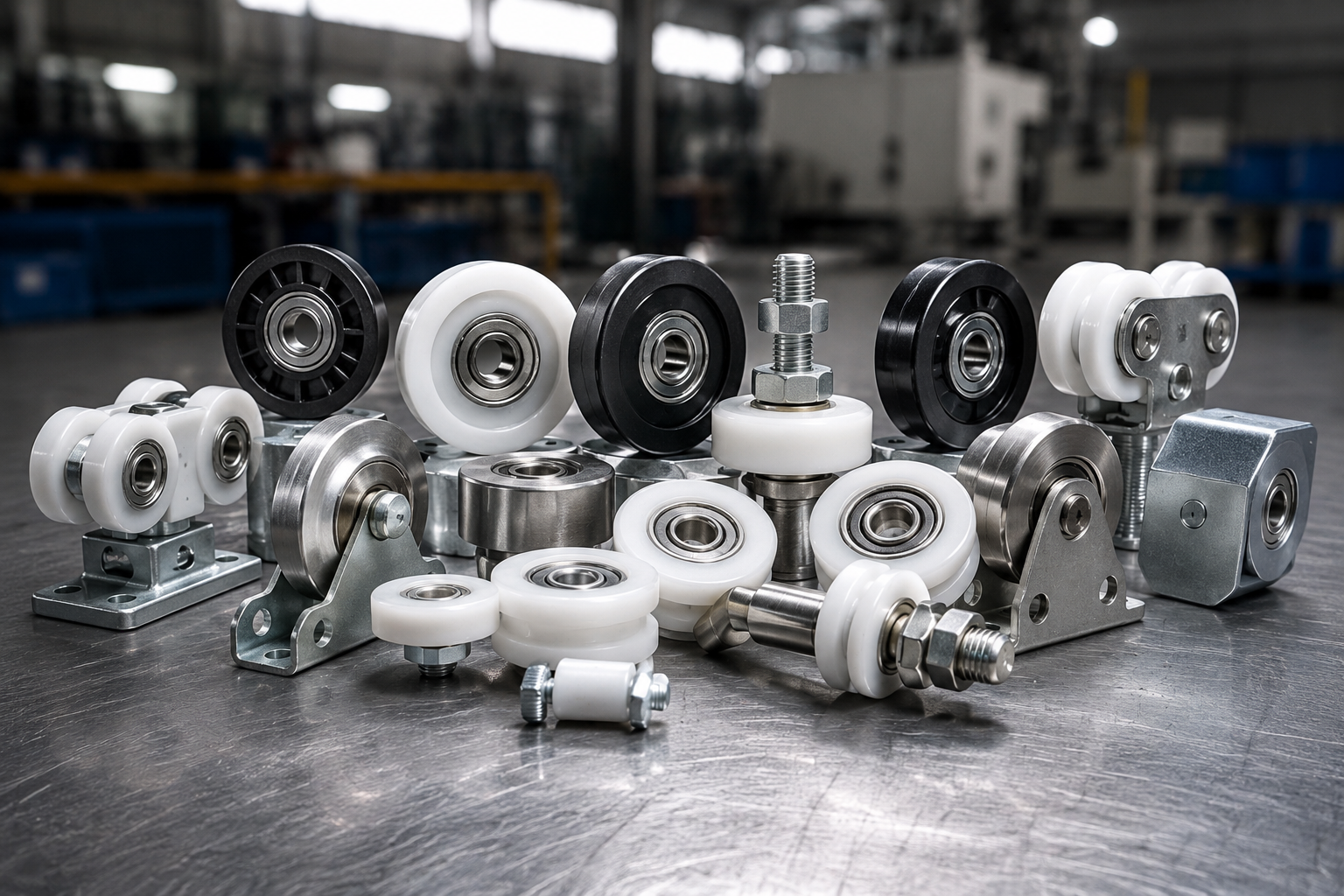
Does a Wet Application Require Every Component to Be Stainless Steel?
No. Buyers should identify which parts receive water and which parts provide rolling contact before specifying stainless steel for the complete assembly.
A shower door roller provides a simple example.
The assembly may contain:
- A stainless bracket
- A stainless shaft
- A sealed stainless or bearing steel bearing
- A POM-coated wheel
- Stainless fasteners
- A glass-door mounting component
The external bracket and shaft may face water every day. The bearing may sit behind a seal and plastic cover.
The correct material combination depends on:
- Water access
- Cleaning chemicals
- Seal design
- Drainage
- Appearance requirement
- Replacement cost
- Target price
| Component | Possible material route | Reason |
|---|---|---|
| Bearing rings and balls | GCr15, 420 or 440C | Rotation, hardness and corrosion requirement |
| Shaft | Carbon steel with finish, 304 or 316 | Fit and external corrosion |
| Bracket | Plated carbon steel, 304 or 316 | Forming, appearance and water exposure |
| External wheel | POM, nylon, rubber or metal | Noise and track contact |
| Fastener | Approved stainless grade | Exposed assembly point |
| Seal | Rubber or polymer closure | Grease retention and contamination control |
A complete stainless specification may be justified in some projects. It should come from an environmental requirement, not from a product photo.
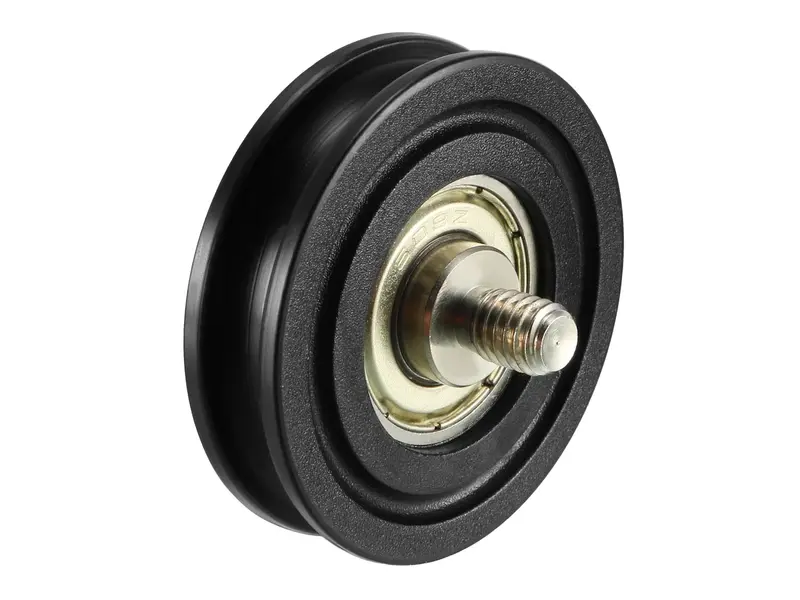
How Does a Plastic-Coated Bearing Pulley Change Material Selection?
A plastic-coated bearing pulley separates the bearing material from the track-contact material. This allows buyers to select each part for its own function.
Our factory produces plastic-coated and rubber-coated bearings for sliding rollers and hardware assemblies.
A common structure includes:
- A high-carbon steel, bearing steel or stainless steel bearing
- A POM, nylon, POK, PPSU, PEEK or rubber outer layer
- A carbon steel or stainless steel shaft
- A stamped bracket
- A metal or plastic track
The plastic outer layer can control:
- Contact noise
- Track protection
- Wheel profile
- Grip
- Appearance
- Rolling resistance
The bearing material controls:
- Internal rotation
- Raceway wear
- Corrosion inside the bearing
- Load response
- Supply cost
For a quiet indoor sliding roller, I may recommend a GCr15 bearing with a POM outer layer. Replacing the bearing with stainless steel may add cost without reducing the contact noise because the POM, not the steel, runs on the track.
For a wet roller, I also review the shaft, bearing seal and water path.
How Do Seals, Grease, Shafts and Brackets Affect the Decision?
The bearing material cannot protect an unsuitable seal, grease, shaft or bracket. Buyers should review the complete assembly.
| Component | What to specify | Purchasing risk |
|---|---|---|
| Bearing material | High-carbon steel, GCr15, 420 or 440C | Wrong cost or corrosion level |
| Closure | Open, Z, ZZ, RS or 2RS | Water or dust enters the bearing |
| Grease | Standard or project-specific grease | High starting force or poor environmental fit |
| Shaft | Material, diameter, tolerance and finish | Loose fit, corrosion or damaged bearing |
| Bracket | Material, thickness and treatment | Misalignment or visible rust |
| External coating | Plastic or rubber grade and thickness | Noise, deformation or poor track contact |
| Fasteners | Material and locking method | Rust or assembly movement |
| Packaging | Oil, bag and carton protection | Corrosion before installation |
A 2RS seal can help retain grease and reduce contaminant entry. It does not make a bearing waterproof.
A stainless bearing also needs the correct shaft fit. Excessive pressing force can damage the bearing before it reaches the customer.
What Bearing Material Mistakes Increase Purchasing Risk?
Most bearing material problems start with a broad material name and an incomplete application description.
| Common mistake | Possible result | Better buyer action |
|---|---|---|
| Writing only “carbon steel” | Supplier quotes ordinary or high-carbon steel without clarification | Confirm high-carbon steel and component scope |
| Writing only “bearing steel” | Suppliers use different grades or standards | State GCr15, 52100, 100Cr6 or SUJ2 with the standard |
| Writing only “stainless steel” | Supplier quotes 420, 440C or another material | State grade and required components |
| Requesting 304 for bearing raceways | Material may not suit the required rolling contact | Confirm whether 440C or bearing steel is more suitable |
| Selecting stainless for every food-equipment part | Unnecessary cost | Confirm direct food contact and washdown zones |
| Using GCr15 near salt water without protection | Early rust risk | Review stainless bearing, seals and exposed parts |
| Ignoring the shaft and bracket | Complete assembly still corrodes | Approve a component-level material list |
| Comparing unit price only | Different bearing structures appear equal | Compare drawings and bills of materials |
| Approving a loose bearing only | Problems appear after pressing or coating | Test the complete roller assembly |
| Allowing later material changes | Repeat orders behave differently | Require written change approval |
What Information Should Buyers Send to a Bearing Supplier?
A B2B buyer should send the environment, load, bearing structure, component materials and purchasing volume before asking for a final recommendation.
| Information group | Details to provide |
|---|---|
| Application | Sliding door, window, shower door, food machine or offshore equipment |
| Bearing function | Load-bearing, guiding or tensioning |
| Load | Total load, bearing quantity and force direction |
| Movement | Speed, travel and cycles per day |
| Environment | Indoor, outdoor, water, salt, dust or chemicals |
| Food contact | Direct, indirect or no contact |
| Cleaning | Dry cleaning, water washdown or chemical washdown |
| Bearing | Model, dimensions, seals and required material |
| Shaft | Material, diameter, tolerance and retention |
| Bracket | Material, thickness and finish |
| External wheel | Metal, POM, nylon, POK, PPSU or rubber |
| Track | Material, profile and dimensions |
| Test | Load, corrosion, noise and cycle requirements |
| Quantity | Samples, first order and annual demand |
| Commercial | Target cost and delivery date |
A drawing should state the material for each component.
If the buyer does not have a full drawing, I ask for:
- A physical sample
- Clear photos
- Manual dimensions
- Installation photos
- A short operating video
- Current rust or wear photos
- A description of the main problem
What Should Buyers Test Before Bulk Production?
Buyers should test the bearing inside the complete roller assembly before approving bulk production.
Our factory can check:
- Bearing model
- Material record
- Bore, outside diameter and width
- Seal appearance
- Basic rotation
- Wheel dimensions
- Coating concentricity
- Shaft fit
- Bracket dimensions
- Surface finish
- Packaging
The buyer should complete the application test.
| Test area | Sample approval question |
|---|---|
| Fit | Does the bearing fit the shaft and roller correctly? |
| Rotation | Does the assembly rotate smoothly after pressing? |
| Load | Does the complete roller pass the defined load test? |
| Noise | Does it meet the approved noise requirement? |
| Corrosion | Does it pass the buyer’s environmental test? |
| Water exposure | Does the seal structure suit the approved washdown condition? |
| Track contact | Does the external wheel match the track? |
| Endurance | Does the assembly complete the required cycle test? |
| Supply | Does the sample match the signed material specification? |
Material selection should create a testable specification. It should not create a general promise such as “this bearing will never rust”.
How Does Our Sliding Door Hardware Factory Review Bearing Materials?
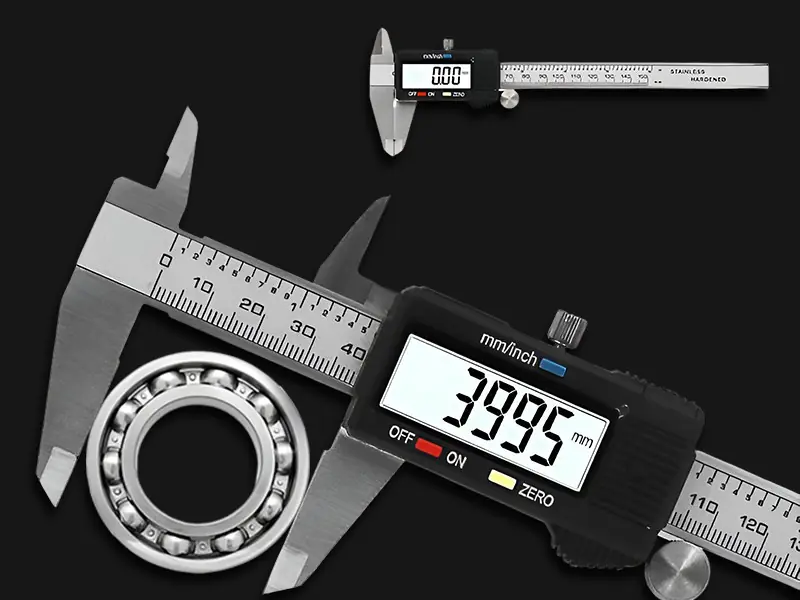
At Zhejiang Huaneng Micro Bearing Co., Ltd., we review the bearing as one part of the complete sliding roller instead of quoting the steel name alone.
Our company started with miniature bearing production. We later added:
- Bearing assembly
- Plastic-coated bearing production
- Rubber-coated roller production
- Injection moulding
- Shaft and spacer processing
- Metal stamping
- Sliding door and window hardware assembly
- OEM and ODM production
This production scope allows me to discuss several routes with a buyer.
For example, we can compare:
- A high-carbon steel bearing for cost control
- A GCr15 bearing steel bearing for standard rolling performance
- A 420 or 440C stainless bearing for moisture exposure
- A bearing steel core with a POM outer wheel
- A stainless shaft with a standard sealed bearing
- A complete stainless bracket and roller assembly
I first check whether an existing bearing, wheel or mould meets the drawing. This can reduce tooling cost and sampling time.
If a standard structure does not fit, we can review:
- A different bearing
- A different stainless grade
- A 2RS closure
- A custom shaft
- Plastic or rubber coating
- A stamped bracket
- Secondary machining
- A complete OEM bearing pulley
I can support material comparison, manufacturing feasibility and repeat-production control. The buyer’s technical and compliance teams should approve the final application.
View Sliding Rollers with Bearing
Review Our OEM and ODM Process
What Should a Bearing Quotation Include?
A controlled quotation should identify the grade, bearing structure, seals, related hardware and testing requirements.
| Quotation item | Required detail |
|---|---|
| Bearing model | Series and full dimensions |
| Bearing material | High-carbon steel, GCr15, 420, 440C or another approved grade |
| Standard | GB, SAE, DIN, EN, JIS or buyer-approved standard |
| Rings and balls | Material for each bearing component |
| Closure | Open, shielded or sealed |
| Grease | Standard or project-specific |
| Shaft | Material, tolerance and finish |
| Bracket | Material, thickness and surface treatment |
| External wheel | Profile, dimensions and coating material |
| Environment | Water, salt, food contact, dust and chemicals |
| Inspection | Material records, dimensions and rotation |
| Testing | Buyer-defined load, cycle and corrosion tests |
| Quantity | Sample, first order and annual requirement |
| Change control | Written approval before material or process changes |
| Commercial | Price, trade term and delivery date |
The quotation should also state whether the price covers:
- A loose bearing
- A coated bearing wheel
- A shafted bearing pulley
- A roller with a bracket
- A complete sliding hardware assembly
What Is the Final B2B Bearing Material Checklist?
A company buyer should select the bearing material after confirming the real environment and the complete roller structure.
Use this order:
- Define the application.
- Confirm the bearing model and dimensions.
- Identify the load and movement frequency.
- Confirm whether water reaches the bearing.
- Describe salt, dust, chemicals and temperature.
- Confirm whether the bearing directly contacts food.
- Identify which parts need stainless steel.
- Compare high-carbon steel, GCr15 and stainless options.
- Confirm the stainless grade.
- State the material standard.
- Select the seal and grease.
- Confirm the shaft, bracket and fasteners.
- Review the external plastic or rubber coating.
- Produce a controlled sample.
- Test the complete roller assembly.
- Sign the drawing and bill of materials.
- Require written approval for later changes.
- Approve bulk production after the sample passes.
Do not ask only:
Is stainless steel better than bearing steel?
Ask:
Does our bearing face a real corrosion risk, and which combination of bearing, seal, shaft, bracket and coating meets our approved test at a reasonable purchasing cost?
That question supports a clearer B2B purchasing decision.
Do You Need a Carbon Steel, Bearing Steel or Stainless Steel Bearing?
Send us your bearing drawing, roller sample, operating environment and target quantity. We will first review whether a standard material and existing roller structure can meet the requirement.
Please include:
- Bearing model
- Bore, outside diameter and width
- Required material or current material
- Application
- Load
- Speed and running frequency
- Water or salt exposure
- Direct or indirect food contact
- Shaft and bracket details
- External wheel material
- Sample quantity
- Annual demand
- Target cost
We can compare:
- High-carbon steel bearings
- GCr15 bearing steel bearings
- 420 stainless steel bearings
- 440C stainless steel bearings
- Sealed 2RS bearings
- Plastic-coated bearing pulleys
- Rubber-coated rollers
- Stainless shafts and brackets
- Complete OEM sliding roller assemblies
View Sliding Rollers with Bearing