Has your customer reported a loose, noisy or jammed sliding roller? Did the bearing fail first, or did the shaft and bracket allow the wheel to move? Would a higher-rated bearing prevent the same problem in the next production order?
These questions matter to door and window manufacturers, hardware importers, distributors and OEM purchasing teams. A failed roller can lead to returns, production delays and unclear responsibility between component suppliers.
The direct answer is:
A failed bearing does not always cause a sliding roller to detach. The shaft, rivet, circlip, bolt, bracket or housing normally keeps the roller in place. However, a seized, corroded or badly worn bearing can create wobble, drag, impact and extra clearance. These conditions may damage the surrounding parts and increase detachment risk if the retention structure is already weak, loose or unsuitable.
When I receive this type of complaint, I do not inspect the bearing alone. I check how the bearing sits inside the wheel, how the shaft retains the assembly and whether the bracket, rivet or circlip still controls axial movement.
A bearing failure and a roller detachment are related events, but they are not the same failure.
What Does This Sliding Roller Failure Guide Cover?
This guide explains how B2B buyers can separate bearing damage from wheel, shaft, bracket, track and retention problems.
It is written for:
- Door and window manufacturers
- Aluminium door system factories
- Sliding door hardware brands
- Shower enclosure manufacturers
- Wardrobe and furniture hardware companies
- Industrial sliding mechanism manufacturers
- Hardware importers and distributors
- OEM and ODM purchasing teams
- Product development and quality staff
This guide does not provide domestic repair instructions. It also does not assign responsibility for an accident without a complete investigation.
Can Bearing Failure Directly Detach a Sliding Roller?
Bearing failure alone usually affects rotation, clearance and load support. A separate retention part normally prevents the sliding roller from leaving its shaft or bracket.
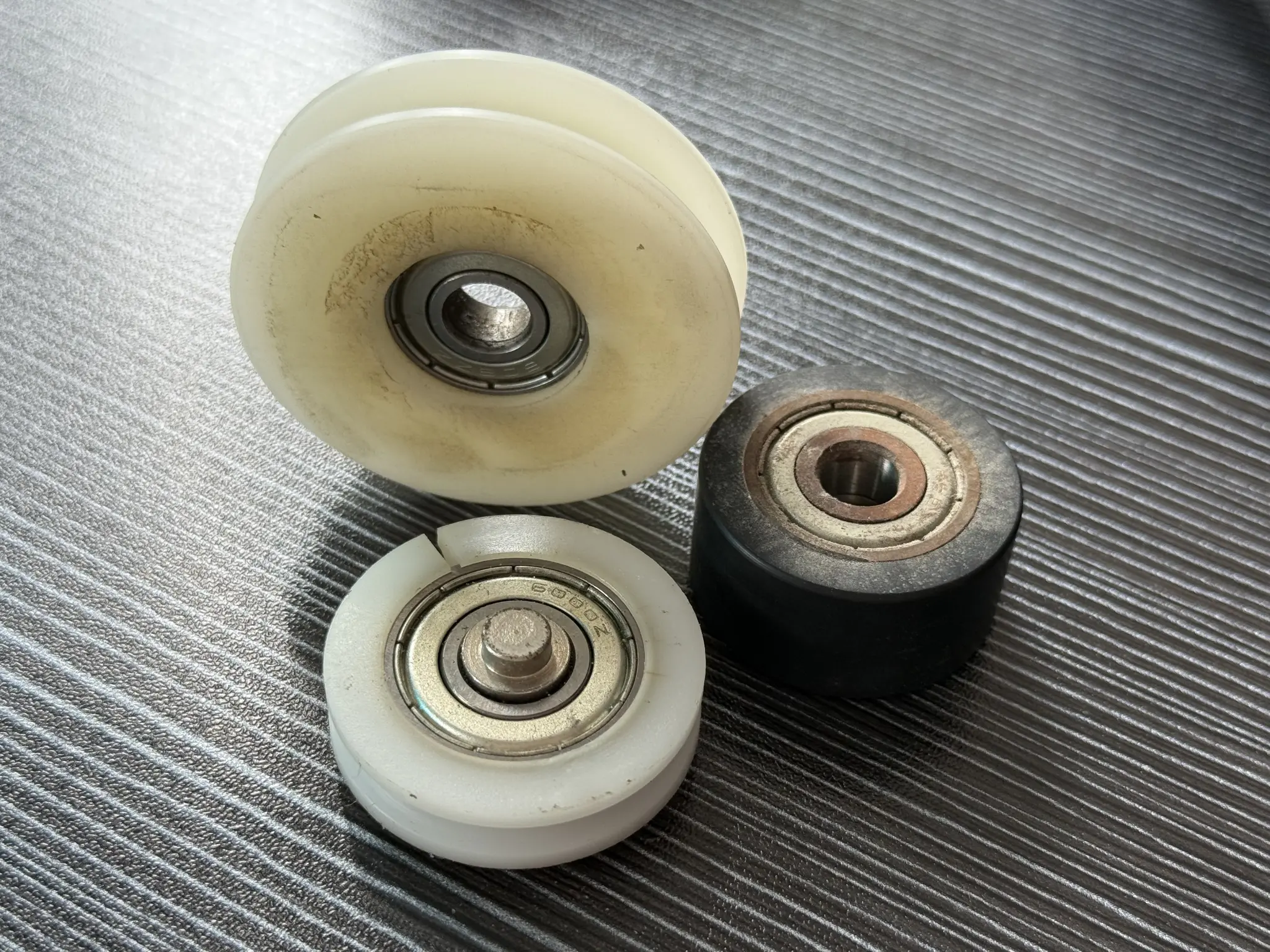
A typical bearing pulley contains several connected parts:
- A plastic, rubber or metal wheel body
- One or two bearings
- A shaft, pin or bolt
- A rivet head, nut, circlip or another retention feature
- A bracket, housing or mounting plate
- A track that controls the wheel path
The bearing supports rotation. The retention structure controls the wheel’s position.
If a bearing becomes rough but the shaft and retention parts remain secure, the wheel may become noisy or difficult to move without detaching. If the bearing seizes, the wheel may slide along the track instead of rotating. The resulting drag can damage the wheel surface or pass more force into the shaft and bracket.
A complete detachment normally needs another change, such as:
- A loose rivet
- A broken or missing circlip
- A loose nut
- A worn shaft
- A cracked wheel body
- A deformed bracket
- An enlarged bearing seat
- Excessive axial clearance
- A damaged mounting point
The failure path may look like this:
Bearing damage → rough rotation or seizure → wobble, drag or impact → damage to the wheel, shaft or bracket → possible loss of retention
This path can occur, but it is not automatic.
ISO 15243:2017 lassifies rolling-bearing damage and failure modes by their visible characteristics and possible causes. This supports a key inspection rule: visible bearing damage can help identify a failure mode, but the complete assembly still needs review before a buyer assigns the root cause.
What Warning Signs Appear Before a Roller Detaches?
Noise, rough movement, wobble and increased clearance often appear before a sliding roller develops a serious structural problem.
I treat these symptoms as warning signs:
| Warning sign | What may be happening | What I check next |
|---|---|---|
| Rough rotation | Bearing race, ball or lubricant problem | Bearing rotation and contamination |
| Repeated noise | Bearing damage or poor track contact | Bearing, wheel surface and track |
| Wheel wobble | Bearing clearance or poor shaft fit | Bearing seat, shaft and rivet |
| Side movement | Excessive axial clearance | Washer, circlip and bracket |
| High starting force | Bearing seizure, dirt or misalignment | Complete installed assembly |
| Uneven wheel wear | Offset load or track mismatch | Wheel contact and bracket position |
| Rust near the bearing | Water entry or unsuitable material | Seal, shaft, bracket and drainage |
| Cracks around the bearing | High seat stress or poor wall thickness | Wheel body and moulding structure |
| Heat or discolouration | High friction or sliding contact | Bearing, wheel material and track |
| Loose bracket | Impact or fixing weakness | Rivets, bolts and mounting plate |
These signs do not prove that the bearing caused the whole problem.
For example, wheel wobble can come from bearing clearance. It can also come from a small shaft, loose rivet, worn bearing seat or bent bracket. A buyer should record the symptom before changing the product.
I also ask where the symptom occurs:
- At the start of movement
- At one track joint
- Near the end stop
- Under load only
- After water exposure
- After a period of storage
- On one roller only
- Across several rollers from the same batch
This information helps both sides reduce unnecessary sample changes.
Which Parts Actually Hold a Bearing Pulley in Place?
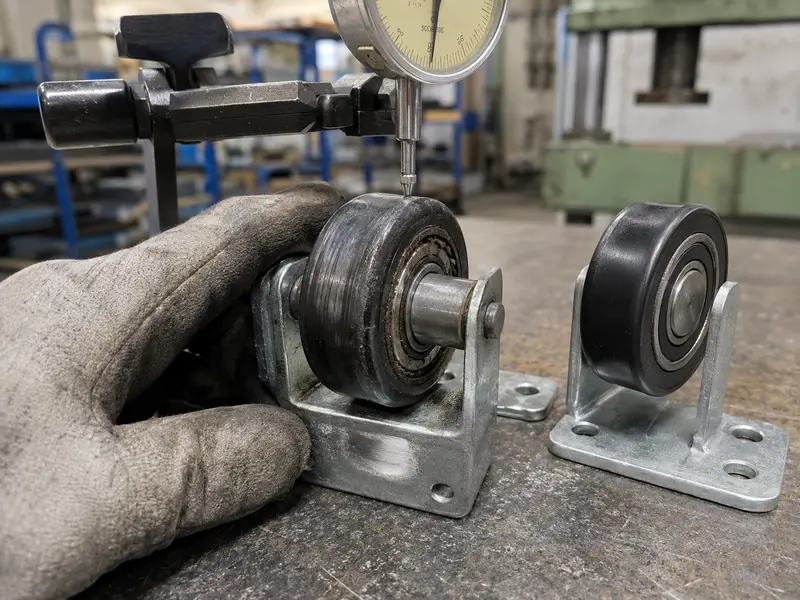
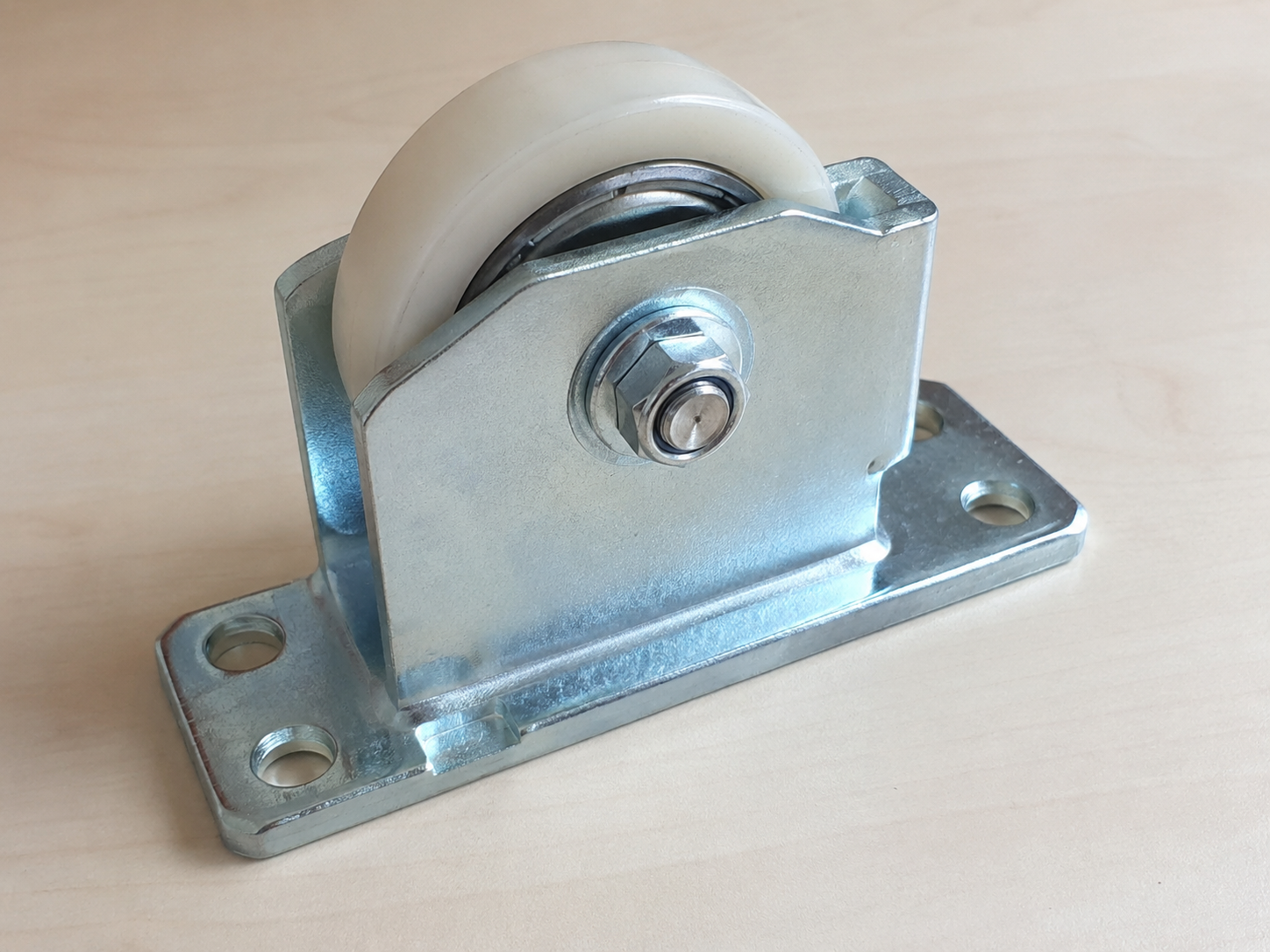
The shaft and its retention method normally keep a bearing pulley inside the bracket. Buyers should identify this structure before they judge detachment risk.
Different door and window rollers use different fixing methods.
| Retention method | What holds the roller | Main points to confirm |
|---|---|---|
| Riveted shaft | Formed rivet head and bracket | Head size, forming quality and looseness |
| Bolt and nut | Thread, nut and washer | Thread engagement and locking method |
| Circlip | Shaft groove and retaining clip | Groove position and clip seating |
| Press-fit shaft | Interference between the shaft and support | Fit tolerance and material deformation |
| Flared or staked pin | Deformed end of the pin | Forming consistency and cracking |
| Enclosed bracket | Bracket walls, covers or plates | Clearance and bracket deformation |
| Shoulder shaft | Shaft shoulder and end fixing | Shoulder position and axial clearance |
When I inspect a roller, I first identify which part prevents axial movement. This tells me whether bearing damage could allow the wheel to move out of position.
A common mistake is to treat internal bearing clearance and complete wheel clearance as the same issue.
They are different:
- Bearing internal clearance exists between the bearing’s internal parts.
- Bearing-to-shaft clearance controls the fit between the bore and shaft.
- Bearing-to-wheel clearance controls the outer ring inside the wheel body.
- Assembly axial clearance controls side movement between the wheel and bracket.
- Bracket clearance prevents unwanted contact during rotation.
A buyer may request a tighter bearing while the real side movement comes from the shaft length or missing washer.
I do not approve a roller from the bearing model alone. I need to know what retains the bearing, what retains the wheel and how much movement the complete assembly allows.
How Can a Failed Bearing Increase Detachment Risk?
A failed bearing can pass extra force into the wheel, shaft and bracket. This force may increase detachment risk if another part cannot retain the assembly.
The bearing may contribute through several failure paths.
| Bearing condition | Possible effect | Related parts to inspect |
|---|---|---|
| Bearing seizure | Wheel stops rotating and slides on the track | Wheel surface, shaft and bracket |
| High rolling resistance | More opening force reaches the fixing points | Rivet, bolt and mounting plate |
| Excessive bearing clearance | Wheel develops movement or impact | Shaft, bearing seat and retention parts |
| Inner ring movement | Shaft fit becomes less stable | Shaft diameter and surface |
| Outer ring movement | Bearing seat wears or deforms | Plastic or metal wheel body |
| Corrosion | Running surfaces lose smooth support | Seal, shaft, bracket and water path |
| Broken internal parts | Load becomes uneven | Wheel body, covers and bracket |
| Lubricant loss | Friction and temperature may rise | Seal, bearing seat and environment |
How Can Seizure Affect the Roller?
A seized bearing changes the way the wheel moves.
The wheel should rotate on the track. A seized wheel may drag across the track. This can create:
- Flat wear on the wheel surface
- Higher opening force
- Vibration
- Local heat
- More force on the shaft
- More force on the bracket
- Impact at joints or surface defects
A shaft and bracket with enough support may retain the wheel even after seizure. A weak, loose or damaged structure may not.
How Can Wobble Affect the Retention Parts?
Wobble can create repeated movement between the wheel, shaft and bracket. This movement may enlarge holes, loosen a riveted joint or damage a plastic bearing seat.
However, wobble does not always begin inside the bearing. It may begin with the shaft, bracket or installation.
I compare the failed roller with an unused sample whenever possible. This comparison helps me identify which clearances changed during use.
How Can Corrosion Affect the Complete Assembly?
A 2RS sealed bearing can help protect grease and the internal rolling surfaces. The seal does not protect every exposed part.
Water may still affect:
- The shaft
- The rivet head
- The bracket
- The washer
- The circlip
- The mounting screws
- The exposed bearing surfaces
- The track
A stainless steel bracket also does not make the complete assembly corrosion-proof if the bearing, shaft and fasteners use unsuitable materials.
The buyer should define the real exposure instead of writing only “outdoor use”.
Can a Sliding Roller Detach While Its Bearing Still Works?
Yes. A sliding roller can lose retention even when its bearing still rotates smoothly.
This distinction matters during supplier reviews. A free-running bearing can distract the buyer from a damaged shaft or bracket.
Possible non-bearing causes include:
- An incomplete rivet head
- A missing or poorly seated circlip
- Insufficient thread engagement
- A nut without a suitable locking method
- An undersized shaft
- A shaft groove in the wrong position
- Excessive axial clearance
- A cracked plastic wheel body
- A loose press-fit bearing seat
- A deformed stamped bracket
- An enlarged bracket hole
- Impact at an end stop
- Side loading from a misaligned track
- Incorrect installation height
- A roller selected for the wrong application
| Failure area | Typical purchasing question |
|---|---|
| Shaft | Does the diameter and material match the bearing bore and load? |
| Rivet | Does the formed head provide enough retention after production? |
| Circlip | Does the groove position keep the clip fully seated? |
| Bracket | Can the bracket control the shaft without bending? |
| Wheel body | Is there enough material around the bearing seat? |
| Track | Does the track keep the wheel centred? |
| Installation | Does the installed structure introduce side load? |
| End stop | Does the roller receive repeated impact? |
I often receive requests for a “stronger bearing”. A higher load rating cannot correct a missing circlip, loose rivet or thin bracket.
The useful question is:
Which part failed to support rotation, and which part failed to retain the roller?
These two questions may produce different answers.
Why Can Bearing Fit Affect the Complete Roller?
Bearing fit controls the connection between the bearing, wheel and shaft. Poor fit can create movement even if the selected bearing meets its own dimensional specification.
A plastic-coated bearing roller can use two common assembly routes.
| Production route | How the bearing is assembled | Main process controls |
|---|---|---|
| Insert moulding | The bearing sits inside the mould while plastic forms around it | Position, mould pressure, plastic flow and cooling |
| Post-mould press fitting | The plastic wheel is moulded first and the bearing is pressed in later | Bearing-seat size, interference and pressing force |
Both routes can work. Each route has different control points.
How Does Insert Moulding Affect the Bearing Pulley?
During insert moulding, the mould holds the bearing while molten plastic forms the wheel body.
I check:
- Bearing position
- Plastic coverage
- Wheel concentricity
- Wall thickness
- Groove position
- Cooling shrinkage
- Bearing rotation after moulding
Too much pressure or an unsuitable structure may affect bearing rotation. Poor positioning may produce uneven wheel thickness. Thick plastic sections may also cool at different rates and create sink or deformation.
How Does Press Fitting Affect the Sliding Roller?
During press fitting, the bearing seat must hold the outer ring without cracking the plastic or leaving the fit too loose.
I check:
- Bearing-seat diameter
- Roundness
- Entry chamfer
- Plastic material
- Wall thickness
- Pressing direction
- Final bearing position
- Rotation after assembly
A tight fit may deform the wheel or affect bearing clearance. A loose fit may allow the outer ring to move inside the wheel.
ISO 492:2023 defines dimensional and geometrical characteristics and tolerance values for radial rolling bearings. These bearing tolerances help control the bearing interface, but the wheel seat, shaft and bracket still need project-specific dimensions.

Why Does a Higher-Rated Bearing Not Solve Every Problem?
A higher bearing load rating cannot correct weak retention, poor alignment, an unsuitable wheel body or incorrect installation.
Purchasing teams often compare bearing numbers first. This comparison has value, but it does not define the complete roller.
A higher-rated or larger bearing may also change other parts of the design.
| Proposed change | Possible benefit | Point that still needs review |
|---|---|---|
| Larger bearing | More bearing capacity in a suitable structure | Less plastic around the bearing |
| Wider bearing | More support in some arrangements | Available bracket and wheel width |
| Two bearings | Better support in selected assemblies | Shaft length, spacing and alignment |
| 2RS sealed bearing | Better grease retention and contaminant control | Seal drag and external corrosion |
| Stainless bearing | Better corrosion control in selected conditions | Cost, load requirement and other metals |
| Higher precision bearing | Better dimensional or running control | Track, wheel and bracket accuracy |
| Different grease | Better fit for a defined environment | Seal, temperature and compatibility |
ISO 281:2007 covers dynamic load ratings and bearing rating-life calculations. The standard also states that its calculation does not cover the influence of wear, corrosion or electrical erosion on bearing life.
This limit matters to door hardware buyers. A bearing calculation does not approve:
- The plastic wheel body
- The shaft
- The rivet
- The bracket
- The track
- The mounting screws
- The installed door system
I use the bearing specification as one input. I still review the outer wheel, shaft fit, fixing method, bracket and environment before I confirm a sample route.
A two-bearing sliding roller may suit one project. A compact single-bearing roller may suit another. The final choice should follow the complete structure and the buyer’s installed test.
What Did a Customer Roller Complaint Teach Us?
A customer complaint showed why a supplier should inspect the complete roller before changing the bearing specification.
In one representative enquiry, a door hardware buyer reported that a roller had become noisy and developed visible side movement. The buyer first asked whether a higher-rated bearing would prevent the roller from coming loose.
I did not confirm a bearing change from the photos alone.
I asked the buyer to provide:
- The complete used roller
- An unused sample
- Photos of the installed bracket
- A video showing the side movement
- The roller drawing
- The door application
- The track section
- The number of rollers
- The working environment
The available evidence showed two separate symptoms:
- The bearing rotation needed inspection.
- The complete wheel had axial movement inside the bracket.
The second symptom could involve the shaft length, washer, rivet, bracket clearance or bearing position. A different bearing model would not automatically remove that movement.
I therefore compared the project in this order:
| Review step | What I checked |
|---|---|
| Used and unused samples | Difference in rotation and clearance |
| Bearing | Noise, roughness and visible corrosion |
| Wheel body | Cracks, wear and bearing-seat movement |
| Shaft | Diameter, wear and end retention |
| Rivet or fixing | Looseness and formed-head condition |
| Bracket | Hole size, deformation and side clearance |
| Track information | Contact position and possible side load |
| Environment | Water, dust and opening frequency |
The useful result was a controlled review plan. We did not treat the bearing as the only possible cause, and we did not change several parts at the same time.
The customer could then test a revised assembly and compare it with the original structure. The complete door-system team remained responsible for approving the installed result.
The complaint started with a bearing question. The practical review focused on every part that supported and retained the roller.
This case reflects the enquiries I often handle. A failed sample tells us what changed. An unused sample and drawing show what the product should have been.
What Evidence Should Buyers Collect After a Failure?
B2B buyers should preserve the complete assembly, record the application and compare failed parts with unused samples from the same batch.
A loose bearing provides limited evidence. The complete assembly shows how the bearing, wheel, shaft and bracket worked together.
What Physical Evidence Should the Buyer Keep?
Keep these parts if available:
- Complete failed roller assembly
- Bearing
- Wheel body
- Shaft or rivet
- Circlip, washer or nut
- Bracket
- Mounting screws
- Short track sample
- Unused roller from the same batch
- Packaging label and batch record
Do not clean, grind or modify the failed part before the supplier reviews it. Cleaning can remove corrosion, grease, wear particles or contact marks.
What Photos and Videos Should the Buyer Send?
Send:
- Front, rear and side photos
- Close photos of the shaft ends
- Close photos of the bearing seat
- Photos of the bracket holes
- Photos of the track contact surface
- A video of free rotation
- A video of axial movement
- A video of the installed roller under load
- A video showing where noise occurs
Place a ruler or calliper in selected photos if this does not hide the damaged area.
What Application Information Should the Buyer Record?
| Information group | Details to record |
|---|---|
| Product | Part number, drawing revision and batch |
| Door system | Door type, dimensions and moving weight |
| Roller arrangement | Quantity, position and function |
| Track | Cross-section, material and condition |
| Operation | Travel, speed and daily cycles |
| Environment | Indoor, outdoor, water, dust, salt and temperature |
| Failure time | Sample test, installation, early use or later use |
| Symptom | Noise, seizure, wobble, cracking or detachment |
| Location | One installation or several sites |
| Quantity affected | One piece, one batch or repeated batches |
| Previous changes | Bearing, material, supplier, mould or assembly process |
The evidence should support the next decision. It should not serve as a quick way to blame one component.
What Should Buyers Test Before Bulk Production?
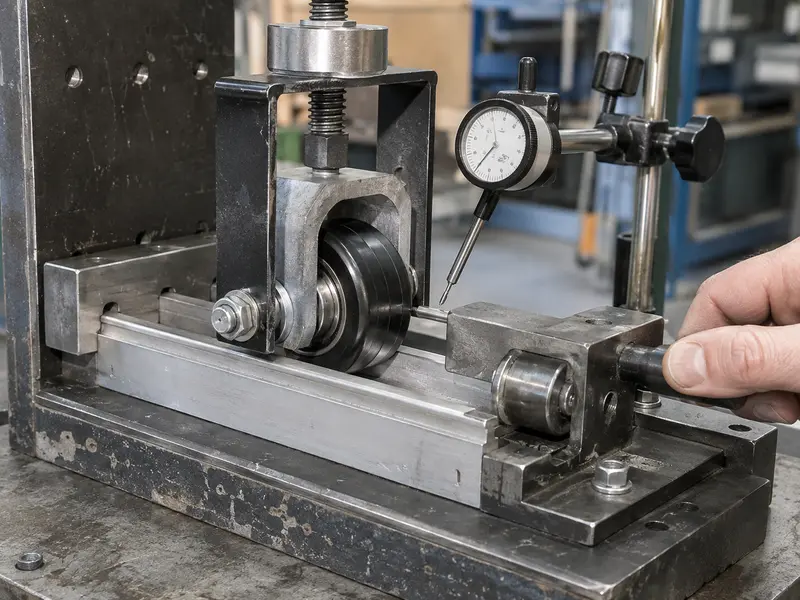
Buyers should test the complete bearing pulley inside the real track, bracket and door structure before bulk approval.
A loose hand test can confirm basic rotation. It cannot confirm installed load, alignment or retention.
| Test point | What the buyer should check |
|---|---|
| Dimensions | Does the sample match the signed drawing? |
| Bearing fit | Does the bearing remain in the correct wheel position? |
| Shaft fit | Does the bore fit the approved shaft? |
| Axial clearance | Does the wheel have controlled side movement? |
| Radial movement | Does the assembly show unwanted wobble? |
| Retention | Do the rivet, circlip, bolt or cover remain secure? |
| Bracket | Does the bracket stay aligned under the defined load? |
| Track contact | Does the wheel remain centred on the running surface? |
| Movement | Does the door complete its full travel without binding? |
| Noise | Is the sound acceptable under the required load? |
| End impact | Does the system control stopping force? |
| Environment | Do the bearing seal and metals suit real exposure? |
| Endurance | Does the assembly pass the buyer’s cycle test? |
| Repeatability | Do production samples match the approved sample? |
What Can the Sliding Door Hardware Factory Check?
From a manufacturing view, I can check:
- Bearing dimensions and specified model
- Wheel diameter and width
- Bearing position
- Wheel concentricity
- Shaft dimensions
- Rivet or circlip structure
- Bracket dimensions
- Plastic coverage
- Moulding defects
- Basic rotation
- Axial movement
- Visual assembly consistency
- Packaging and batch marking
What Should the Door Manufacturer Approve?
The door or equipment manufacturer should approve:
- Complete system load
- Load distribution
- Track alignment
- Mounting strength
- Opening and closing force
- End-stop impact
- Cycle requirement
- Environmental exposure
- Safety requirements
- Pass and fail criteria
The buyer should define numbers where possible. The phrases “heavy duty”, “long life” and “no wobble” do not create measurable approval limits.
What Should the Final Roller Specification Control?
The final specification should control the bearing, wheel, shaft, retention parts, bracket, track interface and change process.
A signed bearing number is not a complete roller specification.
| Specification area | Details to approve |
|---|---|
| Bearing | Model, dimensions, closure, grease and approved source |
| Wheel body | Material, colour, diameter, width and groove |
| Bearing seat | Assembly method, fit and bearing position |
| Shaft | Material, diameter, length and tolerance |
| Retention | Rivet, circlip, bolt, washer or enclosed structure |
| Bracket | Material, thickness, dimensions and finish |
| Clearance | Approved radial and axial movement |
| Track interface | Profile, contact position and side clearance |
| Environment | Moisture, dust, salt, chemicals and temperature |
| Test | Load, travel, speed, cycles and impact |
| Inspection | Critical dimensions and sampling level |
| Packaging | Protection against corrosion and deformation |
| Identification | Part number, batch or date code |
| Change control | Buyer approval before material or process changes |
Which Dimensions Should Buyers Mark as Critical?
Critical dimensions may include:
- Bearing bore
- Bearing outside diameter
- Wheel outside diameter
- Wheel width
- Groove dimensions
- Shaft diameter
- Shaft length
- Circlip-groove position
- Rivet-head diameter
- Distance between bracket walls
- Bearing position inside the wheel
- Installed roller height
- Axial clearance
The buyer does not need to apply a tight tolerance to every dimension. Tight tolerances can add cost without improving the installed result.
I prefer to mark the dimensions that control:
- Rotation
- Retention
- Track contact
- Installation
- Interchangeability
This gives production and inspection teams a clearer target.
For projects that need a new wheel, shaft or bracket, our OEM and ODM process explains how drawing review, mould evaluation, sampling and bulk approval connect.
How Should Buyers Assess a Sliding Door Hardware Factory?
Buyers should assess whether the factory can control the complete roller assembly and repeat the approved specification.
A supplier may produce only the loose bearing. Another supplier may produce the wheel but purchase the shaft and bracket. These routes can work, but the buyer should know who controls each interface.
I suggest asking these questions:
| Factory area | B2B question | Why it matters |
|---|---|---|
| Bearing control | Is the bearing model and source recorded? | Prevents unapproved bearing changes |
| Injection moulding | Can the factory control bearing position and wheel concentricity? | Affects movement and track contact |
| Press fitting | How does the factory control the bearing seat? | Affects looseness and cracking |
| Shaft processing | Are shaft diameter and retention features inspected? | Affects bearing fit and detachment risk |
| Stamping | Are bracket holes and wall positions controlled? | Affects alignment and clearance |
| Riveting | How is the formed rivet head checked? | Affects wheel retention |
| Assembly | Is axial movement checked after assembly? | Detects loose complete rollers |
| Material control | Are plastic and metal grades recorded? | Supports repeat orders |
| Sample review | Can the supplier compare failed and unused parts? | Supports complaint analysis |
| Inspection | Which critical dimensions appear on the report? | Creates a clear approval record |
| Change control | Must the buyer approve product changes? | Protects future batches |
| Traceability | Can the factory identify the production batch? | Supports targeted reviews |
At Zhejiang Huaneng Micro Bearing Co., Ltd., I work with plastic-coated bearing rollers, rubber-coated rollers, shafts, stamped brackets and related sliding hardware.
Our production experience helps me review the wheel and its supporting parts together. It does not allow me to confirm an installed accident from one photo or one loose bearing.
Buyers can review common sliding rollers with bearing before preparing a custom assembly specification.
What Should a B2B Failure-Review Enquiry Include?
A useful enquiry should define the failed assembly, application, evidence and required production decision.
| Information group | Details to provide |
|---|---|
| Application | Sliding door, window, shower door, wardrobe or industrial mechanism |
| Failed product | Complete roller, photos, drawing and part number |
| Bearing | Model, closure and known supplier requirement |
| Wheel | Material, diameter, width and groove |
| Shaft | Diameter, length and fixing structure |
| Retention | Rivet, circlip, bolt, nut or enclosed bracket |
| Bracket | Drawing, material, thickness and finish |
| Track | Cross-section, material and wear condition |
| Load | Moving weight and number of load-bearing rollers |
| Operation | Speed, travel and opening frequency |
| Environment | Indoor, outdoor, water, dust, salt and temperature |
| Symptom | Noise, seizure, wobble, corrosion, cracking or detachment |
| Quantity | Affected pieces and batch quantity |
| Evidence | Used sample, unused sample, photos and videos |
| Purchasing | First order, annual volume and target decision |
| Testing | Required load, movement, cycle and acceptance limits |
A good failure-review request should ask:
Which bearing, wheel body, shaft, retention method and bracket need review before we approve the next production batch?
This question is more useful than:
Can you replace the bearing with the strongest one?
If you need us to review an existing sample or drawing, use the contact page and include the expected order quantity. Clear commercial information helps us compare an existing mould, secondary machining and a new assembly.
What Is the Final B2B Decision?
A failed bearing can contribute to sliding roller detachment, but the bearing rarely explains the complete event by itself.
Use this review order:
- Record the first reported symptom.
- Keep the complete failed assembly.
- Compare it with an unused sample.
- Inspect bearing rotation and visible damage.
- Check the bearing-to-wheel fit.
- Measure the shaft and bearing bore.
- Inspect the rivet, circlip, bolt or nut.
- Check axial and radial movement.
- Inspect the bracket for wear or deformation.
- Compare the wheel with the track.
- Review load, impact and environment.
- Define one controlled product change.
- Test the complete assembly.
- Sign the drawing and physical sample.
- Control material and process changes in repeat orders.
Do not ask only:
Did the bearing fail?
Ask:
Did the bearing stop supporting rotation, and did another part stop retaining the roller?
The first question identifies a movement problem. The second question identifies a structural retention problem.
A B2B buyer needs both answers before changing the specification or assigning responsibility.