
A motorized outdoor screen moves along its side tracks because a motor turns the top roller tube, winding or unwinding the fabric while the two side guides control its edges. A bottom bar keeps the fabric’s lower edge straight. In a ZIP-style system, a bead or zipper-like edge on the fabric engages with the guide profile; other designs use different retainers or guides. The exact mechanism varies by product, but smooth travel depends on the roller, fabric, guides, bottom bar and motor working as one matched assembly.
How Does a Motorized Outdoor Screen Move?
The motor rotates the top tube; it does not usually drive separate wheels in the side tracks. In a common motorized vertical screen, a tubular motor sits inside the roller tube or headbox. When it turns, the tube winds the fabric up or pays it out. The fabric’s side edges remain guided as the screen rises or lowers, and the bottom bar travels with the fabric.
Ziptrak’s overview of motorized blinds describes this general arrangement: a motorized blind operates through a roller and the fabric travels within side tracks. The details differ among manufacturers, so the product’s own drawings and installation requirements should govern any design review.
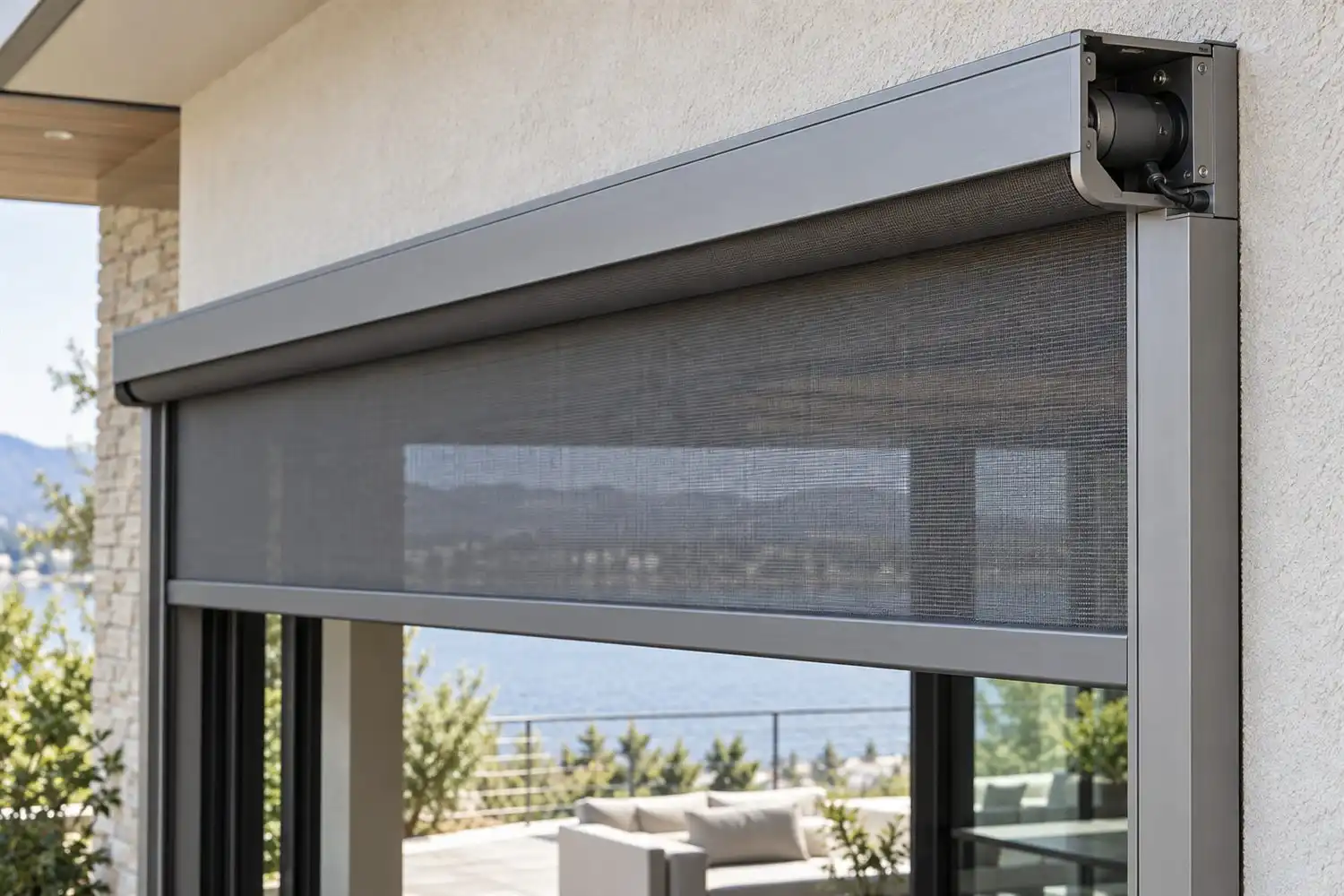 Image placement: after this section. Illustrative editorial image; motor location, headbox shape and internal construction vary by model.
The complete screen assembly may include:
- a tubular motor and drive adapter;
- a roller tube, end brackets and headbox or cassette;
- screen fabric with an edge retention feature;
- two side tracks or guide channels;
- a bottom bar that tensions and stabilizes the lower edge;
- controls and travel limits that stop the screen at set positions.
The motor supplies rotation at the top. The side guides constrain the fabric laterally, and the bottom bar helps maintain a straight lower edge. None of those parts can fully compensate for a mismatch elsewhere in the system.
What Do the Side Tracks Actually Do?
Side tracks guide and retain the screen edges; their cross-section depends on the screen architecture. In a ZIP screen, the fabric edge carries a bead or zipper-like spline that engages with a compatible channel. As the roller tube turns, the retained edges move through the guides, helping keep the fabric aligned and reducing the chance of the edge pulling away under ordinary operating conditions. WAREMA’s easyZIP system is one example of an exterior screen using guided side edges.
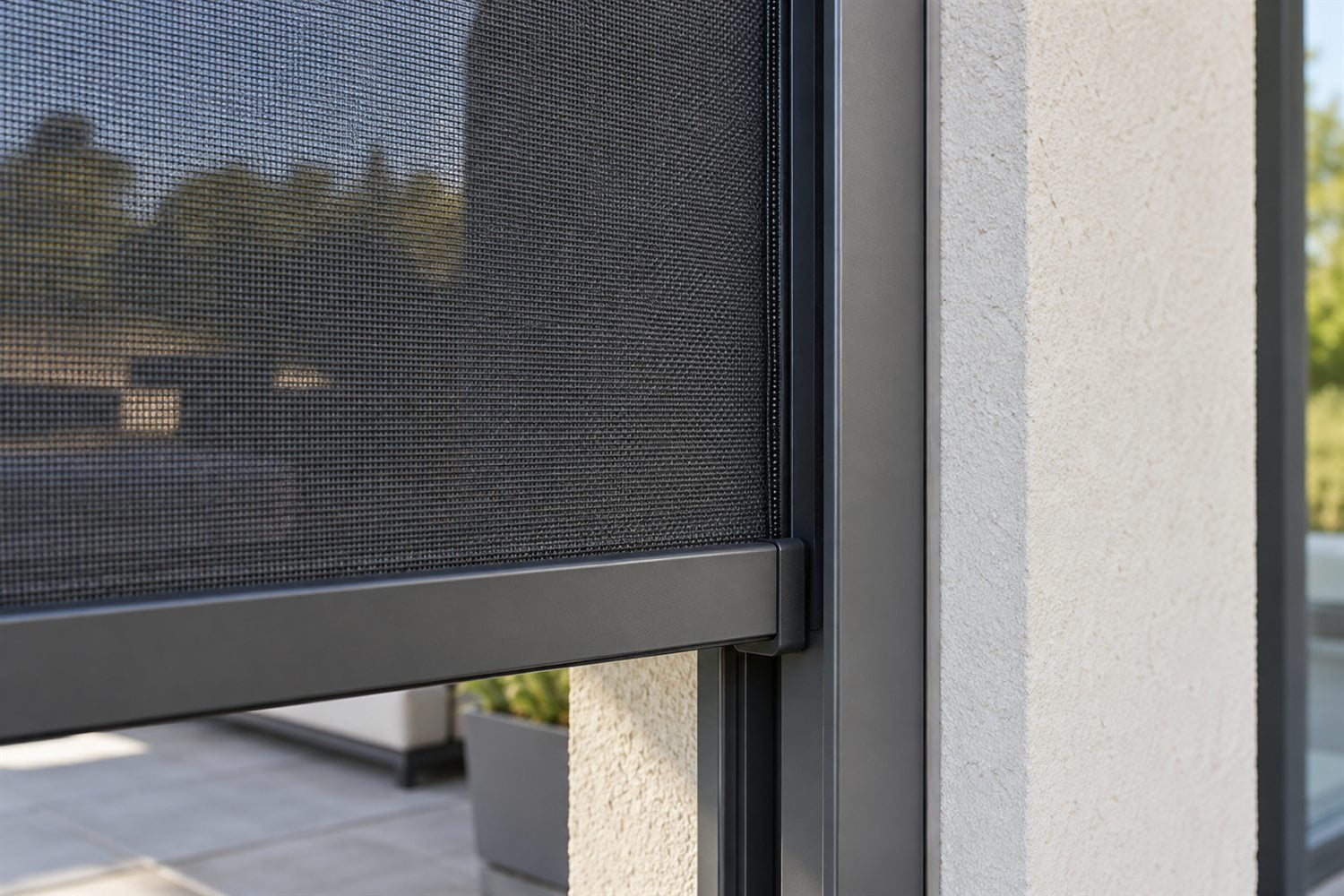 Image placement: after the paragraph describing the ZIP-style fabric edge and guide. Illustrative close-up; confirm the real edge bead, channel and clearances from the chosen system’s drawings.
A track-guided screen should not automatically be described as a roller-wheel mechanism. Some screens use a fabric spline sliding or retained in a track. Other products may use glides, end pieces or small guide rollers. Those designs have different interfaces and friction behavior.

Image placement: after this section. Illustrative close-up; confirm the real edge bead, channel and clearances from the chosen system’s drawings.
For a screen that does use a rolling guide component, the wheel profile, bearing arrangement, axle and mounting geometry must match the track. HUNE’s bearing-integrated sliding rollers and U-groove bearing guide wheels are relevant examples of guide-wheel components, but they should only be specified when the actual screen design calls for a wheel-and-track interface.
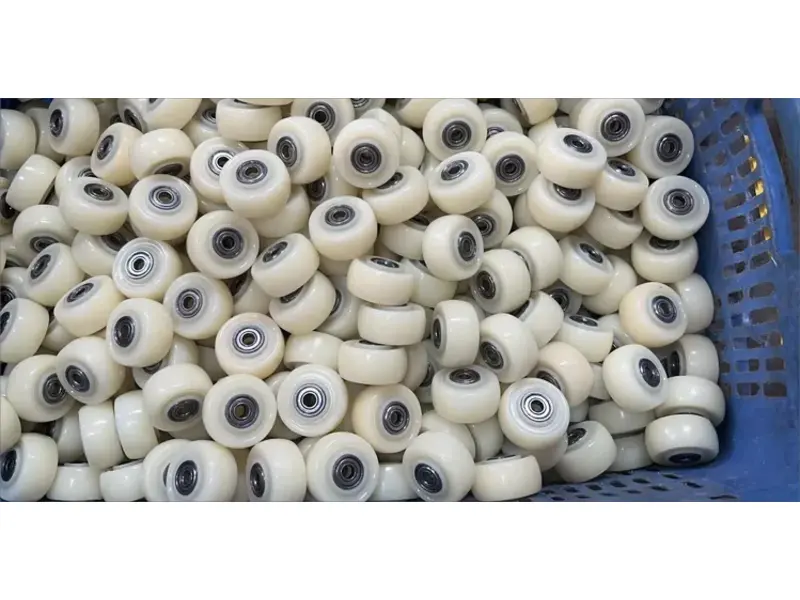
Image placement: after the paragraph mentioning HUNE roller components. This media-library photo illustrates the company’s bearing roller products; it is not presented as a screen-track assembly.
What Keeps the Screen Moving Evenly?
The two edges must experience compatible guidance and resistance. A screen can appear to move unevenly if the guides are not parallel, if one side has more drag, if the fabric winds off-center, or if the bottom bar twists. The motor may still rotate normally while the fabric skews, wrinkles or loads one edge more than the other.
Key design factors include:
- Parallel side tracks. Their spacing and alignment need to remain consistent along the full travel. A small mismatch can create uneven edge tension or binding.
- Compatible fabric retention. The edge bead, spline or guide insert must suit the track opening. Too much interference can raise friction; too little retention may allow the edge to disengage.
- Roller-tube alignment. The tube should be supported and aligned so fabric winds evenly across its width.
- Bottom-bar stiffness and end details. The bar spans the opening and links the two guided edges. Its end caps or guide pieces must not introduce different drag on the left and right.
- Wind and environmental conditions. Outdoor wind pressure can push the fabric against a guide or increase operating resistance. Follow the system manufacturer’s operating limits; a side track does not make a screen suitable for every wind condition.
- Travel limits and control setup. The motor’s upper and lower stops should correspond to the screen’s intended travel so the fabric is not repeatedly over-wound or pulled beyond its designed position.
Ziptrak’s FAQ notes that operating conditions such as wind can affect how a track-guided blind moves. The practical engineering point is to evaluate the screen as a fabric-and-guide system, rather than assuming motor torque alone will solve uneven travel.
Does Every Side-Track Screen Use Bearing Rollers?
No. Many ZIP-style screens guide the fabric edge directly in a channel. The word “track” describes the guiding path, not necessarily the rolling element. A screen can use a retained fabric edge, sliding insert, glide or roller carriage depending on its construction.
This distinction matters when selecting a component. A bearing roller can reduce rolling resistance in an application designed around a rotating wheel, but it cannot substitute for a fabric spline that must remain captured in a narrow guide channel. Before proposing a wheel, identify the actual contact pair: wheel against rail, sliding insert against channel, or fabric edge against guide profile.
For custom wheel-based guides, share the rail cross-section and running surface with the roller supplier. HUNE’s material and process guide can help buyers compare wheel materials and manufacturing routes when a roller is genuinely part of the design.
What Should OEM Buyers Specify?
Send the full interface and operating conditions, not only a screen width. To review a motorized screen or a guide-wheel component, an OEM should provide:
- screen opening width and drop, plus mounting arrangement;
- side-track cross-section, spacing and allowable running clearance;
- fabric type, edge bead or spline dimensions, and bottom-bar geometry;
- roller-tube dimensions, support positions and motor arrangement;
- whether guidance uses a retained fabric edge, sliding insert or wheel carriage;
- expected use environment, including outdoor moisture, dust, temperature and wind exposure;
- operating frequency, desired travel speed and control or limit requirements;
- material, corrosion, noise, service-life and appearance requirements;
- production volume, prototype expectations and inspection criteria.
If the design includes a wheel, add its outside diameter, width, groove/profile, bore or axle size, mounting method, bearing type and load direction. A drawing or representative sample usually resolves interface questions faster than a part name alone. For a component review, contact HUNE with the relevant drawing and operating conditions.
Frequently Asked Questions
Do motorized outdoor screens have a motor in each side track?
Usually the motor drives the top roller tube, while the side tracks guide the fabric edges. Product layouts vary, so confirm the motor and drive arrangement in the manufacturer’s drawings.
Do ZIP screens use bearing wheels in their side tracks?
Not necessarily. Many ZIP-style designs retain a beaded fabric edge in a channel. Some other screen architectures may use guide rollers or carriages.
Why can a motorized screen move unevenly?
Uneven rail alignment, different drag at each edge, off-center winding, fabric tension variation, a flexible bottom bar or wind pressure can all contribute. The cause depends on the system and its operating conditions.
Can a sliding roller be used as an outdoor screen guide?
Only when the design provides a suitable wheel-and-track interface. Check the rail profile, wheel geometry, bearing arrangement, exposure conditions and load path before selecting a roller.
What should I send a supplier for a custom screen guide roller?
Provide the track drawing, wheel contact profile, axle or bore dimensions, mounting details, operating environment, expected duty and production quantity. A sample can help verify the fit.