

A conveyor belt usually runs straight when its frame, pulleys and idlers are aligned, the belt and splice are sound, and material enters near the center. If it drifts, first find where the belt begins to move off-center and what changes at that point. Check for skewed rollers, buildup, off-center loading, belt or splice damage, and uneven tension before touching an adjustment. Then make one small correction at a time under the conveyor manufacturer’s procedure and reassess the full belt path. There is no universal “turn this side” rule because adjustment direction depends on conveyor geometry. Never reach into or reposition a moving conveyor using generic online instructions.
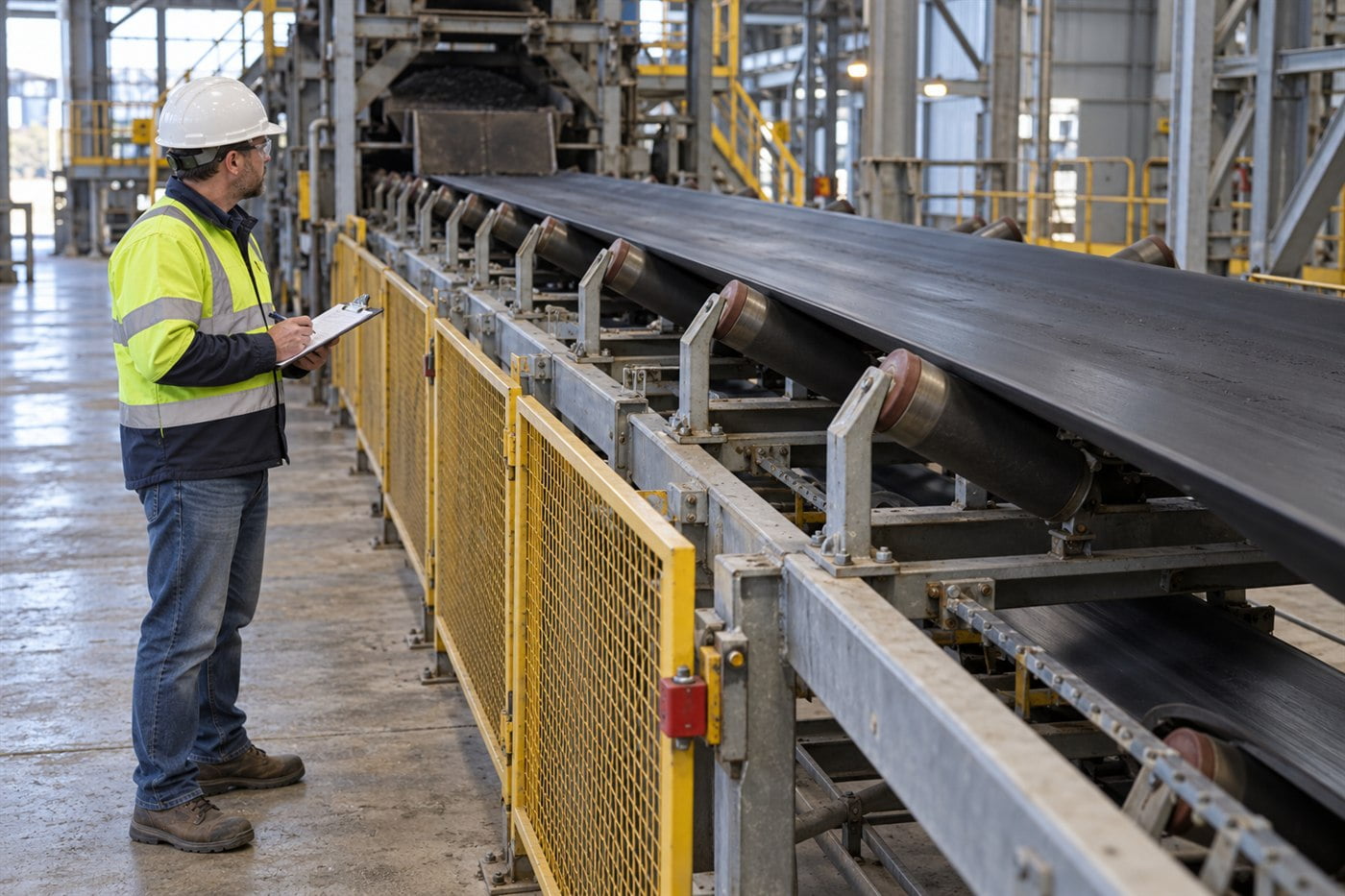
Why does a conveyor belt run to one side?
Mistracking usually means that contact, resistance, tension or loading differs across the belt width. The belt responds to the complete system, so changing one idler may hide rather than solve the fault.
Common causes include:
- Misaligned structure, pulleys or idlers. A roller out of square can create unequal contact and gradually steer the belt.
- Buildup or a seized roller. Material changes a roller’s effective diameter; a roller that no longer turns freely creates extra drag.
- Off-center loading. If drift appears only after product enters, check the chute, transfer point and load distribution.
- A poor splice or damaged belt. A splice that is not square may make the belt wander each time it passes a pulley. Cupping, stretching and uneven wear can also make tracking unstable.
- Uneven take-up or incorrect tension. A skewed take-up or uneven tension can move the running path. Simply increasing tension is not a dependable fix and may accelerate wear.
- Structure and environment. A bent frame, shifted support, water, ice, wind or uneven heating can change belt contact.
A belt tends to move toward the side that contacts a roller first or experiences greater friction. This principle helps explain how an angled roller can affect tracking, but it does not tell every operator which bolt to turn. The direction depends on the design. See Martin Engineering’s technical explanations of belt behavior and mistracking causes.
How can you identify where mistracking starts?
Record the belt’s position and operating conditions before adjusting anything. A repeatable pattern gives a better clue than trial-and-error changes.
| Observation | Check first |
|---|---|
| Belt position changes when product is added | Loading chute, transfer point, centered loading and carryback |
| Belt wanders when the splice reaches a pulley | Splice squareness, splice damage and belt condition |
| Drift begins at one particular conveyor section | Nearby idler or pulley alignment, buildup, support movement |
| Drift occurs empty and loaded along much of the conveyor | Frame geometry, pulleys, take-up, tension and belt condition |
| A roller is noisy, hot or not rotating | Roller and bearing condition; contamination or seizure |
| Tracking changes with weather or temperature | Moisture, ice, wind, exposure and uneven heating |
Observe only from an approved safe position with guards in place. Note the belt direction, where drift starts, whether it occurs loaded or empty, and whether it repeats with the splice. Do not use a hand or loose tool to test a moving belt.
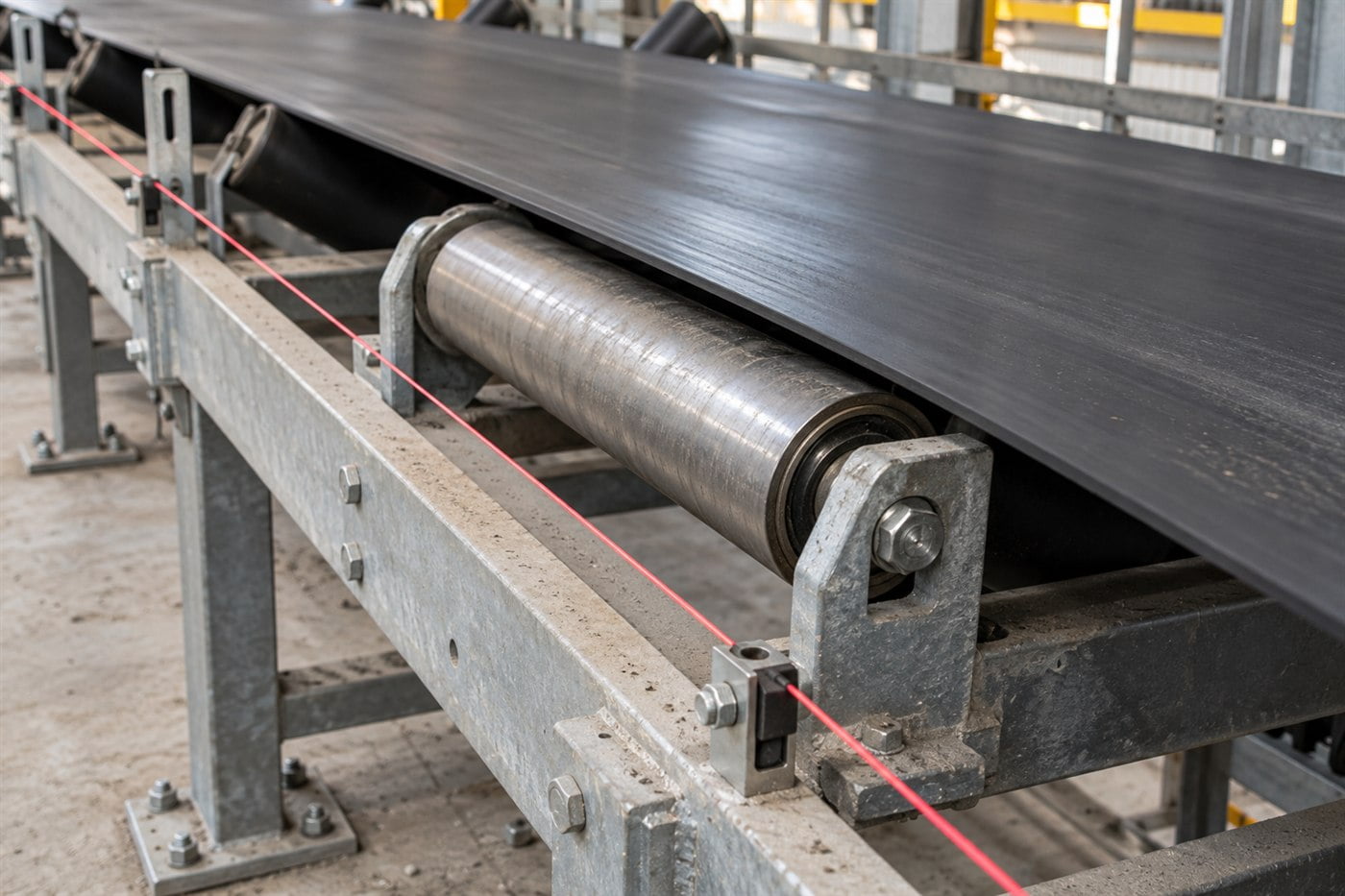
What should be inspected before a tracking adjustment?
Correct visible faults before fine-tuning alignment. An idler adjustment cannot reliably compensate for a bent frame, failed roller, damaged belt or badly placed load.
Use the conveyor drawing and maintenance manual to identify the intended centerline, head and tail pulleys, take-up and any training idlers. Where servicing could expose anyone to hazardous energy, inspection and corrective work must follow the site energy-control procedure.
- Frame and supports: look for bent members, loose or shifted supports, and signs of settlement.
- Pulleys and idlers: verify their intended positions and alignment; look for seized, damaged or unevenly worn rollers.
- Buildup and carryback: inspect pulley faces, idlers and return rollers for deposits that change contact or effective diameter.
- Belt and splice: check for edge damage, cupping, uneven wear, stretching and splice defects. A belt that shifts at each splice passage needs splice evaluation.
- Loading: check that material enters centrally and that transfer points do not push it sideways.
- Take-up and tension: confirm that the take-up can move as designed and is not skewed. Use the specified tensioning method.
For covered general-industry servicing, OSHA’s hazardous-energy control standard requires an energy-control program when unexpected startup or release of stored energy could cause injury. Its exact application depends on the work and jurisdiction. Follow local law and the site’s procedure; only trained, authorized personnel should do the work.
How do you adjust a conveyor belt to run straight?
Use a measured, one-change-at-a-time method that follows the specific conveyor manual. First correct the root cause, then make a small change at the component indicated by the observed drift.
A practical process is:
- Set a baseline. Record belt position at several points, noting whether it is empty or carrying product.
- Correct defects first. Address shifted structure, misaligned pulleys, seized rollers, buildup, splice faults and off-center loading before fine tracking.
- Select the adjustment point from the pattern. If drift starts near one station, inspect that station and the preceding components. Conditions upstream can influence where drift becomes visible.
- Make one small, documented change. Use the designated adjustment mechanism. Do not move multiple idlers at once, improvise tools, or use side guides to conceal a persistent fault.
- Recheck the full path. Once the equipment is returned to service under the approved procedure, observe enough belt travel to see whether the correction remains stable. Compare similar loading conditions.
- Stop and reassess if the result is mixed. If one section improves while another gets worse, return to diagnosis rather than making larger corrections.
Some conveyors have an authorized controlled test procedure after guards are restored and personnel are clear. Others require different controls. Follow the machine-specific risk assessment and operating instructions. Do not loosen or reposition rollers while a belt is moving based on generic advice.
How do rollers and bearings affect belt tracking?
Rollers support the belt path, while their alignment and condition determine how evenly they support it. A skewed, seized or contaminated roller can add uneven resistance. Bearing noise, heat, rough rotation or a stationary roller are signs to investigate under safe isolation.
Guide rollers and edge restraints can contain a belt in designs intended for them, but constant edge contact is a symptom. It can wear the belt edge and impose unwanted loads on the guide wheel and bearing. Correct the cause rather than treating a guide roller as the primary steering control.
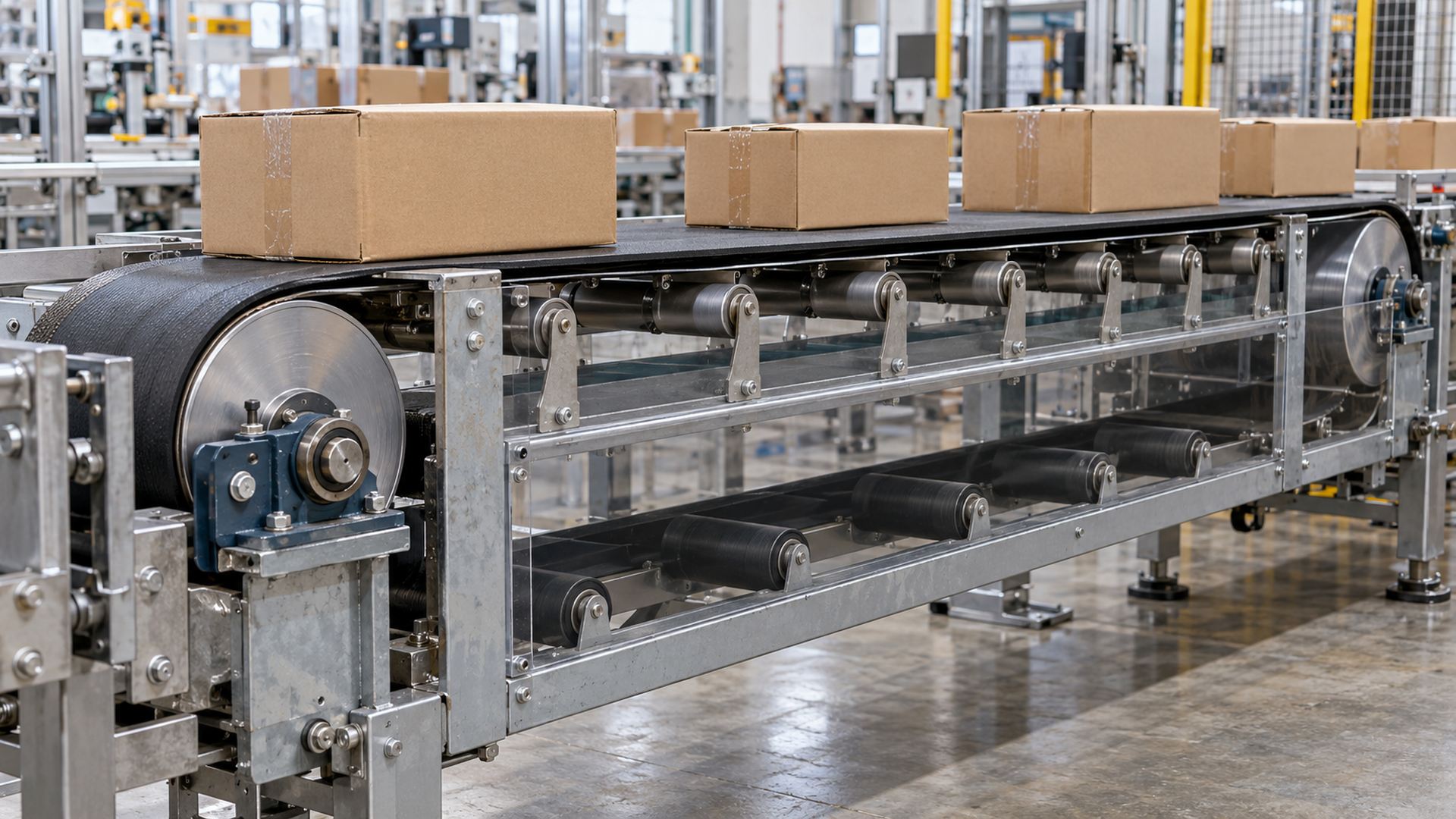
How can recurring tracking problems be prevented?
Keep alignment, loading and roller condition within the conveyor’s design intent. A simple inspection record helps identify whether a recurring fault is in the same place and under the same conditions.
- Check frame, pulley and idler alignment after structural work, impact or support movement.
- Keep transfer points centered and control spillage and carryback.
- Inspect belts and splices for edge wear, cracks, cupping and repeatable wandering.
- Replace rollers that are seized, damaged or no longer rotate freely; investigate bearing noise or heat.
- Verify take-up movement and tension using the manufacturer’s method.
- Record where and when each drift event occurs.
If adjustments keep returning, have a competent conveyor specialist measure the structure and belt path using the actual belt width, speed, load, material, environment and conveyor geometry.
Frequently asked questions
Which way should I adjust a conveyor idler to move the belt?
There is no safe universal direction. It depends on conveyor layout, belt direction, whether the roller supports the carrying or return run, and the adjustment design. Use the equipment manual and make a small, documented change only after identifying the cause and confirming the safe work procedure.
Why does a conveyor belt run straight empty but drift when loaded?
Start by checking load distribution and the chute. Confirm material enters near the belt center and does not shift at a transfer point. Carryback or a structural and belt condition that becomes more apparent under load may also contribute, so compare the same locations under similar conditions.
Why does the belt move side to side once per revolution?
A repeating shift as the splice passes a pulley suggests a splice that may not be square or damage at that point. Compare belt movement with splice passage and have the belt inspected before trying to steer it with idler adjustments.
Can side guide rollers fix a belt that keeps mistracking?
They can limit travel in a conveyor designed for side guides, but they do not correct misaligned pulleys, off-center loading, buildup or splice faults. Constant contact can damage the belt edge and load the guide assembly. Treat it as a symptom to investigate.
Is it safe to adjust a conveyor belt while it is running?
Do not reach into or reposition conveyor components while the belt is moving based on general advice. Servicing can expose workers to unexpected startup or stored energy. Follow the machine-specific procedure, guards and applicable energy-control requirements; adjustments and tests belong to trained, authorized personnel under approved controls.
The practical recommendation is to map where drift begins, correct structural, loading, belt and roller faults, and then make only small adjustments under the conveyor’s own procedure. If the belt still wanders, measure alignment and get a qualified conveyor specialist to review the system instead of continuing ad hoc corrections.