Deep groove ball bearings are used in components that need stable, low-friction rotation. Common examples include electric motors, pumps, household appliances, conveyors, agricultural equipment and many types of small rotating mechanisms.
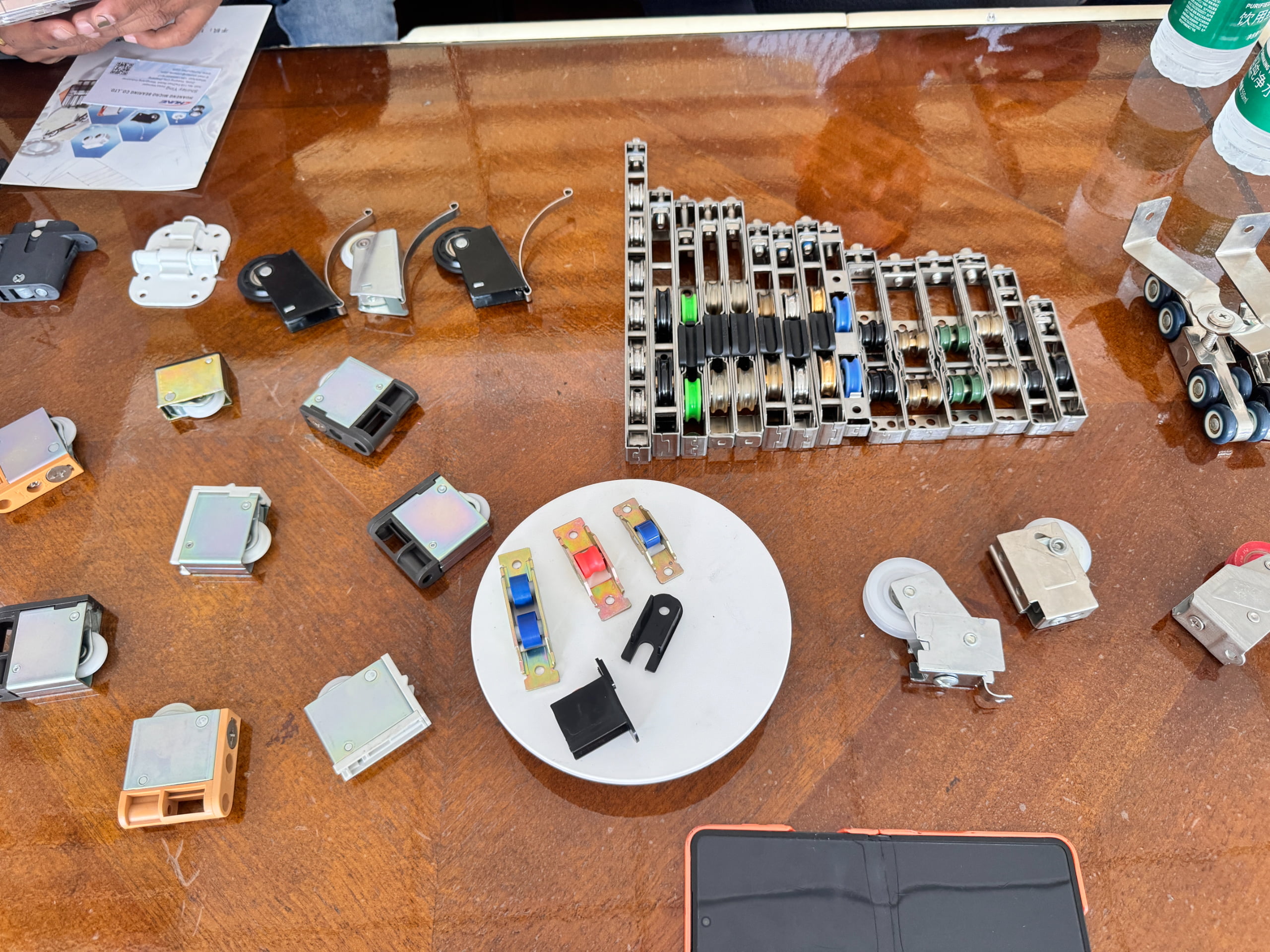
In our factory, however, we usually see them inside a more application-specific part:
- Window rollers
- Sliding door rollers
- Shower door pulleys
- Plastic-coated bearing rollers
- Rubber-coated rollers
- Furniture hardware
- Injection-moulded wheel assemblies
- Light and medium-duty guide or conveyor rollers
The bearing supports rotation, but it does not define the complete application.
When a deep groove ball bearing is moulded inside a POM wheel, fitted onto a shaft and installed in a stamped bracket, the buyer is no longer selecting only a bearing. The buyer is selecting a complete roller system.
The outer wheel material, track profile, shaft fit, bracket alignment, sealing and assembly dimensions can affect the result as much as the bearing number.
This guide explains where deep groove ball bearings are used, with a practical focus on sliding hardware and customized roller components.
What Is the Main Function of a Deep Groove Ball Bearing?
A deep groove ball bearing supports a rotating part and reduces friction between its moving and stationary surfaces. It is mainly selected for radial load, but it can also accommodate some axial load in both directions when the application and bearing arrangement allow it.
The bearing has deep raceway grooves in its inner and outer rings. Balls roll between these raceways and allow one ring to rotate relative to the other.
This simple structure is one reason the bearing appears in so many products.
Official guidance from NSK describes deep groove ball bearings as widely used bearings that can support radial and axial loads. NSK also notes that their point-contact rolling structure supports low torque, low noise and high-speed rotation.
In a roller component, the typical movement is different from what buyers see in a motor. The inner ring may be fixed on a shaft while the bearing outer ring and moulded wheel rotate around it. In other assemblies, the mounting arrangement may be reversed.
For the small roller components we manufacture, buyers normally want the bearing to provide:
- Smooth starting and running
- Lower sliding resistance
- Stable rotation
- Acceptable noise
- Consistent movement over repeated use
- A compact structure that fits inside the wheel
These are application goals. The bearing can support them, but only when the complete roller is correctly designed and installed.
Where Are Deep Groove Ball Bearings Commonly Used?
Deep groove ball bearings are commonly used in motors, pumps, appliances, agricultural machinery, material-handling equipment and conveyors. They are also widely used inside small wheels, pulleys and sliding roller assemblies.
SKF lists electric motors and generators, agriculture, material handling, industrial transmissions, food and beverage equipment, pumps and industrial fans among typical application areas.
NSK also identifies motors, electric machinery, agricultural machinery, textile machinery and conveyance equipment.
Those examples show the broad market. For an OEM buyer, the more useful question is: What job does the bearing perform inside the final component?
| Final component | Bearing function | Other parts that affect performance |
|---|---|---|
| Sliding door roller | Allows the wheel to rotate on the shaft | Wheel material, track, bracket and alignment |
| Window roller | Supports compact, repeated sliding movement | Housing size, wheel profile and installation clearance |
| Shower door pulley | Supports smooth movement in a wet area | Seal, exposed metal, wheel material and maintenance |
| Plastic-coated bearing roller | Forms the rotating core of the moulded wheel | Plastic grade, moulding structure, dimensions and track |
| Rubber-coated roller | Supports rotation under a softer contact surface | Rubber compound, bond, deformation and surface finish |
| Furniture roller | Supports light, intermittent movement | Noise, appearance, mounting and floor or track contact |
| Guide roller | Guides a moving part or material | Load direction, alignment, speed and contamination |
| Conveyor roller component | Supports repeated material movement | Duty cycle, load, shaft, seal and roller body |
The same bearing series may appear in several of these parts. That does not mean the finished rollers are interchangeable.
How Are Deep Groove Ball Bearings Used in Window and Door Rollers?
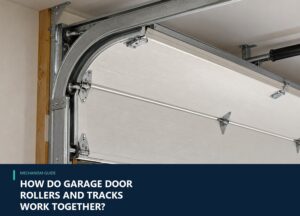
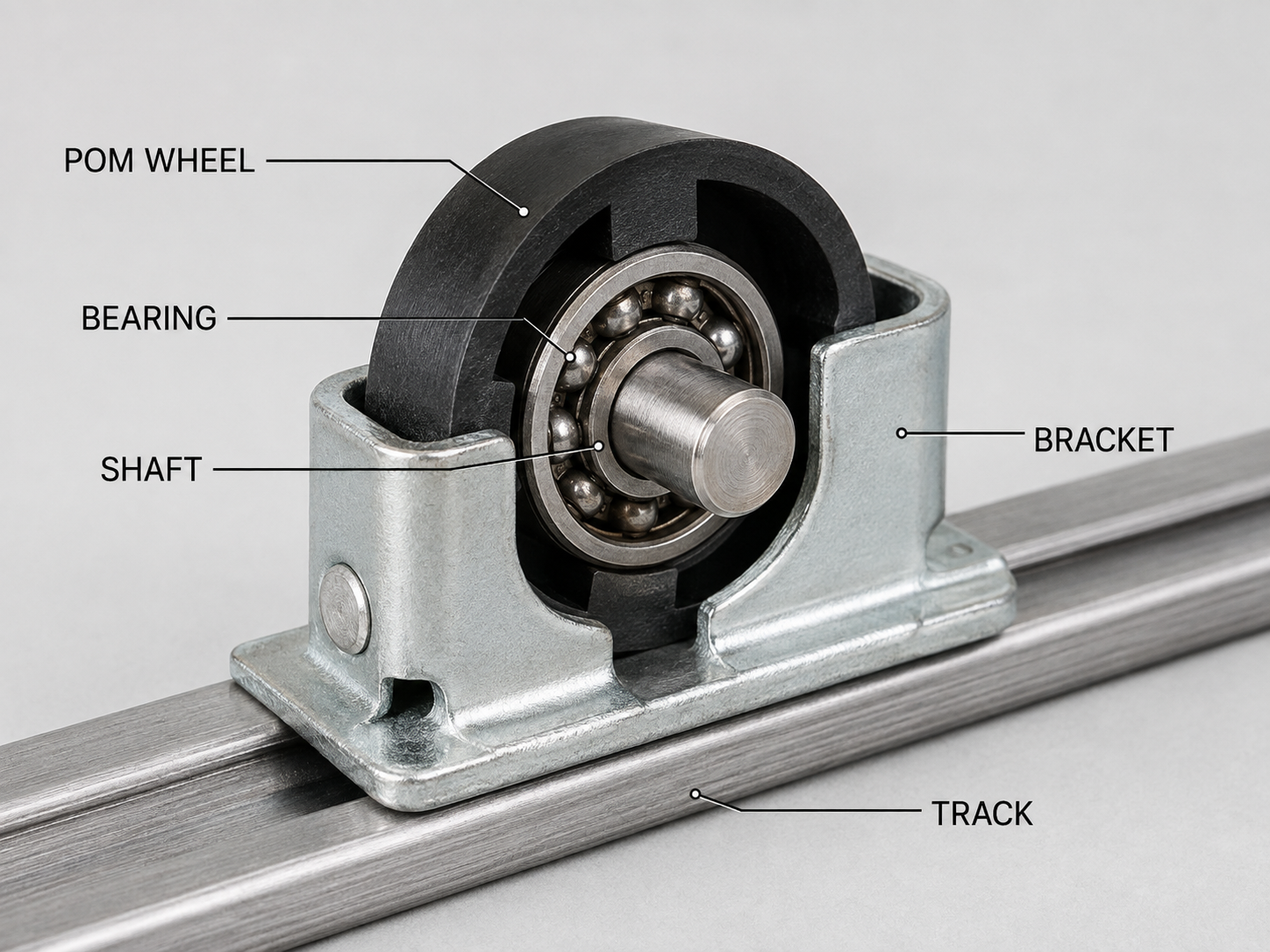
In window and sliding door rollers, a deep groove ball bearing usually sits inside a plastic, metal or rubber wheel and rotates around a shaft or bolt. The complete roller then runs on a track.
Window and door manufacturers often choose this structure because it is compact and supports smooth repeated movement.
A typical roller assembly may include:
- A deep groove ball bearing
- A POM, PA, rubber or metal outer wheel
- A shaft, rivet or bolt
- Washers or spacers
- A stamped metal housing or adjustable bracket
- A track with a flat, U-shaped, V-shaped or other profile
In many enquiries, the buyer sends only a bearing model and an outer diameter. That information is not enough to confirm the roller.
For a window or door application, I also check:
- Door or sash weight
- Number of load-bearing rollers
- Track profile and material
- Wheel groove or running-surface shape
- Installation space
- Shaft or bolt dimensions
- Bracket adjustment method
- Indoor, outdoor or humid use
- Expected noise and smoothness
- Opening frequency
A 6002 deep groove ball bearing, for example, describes the bearing dimensions and series.
It does not tell me whether the buyer needs a flat POM wheel, a U-groove guide wheel, a double-bearing roller or a complete adjustable door carriage.
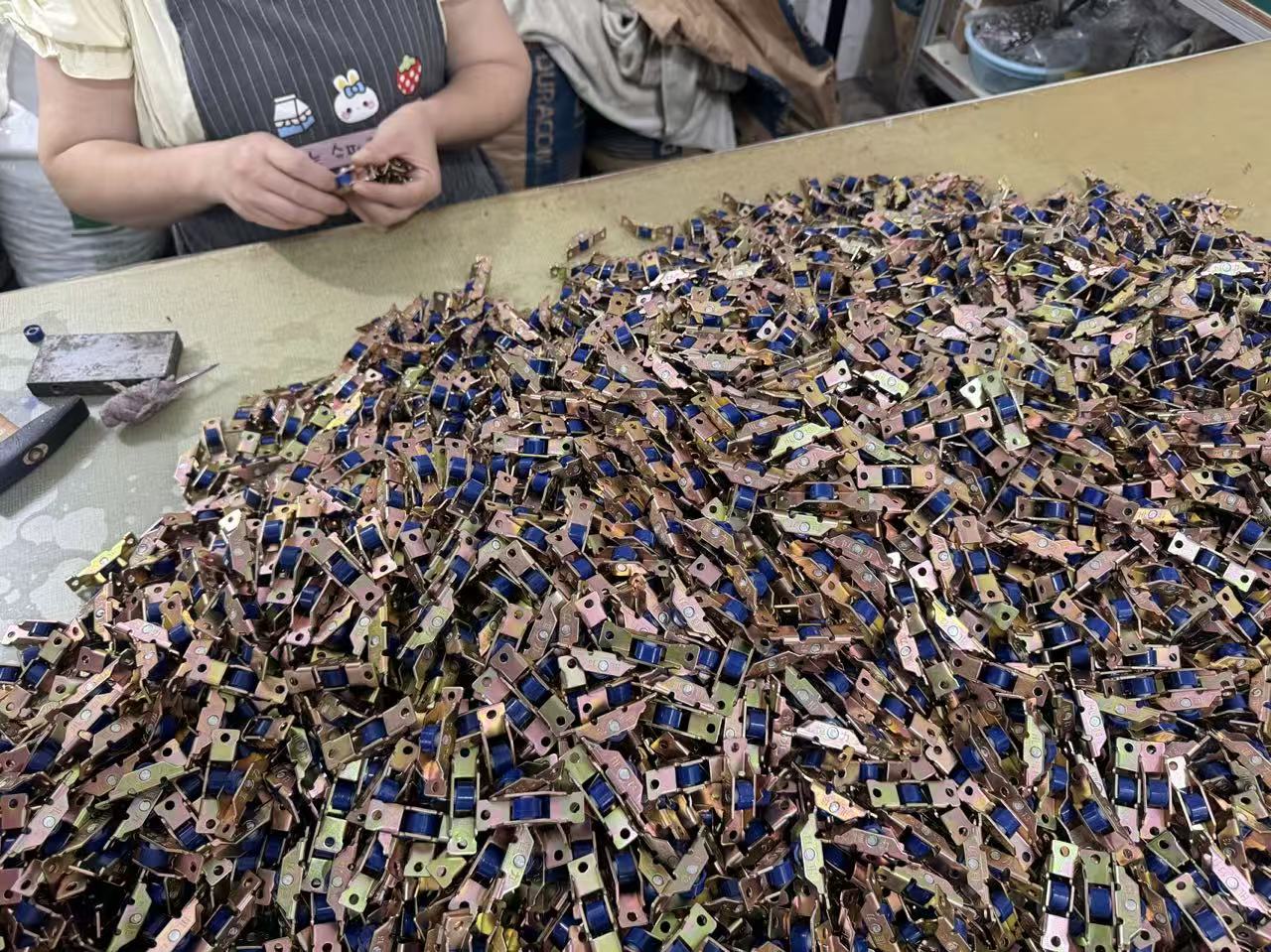
Why Are Deep Groove Ball Bearings Used in Shower Door Pulleys?
Deep groove ball bearings are used in shower door pulleys because the pulley needs compact, smooth rotation, but moisture makes the seal, metal parts and installation more important.
A shower door pulley may look like a simple wheel. Its working environment creates several practical risks:
- Water and humidity
- Cleaning chemicals
- Soap residue and contamination
- Repeated opening and closing
- Visible hardware and appearance requirements
- Glass-panel alignment
The buyer should not assume that every sealed bearing or stainless-looking component is automatically suitable for long-term wet use.
For this type of project, I normally review:
| Selection point | Why it matters |
|---|---|
| Bearing seal | Helps protect the bearing from moisture and contamination |
| Bearing and metal material | Affects corrosion risk |
| Wheel material | Affects noise, wear and contact with the track |
| Shaft and screw material | Exposed parts also face moisture |
| Bracket alignment | Misalignment can create uneven running and edge contact |
| Installation clearance | Affects wobble, interference and glass-panel position |
| Cleaning environment | Chemicals may affect plastic, rubber, grease and metal surfaces |
I may suggest a sealed bearing and corrosion-resistant exposed components after reviewing the application.
I would not confirm the structure from the word “shower” alone. The buyer still needs to define the exact environment and acceptance requirements.
How Are Deep Groove Ball Bearings Used in Plastic-Coated and Rubber-Coated Rollers?
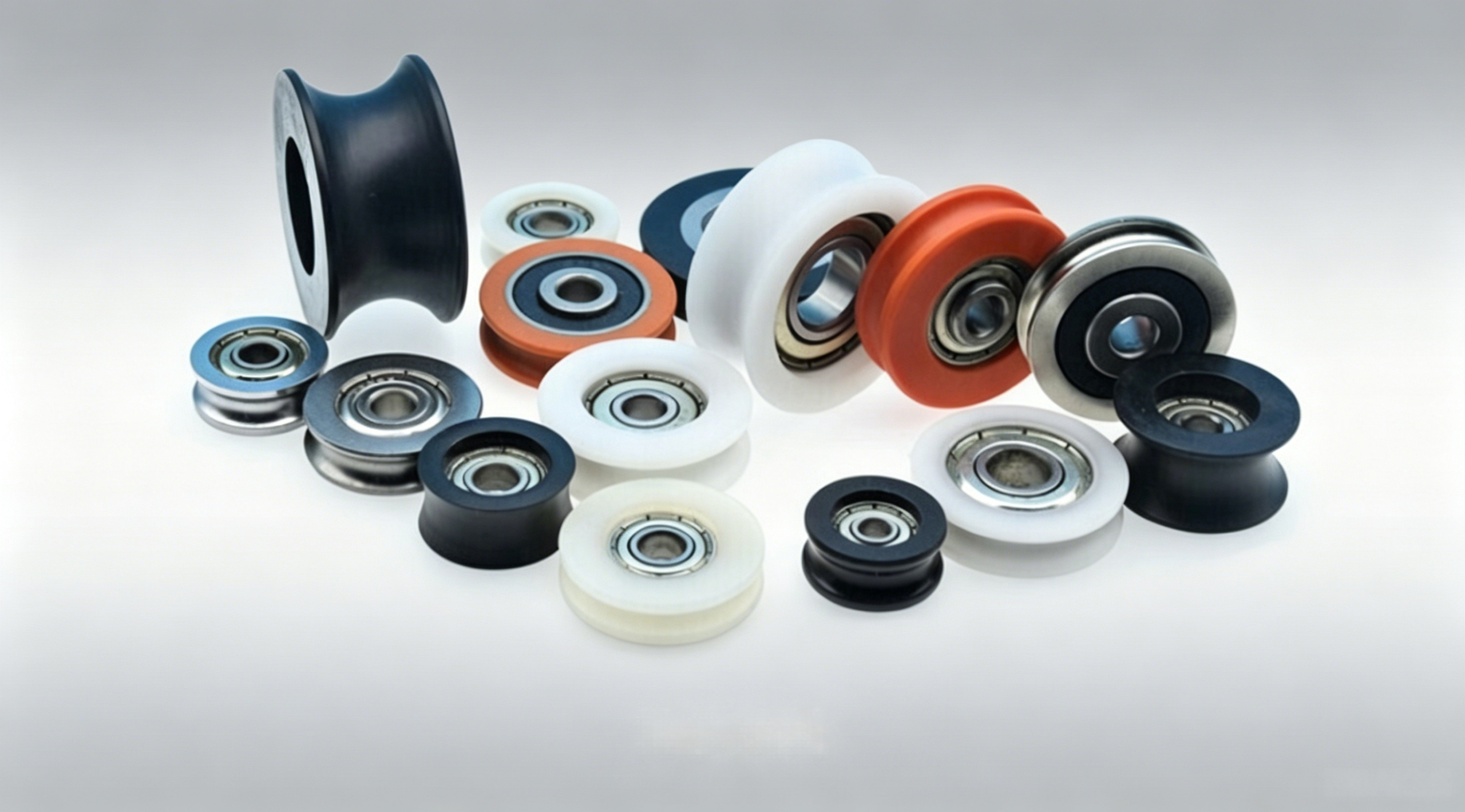
In a coated roller, the deep groove ball bearing forms the rotating inner core while plastic or rubber creates the outer running surface. This lets the manufacturer adapt one bearing concept to different tracks, noise targets and installation structures.
This is the application area we know best.
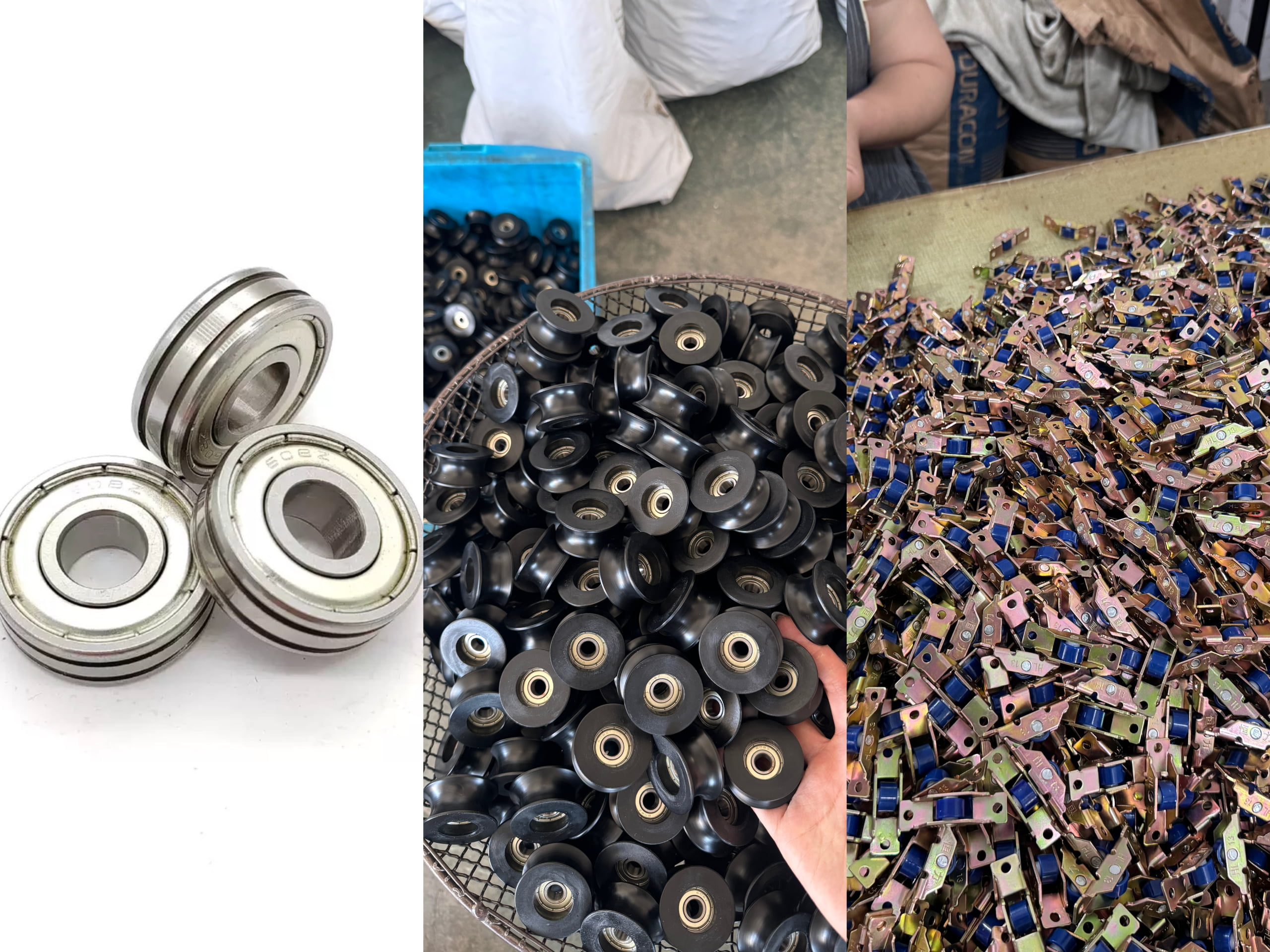
We can injection-mould engineering plastic around a bearing to produce:
- Flat rollers
- U-groove rollers
- V-groove rollers
- H-type rollers
- R-groove rollers
- Double-flange rollers
- Shafted rollers
- Custom wheel profiles
We can also combine the wheel with a shaft, stamped bracket or other hardware.
The outer layer is not decorative. It becomes the contact surface between the roller and the track.
| Outer wheel option | Typical reason for evaluation | Points to confirm |
|---|---|---|
| POM | Dimensional stability, smooth surface and common roller use | Load, temperature, UV and chemical contact |
| PA nylon | Wear-focused applications or specific customer requirements | Moisture absorption, dimensions and grade |
| Rubber coating | Softer contact, grip or noise reduction | Hardness, deformation, bonding and wear |
| Metal wheel | Higher stiffness or metal-track requirements | Noise, track wear, corrosion and weight |
| Special engineering plastic | Temperature, compliance or chemical requirements | Verified material grade and project conditions |
The moulding structure also matters. The manufacturer must control the bearing position, plastic coverage, wheel dimensions, groove profile and visible moulding defects.
If the outer wheel is off-centre, the bearing may rotate correctly while the finished roller still wobbles.
If the groove does not match the track, a high-quality bearing cannot prevent poor contact.
Where Are Deep Groove Ball Bearings Used in Furniture and Small Sliding Mechanisms?
They are used in wardrobe doors, cabinet systems, partitions, drawers, movable panels and other compact mechanisms that require controlled, low-friction movement.
These applications are usually light or medium duty, but that does not make selection unimportant.
Furniture and interior hardware buyers may care about:
- Quiet movement
- Low starting resistance
- A compact wheel and bracket
- Clean appearance
- Protection of the track surface
- Adjustment after installation
- Stable supply for repeated furniture programmes
Some mechanisms use a load-bearing bottom roller. Others use a top guide roller that mainly controls alignment. These two positions can use visually similar wheels but experience different loads.
The first question should therefore be: Does the roller carry the weight or only guide the moving part?
A guide wheel may experience lateral contact and intermittent impact. A bottom roller may carry sustained radial load.
The bearing, wheel profile, bracket and shaft should match the real force direction.
For private-label furniture hardware, the buyer may also need customized colour, surface treatment, logo, packaging, barcode and replacement supply.
These requirements belong to the complete product specification, not to the bearing catalogue.
Can Deep Groove Ball Bearings Be Used in Industrial Guide and Conveyor Rollers?
Yes. They can be used in light and medium-duty guide rollers, conveyor components and equipment mechanisms when the load, speed, alignment, contamination and duty cycle suit the bearing and roller structure.
Material-handling and conveyance equipment are recognized application areas for deep groove ball bearings by both SKF and NSK.
However, the phrase “industrial roller” covers very different conditions.
A roller that moves a small product tray once every minute is not equivalent to a roller that runs continuously near dust, oil or heat.
For industrial enquiries, I ask for:
| Operating condition | Information needed |
|---|---|
| Load | Radial, axial, combined, static or impact load |
| Speed | Rotational speed or linear travel speed |
| Duty cycle | Intermittent, frequent or continuous movement |
| Alignment | Shaft and bracket accuracy and allowable misalignment |
| Environment | Dust, moisture, oil, chemicals and temperature |
| Contact surface | Track or product material and surface finish |
| Installation | Shaft fit, retention and available space |
| Acceptance | Noise, smoothness, wear and application-test requirements |
Deep groove ball bearings are not self-aligning bearings.
If the shaft and housing are poorly aligned, the bearing and wheel may face additional stress. An industrial buyer should not use a standard roller to compensate for an inaccurate machine structure.
If the project has a defined cycle, speed or load requirement, the buyer should test the complete roller in the actual equipment or in a representative test setup.
Why Does the Bearing Number Not Define the Final Application?
A bearing number identifies the bearing series and main boundary dimensions, but it does not define the wheel, shaft, bracket, track, fit, seal, grease or installation accuracy of the complete component.
This is the most common misunderstanding I see in roller enquiries.
A customer may ask:
Can a 6002RS bearing carry my 300 kg sliding door?
I cannot answer that question from the bearing number alone.
The real assembly may use two, four or more rollers. The load may not divide equally because of frame deformation, track unevenness or bracket adjustment.
The bearing may be strong enough while the plastic wheel, shaft or stamped housing becomes the limiting part.
The buyer should separate the specification into layers:
| Specification layer | Examples |
|---|---|
| Bearing | Model, internal clearance, seal or shield and grease |
| Outer wheel | Material, diameter, thickness, groove and hardness |
| Shaft | Diameter, material, tolerance and retention method |
| Bracket | Material, thickness, surface treatment and adjustment |
| Track | Profile, material, roughness and alignment |
| Operating conditions | Load, speed, frequency, impact and environment |
| Commercial requirements | Quantity, packaging, labels and repeat supply |
A Real Exterior Sliding Door Enquiry
We received an enquiry for a roller set used in an exterior sliding aluminium glass door.
The proposed roller used two 6002RS bearings with a POM outer wheel, and the customer mentioned a total load of approximately 200–300 kg for one set.
The bearing model and total load still did not allow us to confirm the component.
We needed to know:
- The door sash weight
- The number of roller sets carrying the door
- The actual load distribution
- The wheel and track contact profile
- The shaft and bracket structure
- Outdoor moisture and contamination conditions
- Installation tolerances
- The customer’s test method
We can manufacture according to a complete drawing or physical sample and suggest production-related changes.
We do not design an entire door carriage from a partial picture because the missing system information creates too much risk.
This is why bearing selection and roller-system validation should not be treated as the same decision.
Should You Use an Open, Shielded or Sealed Deep Groove Ball Bearing?
Use the closure type that matches contamination, moisture, friction, speed and maintenance conditions. A sealed bearing is useful in many roller applications, but it is not automatically the best choice for every project.
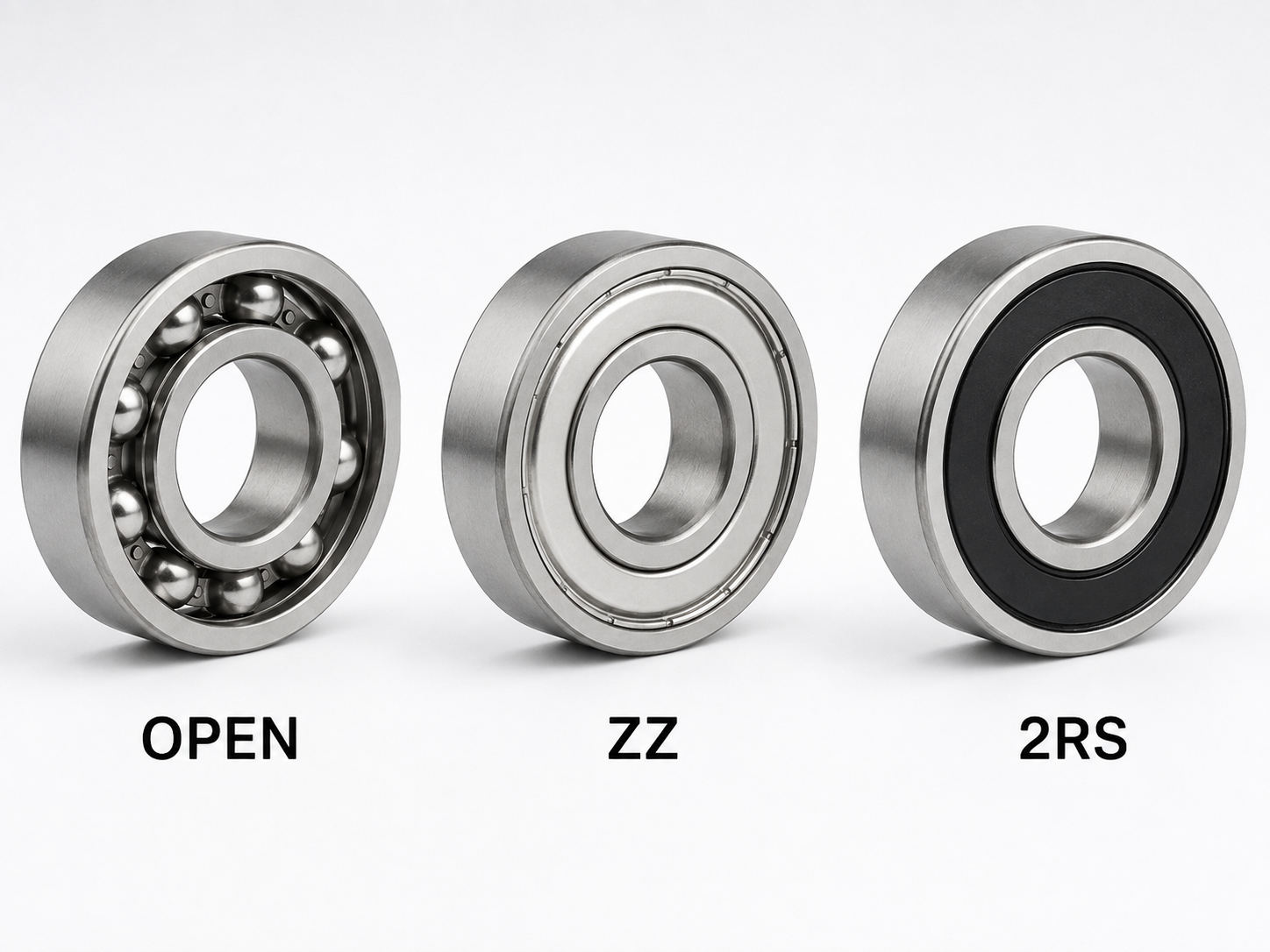
Deep groove ball bearings are available as open bearings and with shields or seals.
NTN explains that metal shields help retain lubricant and limit the entry of larger foreign matter, while pre-lubricated sealed or shielded bearings can be used without separate closures in many applications.
| Bearing configuration | Practical use consideration |
|---|---|
| Open bearing | Low closure friction, but limited built-in protection from contamination |
| Metal shield | Helps retain grease and block larger particles with little contact resistance |
| Contact rubber seal | Better barrier against contamination, with additional running resistance |
| Non-contact seal | Balances protection and lower friction in suitable applications |
The exact suffix and construction vary by bearing manufacturer.
Buyers should confirm the supplier’s specification instead of assuming that every “RS,” “2RS,” “Z” or “ZZ” product has identical seal contact, grease and performance.
In many sliding hardware applications, we use or evaluate a 2RS-type sealed bearing because the product may face dust or moisture.
I still check:
- Whether the seal is required on one or both sides
- Expected speed
- Required starting resistance
- Temperature
- Water or dust exposure
- Grease requirements
- Bearing supplier and specification
- Whether the outer ring rotates inside the wheel
A seal can protect the bearing interior. It cannot protect an unsuitable shaft, bracket or exposed metal surface.
What Loads Can a Deep Groove Ball Bearing Handle?
A deep groove ball bearing mainly carries radial load and can carry a limited axial load, but the allowable load depends on the exact bearing, speed, mounting, lubrication and operating conditions.
There is no honest universal answer such as “a 30 mm bearing roller carries 100 kg.”
The bearing manufacturer’s load rating applies to a defined bearing under specified calculation conditions.
A finished roller adds other possible limits:
- Plastic thickness around the bearing
- Wheel geometry
- Groove contact area
- Shaft diameter and strength
- Bracket thickness
- Riveting or retaining structure
- Load distribution between rollers
- Impact during starting, stopping or door slamming
- Track alignment and surface
- Temperature and contamination
SKF’s bearing suitability overview shows why bearing type selection is a trade-off.
Deep groove ball bearings offer strong advantages in speed, low friction and integral sealing, but they are not designed to tolerate substantial misalignment or moment load.
For a complete roller assembly, the buyer should provide the test conditions instead of asking for an isolated load number.
| Test input | Example question |
|---|---|
| Total moving weight | What is the door, panel or equipment load? |
| Roller quantity | How many wheels actually carry the load? |
| Load direction | Is the force radial, axial, lateral or combined? |
| Movement | Is it static, intermittent or continuous? |
| Speed and travel | How fast and how far does it move? |
| Impact | Does the mechanism slam, stop suddenly or vibrate? |
| Environment | Is there water, dust, heat, cold, oil or chemicals? |
| Acceptance standard | What must the sample pass? |
The final confirmation should come from calculation by the responsible design team and an application test using the complete assembly.
When Is a Standard Deep Groove Ball Bearing Enough?
A standard bearing can be enough when the buyer already has a correctly designed wheel, housing or machine structure and only needs a bearing that meets the approved specification.
This route normally works when:
- The bearing model is already defined
- The shaft and housing fits are confirmed
- The load and speed have been evaluated
- The seal, grease and clearance are specified
- The installation structure already exists
- The buyer can test the bearing in the final application
In this case, the bearing is purchased as a standard component and installed into the buyer’s own assembly.
For many door, furniture and equipment projects, however, the buyer does not want to assemble a bare bearing.
The buyer needs a functional wheel or hardware component that can go directly into production.
That is where a coated bearing roller or custom assembly becomes more useful.
When Do You Need a Custom Roller Assembly?
You need a custom roller assembly when the bearing must be combined with a specific wheel profile, material, shaft, bracket or installation structure that standard catalogue parts cannot provide.
Customization may involve:
- Injection-moulding POM, PA or another plastic around the bearing
- Adding a rubber contact layer
- Producing a flat, U, V, H, R or non-standard groove
- Combining one or two bearings inside one wheel
- Adding a custom shaft, rivet or bolt
- Producing a stamped metal bracket or housing
- Changing colour or appearance
- Meeting specific tolerance and packaging requirements
| Project situation | Existing roller | Secondary machining | New mould or custom assembly |
|---|---|---|---|
| Standard dimensions and profile match | Best first option | Usually unnecessary | Usually unnecessary |
| Existing wheel is close but not exact | Check installation tolerance | May adjust diameter or groove | Consider for stable volume |
| Unique wheel profile | Unlikely to fit | Limited by the existing structure | Often the correct route |
| Low trial quantity | Cost-effective if suitable | Can avoid initial tooling | Tooling may be difficult to justify |
| Stable annual demand | Possible after approval | Compare long-term unit cost | Dedicated tooling may improve repeat supply |
| Complete bracket assembly required | Only if an existing assembly fits | Limited | Custom assembly may be required |
In our normal process, we first check the drawing or sample against our existing mould library.
If a close product exists, we assess whether it can be used directly or modified through secondary machining.
If the dimensions, groove or structure are unique and the project has stable demand, we evaluate a new mould.
The best option is not always the one with the lowest initial tooling cost.
It is the option that reduces fit, quality and repeat-supply risk over the expected order volume.
What Should You Test Before Mass Production?
Test the complete roller inside the actual bracket and on the real track. A loose bearing or wheel sample cannot confirm the full installation result.
Before approving mass production, the buyer should check:
- Does the bearing bore fit the shaft or bolt?
- Does the wheel fit inside the bracket?
- Does the outer wheel profile match the track?
- Does the assembly move through its full travel?
- Is the lateral clearance acceptable?
- Does the roller remain aligned?
- Is there jamming, interference or visible wobble?
- Is the noise acceptable?
- Is the movement smooth under the real load?
- Does the material suit the environment?
- Does the sample match the approved drawing?
- Are the packaging and labels correct?
We can perform dimensional inspection, appearance checks, bearing-rotation checks and basic manual track-fit checks when the customer supplies the matching track and bracket.
A manual test confirms basic fit and movement. It does not prove service life or performance at a defined load, speed or cycle count.
If the project has a performance requirement, the buyer should provide:
- Test load
- Speed and travel distance
- Cycle count
- Temperature and environmental conditions
- Installation method
- Acceptance standard
I prefer to find problems during sample approval. A change is easier at this stage than after thousands of assembled rollers have been shipped.
What Are the Most Common Buyer Mistakes?
The most common mistake is selecting the bearing first and assuming the rest of the roller will automatically work.
In the enquiries we review, the main risks are:
| Buyer mistake | Possible result |
|---|---|
| Sending only the bearing number | Wrong wheel, shaft or bracket structure |
| Selecting by outer diameter alone | Incorrect groove, width or installation fit |
| Dividing total load equally by wheel quantity | One roller may carry more load in the real assembly |
| Ignoring track profile | Edge contact, noise, wear or derailment risk |
| Choosing 2RS without checking conditions | Unnecessary resistance or incorrect protection assumption |
| Ignoring shaft and bracket tolerances | Bearing stress, wobble or jamming |
| Selecting plastic only by price | Poor wear, moisture, temperature or appearance result |
| Approving a loose sample | Problems appear only after installation |
| Requesting a universal load rating | Test conditions and assembly limits remain unknown |
| Changing suppliers without an approved specification | Batch differences and replacement problems |
A deep groove ball bearing is widely used because it is versatile.
Versatility does not remove the need for application information.
How Should B2B Buyers Specify a Deep Groove Bearing Roller?
Control the bearing, outer wheel, shaft, bracket, track interface, inspection standard and packaging as one approved product specification.
For repeat OEM orders, the purchasing team should keep:
- Approved drawing
- Approved physical sample
- Bearing model and closure type
- Bearing supplier or agreed quality level
- Outer wheel material and colour
- Wheel profile and tolerances
- Shaft and bracket specifications
- Surface-treatment requirements
- Inspection and test standard
- Packaging and label specification
- Mould agreement
- Change-control requirement
- Batch identification method
A company does not purchase only a bearing roller. It purchases a repeatable supply result.
This is especially important for importers, hardware brands and equipment manufacturers that need the same component over several years.
What Information Should You Send for an OEM Quotation?
Send the complete application, load, movement, environment, dimensions and assembly structure. A drawing or physical sample gives the manufacturer the best starting point.
Use this checklist:
| Information group | What to provide |
|---|---|
| Application | Window, sliding door, shower door, furniture, conveyor or equipment |
| Load | Total weight, roller quantity, distribution and direction |
| Movement | Frequency, speed, travel distance, impact and vibration |
| Environment | Indoor, outdoor, moisture, dust, oil, chemicals and temperature |
| Bearing | Model, bore, OD, width, seal or shield and grease requirement |
| Outer wheel | Material, hardness, colour, diameter, thickness and profile |
| Installation | Shaft, bolt, bracket, housing, spacers and available space |
| Track | Cross-section, material, surface and installation tolerance |
| Performance | Noise, smoothness, wear and application-test requirements |
| Quality | Drawing tolerance, inspection report and compliance needs |
| Quantity | Sample quantity, first order and annual demand |
| Commercial | Target price, tooling budget and delivery date |
| Branding | Logo, neutral packaging, private label, barcode and carton marks |
If you do not have a complete drawing, send:
- Photos from several angles
- A physical bearing roller sample
- Track and bracket samples
- Manual measurements
- Installation photos
- A short operating video
- A description of the current problem
We can manufacture roller components according to a confirmed drawing or sample.
We can also review materials, moulding feasibility, tolerances and production methods.
The buyer or system designer should approve the complete application design and final performance test.
Where Are Deep Groove Ball Bearings Used? The Practical Answer
Deep groove ball bearings are used wherever compact, smooth and low-friction rotation is needed, but their real value depends on how they are integrated into the final component.
In motors and pumps, the bearing supports a rotating shaft.
In a plastic-coated roller, it supports the outer wheel.
In a sliding door assembly, it works together with the wheel, shaft, bracket and track.
In a guide roller, it must also match the load direction, alignment and operating environment.
For B2B buyers, the correct sourcing order is:
- Define the application.
- Confirm load and movement.
- Review the environment.
- Define the track and installation structure.
- Select the bearing and closure type.
- Select the outer wheel material and profile.
- Compare an existing roller, secondary machining and new tooling.
- Test the complete sample in the real assembly.
- Approve the drawing and supply specification.
Do not ask only, “Which bearing should I use?”
Ask, “What complete rotating component will work reliably in my system?”
That question leads to a much safer purchasing decision.
Do You Need a Deep Groove Bearing Roller for an OEM Project?
Send us your:
- Drawing or physical sample
- Application and installation photos
- Load and movement conditions
- Bearing model or required dimensions
- Wheel material and profile
- Shaft, bracket and track structure
- Working environment
- Noise and smoothness requirements
- Trial and annual quantities
- Appearance and packaging requirements
We will first check whether an existing roller can meet the application.
If not, we can evaluate secondary machining, a new plastic or rubber-coated wheel, or a complete custom roller assembly.
View Our Plastic-Coated Bearing Rollers
Learn About Our OEM and ODM Process
About the Author
I work with plastic-coated bearing rollers, rubber-coated rollers, sliding rollers, window and door hardware and customized roller assemblies at Zhejiang Huaneng Micro Bearing Co., Ltd.
Our team has long-term manufacturing and export experience.
I review enquiries from window and door hardware manufacturers, sliding system companies, machinery manufacturers, importers, wholesalers and OEM buyers.
My work includes checking drawings and samples, matching existing moulds, confirming materials, arranging sample production and following projects through mass production.
I write from the questions and sourcing risks that we see in real roller projects.
My goal is to help buyers provide clearer requirements and select a more suitable component.