Conveyor guide rollers keep products on track by creating rolling contact at the sides of the product, limiting unwanted lateral movement while the conveyor belt or carrying rollers move it forward. The guide rollers do not normally drive the product. Their position, profile, spacing and contact force help keep each item within a lane or present it consistently to the next operation.
That is different from tracking the conveyor belt itself. A product guide controls the item; a belt-tracking device controls the belt’s path. The correct design depends on what is moving, how much it varies in width and shape, where the guide touches it, and whether the contact needs to roll or slide. For an OEM, the roller, bearing, axle, bracket and conveyor frame need to be treated as one guiding assembly.
What is a conveyor guide roller?
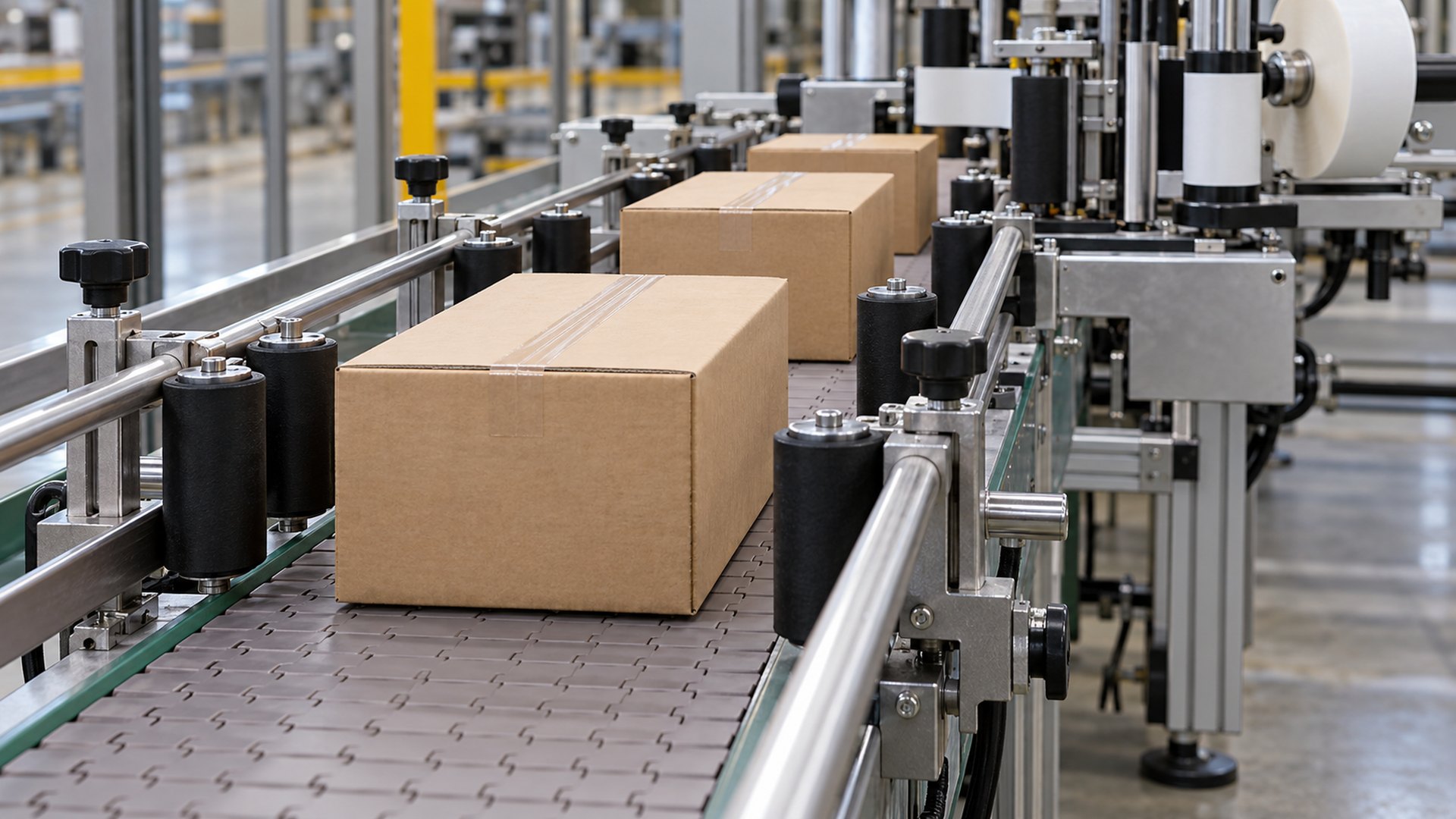
It is a rotating contact point that helps constrain a product’s sideways position. Guide rollers may sit along one or both sides of a belt, modular conveyor or roller conveyor. Multiple rollers can form a side guide, or a series of guide assemblies can funnel products toward a defined lane. Some systems use fixed rails instead; a roller is useful when the application benefits from rolling contact at the product edge.
The conveyed product still gets its forward motion from the conveyor. As the product touches a side guide roller, the roller turns around its axle and reduces sliding at that contact. The assembly resists or redirects lateral movement, but it cannot correct every upstream cause of a product arriving skewed. Belt direction, transfer gaps, product shape, acceleration, spacing and upstream alignment all influence how the item reaches the guide.
Industrial component makers also distinguish guide configurations by the product being handled. For example, Elesa+Ganter’s conveyor roller central guides list different roller contact forms for cans or plastic containers, cardboard products and glass products. That illustrates why “a guide roller” is not a single universal shape.
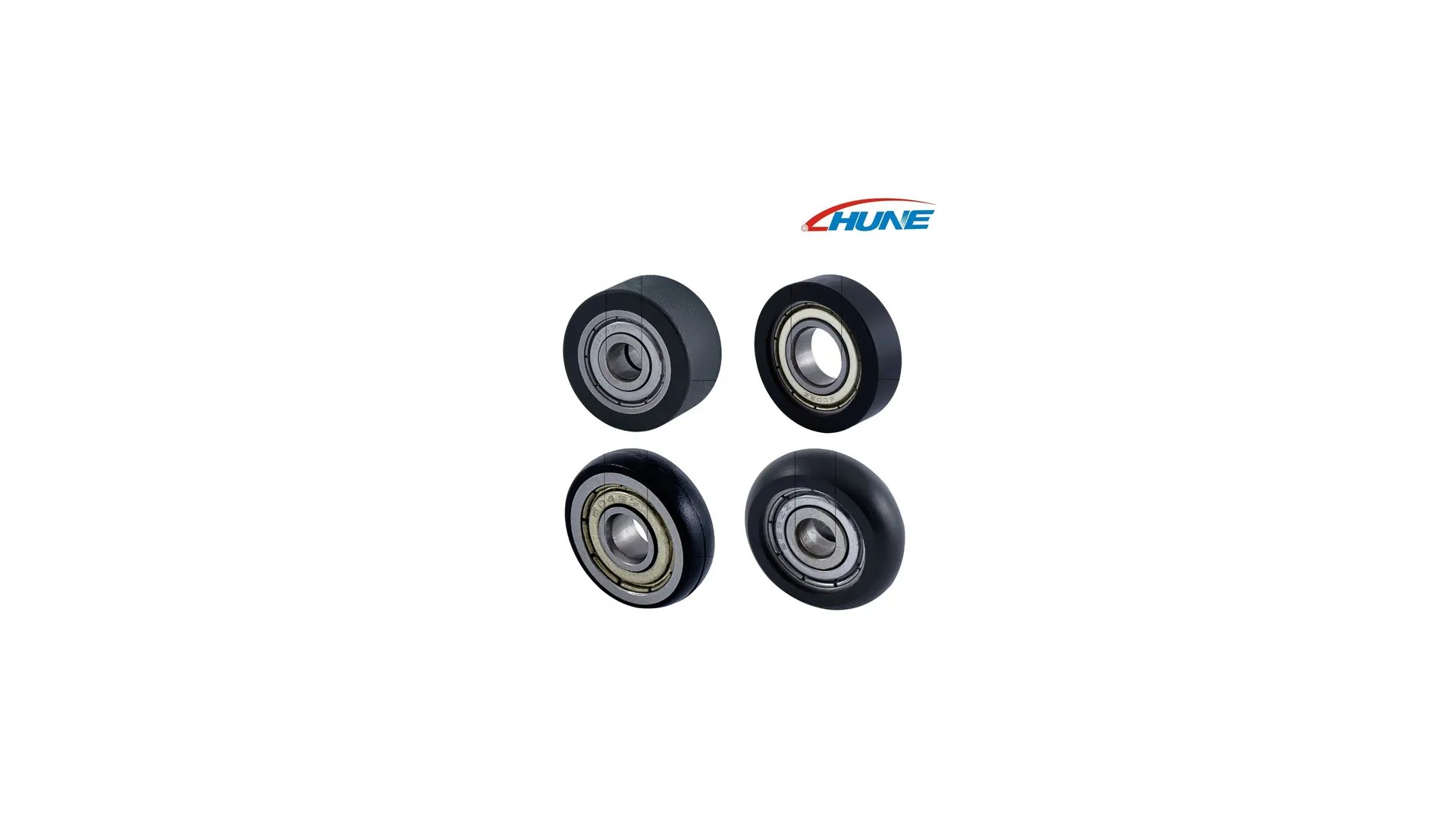
Image placement 1 — after this section: Use one HUNE media-library image to illustrate a bearing-integrated roller component. Caption it as an example component, not as a complete conveyor guide assembly.
How do guide rollers keep products centered?
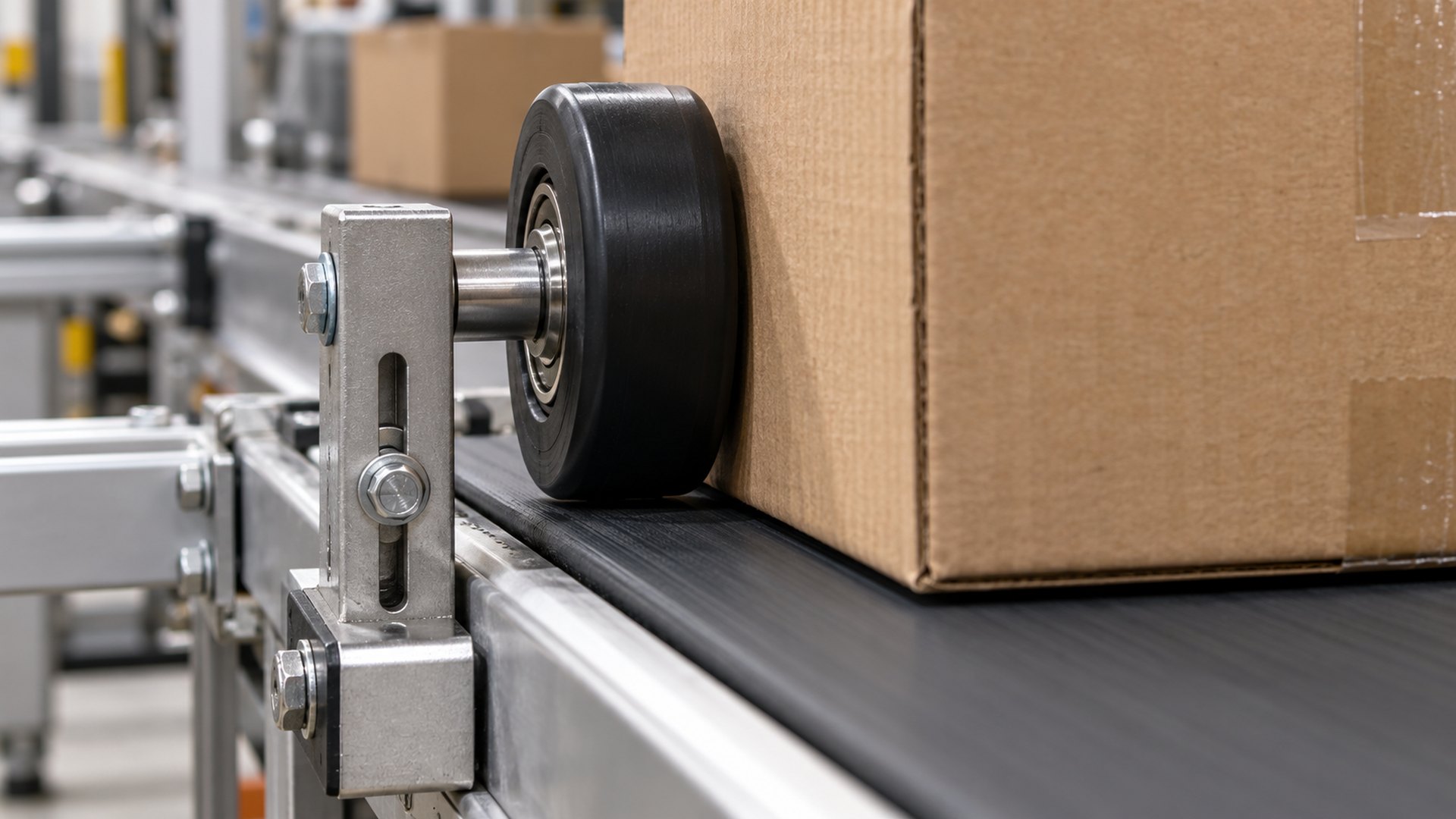
They provide a side boundary that the product can contact without rubbing continuously against a fixed rail. When a product moves toward the boundary, the roller surface turns with it. The roller’s mounting position and contact height determine where the lateral reaction is applied. If guides are placed on both sides, their spacing defines the available lane width; if only one side is guided, the conveyor or another datum must establish the product’s reference position.
The contact needs to be enough to control the path, but not so aggressive that it damages, deforms or tips the product. A tall narrow carton, a round bottle and a shallow tray react differently to side contact. A roller contacting high on a tall item may create a different tipping tendency from one contacting close to the conveyor surface. Irregular packages can also touch only a small portion of the roller, so the contact shape and edge condition matter.
I would check the entire transition into and out of the guided section. A sudden change in guide spacing can catch a corner; too little clearance can create continuous squeeze; too much can leave the product free to wander before a sensor, labeler, printer or packing station. For mixed product sizes, the guide may need adjustment or changeover positions rather than a single fixed width.
Image placement 2 — after this section: Insert the generated close-up showing a guide roller contacting a carton edge. It demonstrates the product-to-roller interface.
What affects smooth and repeatable product guidance?
Smooth guidance depends on the product, the contact geometry and the support structure together. The following factors should be reviewed as a set:
| Design factor | Why it matters | What an OEM should confirm |
|---|---|---|
| Product width and variation | Sets lane clearance and side-contact frequency | Minimum, nominal and maximum product envelope |
| Product shape and stiffness | Affects local contact pressure and stability | Flat, curved, flexible, fragile or irregular contact surface |
| Roller profile and surface | Determines how the guide meets the product edge | Outside diameter, roller width, edge shape and coating/material requirement |
| Roller spacing and height | Controls how continuously the product is supported laterally | Contact points relative to product height and travel direction |
| Bearing, axle and bracket | Carries side reactions and keeps the roller positioned | Bearing bore, shaft or stud, retention, bracket stiffness and fit |
| Conveyor speed and duty | Affects rotation rate, wear and heat generation | Operating speed, starts/stops, hours and reversals |
| Environment | Dust, washdown, moisture or product debris can affect rotation | Exposure, cleaning method, sealing and material compatibility |
| Changeover needs | Different SKUs may need different lane widths | Adjustment range, repeatability and locking method |
No single material or bearing type fits every guide. A soft or compliant contact surface may protect a delicate item, while a harder surface may suit a different wear or dimensional requirement. The right choice depends on product contact, cleaning conditions, speed and the mounting structure. If the roller does not rotate freely, side contact can become sliding friction; if the bracket deflects, the guide position can change under load.
Image placement 3 — after this section: Insert the generated conveyor overview showing cartons passing through side guide rollers. It gives context for adjustable rails and product flow.
 )
Are product guide rollers the same as belt-tracking rollers?
No. Product guides constrain the conveyed item; belt-tracking devices influence the belt’s lateral path. A side roller near a belt edge may act as a limit that prevents the belt from moving beyond a point, but continuous contact can signal that the belt is not tracking correctly. Kinder Australia’s belt-tracking white paper distinguishes side guide rollers from devices that actively train or align a belt.
This difference matters for part selection. A roller designed to contact a carton or bottle side should not automatically be specified against the belt edge, and a belt-training idler should not be treated as a product-positioning guide. The load direction, contact surface, support arrangement and acceptable wear are different. When a product skews but the belt runs true, investigate the product transfer and guide layout. When the belt itself wanders, check belt-tracking causes and use the appropriate conveyor design process.
HUNE has a separate article on specifying a plastic-coated bearing for conveyor guide systems, which focuses more closely on component geometry and sourcing inputs. For a guide that runs on a round rail or cable rather than directly against a product edge, a U-groove bearing roller may be worth evaluating only when its groove matches the actual mating profile.
What should OEM buyers send a supplier?
A useful RFQ describes the moving product and the complete guide assembly, not just the roller diameter. Include:
- Product drawings or samples, including the minimum and maximum width, height and edge shape.
- Conveyor type, belt or carrying surface, travel direction and the guide’s position in the line.
- A section view showing roller orientation, contact height, spacing and clearance to the product.
- Roller outside diameter, width, profile, material or coating requirement, and any finish constraints.
- Bearing bore, axle or stud dimensions, mounting bracket and retention details.
- Expected speed, operating hours, starts/stops, reversing duty and estimated side-contact severity.
- Environment, cleaning chemicals, dust, moisture and temperature conditions.
- Required SKU changeover range, critical dimensions, inspection datums and validation plan.
- Prototype quantity, expected production volume, packaging and target delivery timing.
If possible, test the guide with representative products at the minimum and maximum envelope, including transfers into and out of the guided zone. Confirm that the rollers rotate, the product remains stable, and the lane stays clear through the intended operating sequence. HUNE’s OEM/ODM process can start with a drawing or sample plus the mating geometry and duty details.
Frequently Asked Questions
Do conveyor guide rollers move products forward?
Usually, no. The conveyor belt or carrying rollers provide forward motion. Guide rollers rotate when the moving product contacts them and help limit lateral movement or maintain lane position. A powered roller guide would be a different mechanism and should be specified as such.
Should guide rollers touch the product all the time?
That depends on the product and process. Some designs maintain light contact to control a narrow path; others provide clearance and touch only when an item drifts. Continuous contact can increase drag or mark sensitive surfaces, while excessive clearance can reduce positioning repeatability. Verify the intended contact behavior in the actual assembly.
Can side guide rollers fix a conveyor belt that wanders?
They may limit how far a belt edge can move, but that is not the same as correcting the cause of belt mistracking. Persistent belt-edge contact can create wear. Belt alignment and tracking should be assessed separately from product guidance.
What dimensions matter when specifying a conveyor guide roller?
Start with the roller’s outside diameter and width, but also specify the bearing bore, axle or stud, profile, contact height, bracket, mounting orientation and clearance to the product. The product’s size range and edge shape are essential because they define the mating interface.
Practical recommendation for OEM projects
Design the guide around the product envelope and the next process, then select the roller and bearing to match that interface. Confirm the roller’s contact point, profile, spacing, bracket rigidity and changeover needs with the conveyor layout. Keep product guidance separate from belt tracking, and validate the complete path with representative products.
For a custom bearing-integrated guide roller, send HUNE the product or track drawing, roller and axle interface, load direction, speed, environment, changeover range and annual demand. You can contact HUNE about an OEM roller project with those details for a technical review.

[…] If a project uses custom rollers, send the supplier the roller drawing, mating track or shaft geometry, load and speed, operating environment, expected water/chemical exposure, cleaning method and any required material declarations. For related system context, see how conveyor belts work and how conveyor guide rollers keep products on track. […]