To clean a conveyor belt, first identify the belt construction, the material to remove and the equipment’s cleaning requirements. Then use a method and cleaning agent approved by the belt and conveyor manufacturers. Dry brushing or scraping may suit loose solids; wet cleaning may be required for sticky residue or a validated food-hygiene process. Before anyone reaches into a conveyor or its nip points, follow the site’s energy-control procedure and applicable safety rules. There is no single detergent, pressure setting or cleaning interval that is safe for every belt.
Start with the belt, the soil and the process
The right method depends on what is on the belt and what the belt is made of. A belt carrying dry cartons has different cleaning needs from a belt carrying flour, sticky confectionery, oil-coated parts or raw food. A method that removes residue can still damage the belt cover, splice, hinge rods, coatings, bearings or nearby electrical parts.
Identify the belt manufacturer and model if possible. Check its technical documentation for approved detergents, chemical compatibility, temperature limits, water pressure, brush type and drying requirements. If the belt is part of a larger machine, check the conveyor OEM’s instructions too. Belt material names alone are not enough: two belts described as “plastic” or “rubber” may use different compounds, covers, fabrics, joining methods and additives.
Also identify the soil. Loose dust, dry powder, oil, adhesive, sugary residue and protein-based food soils do not respond to the same cleaning method. If a residue is unknown, test a compatible method in a controlled, non-production area and confirm the result before applying it across the line.
Choose a cleaning method that fits the belt
Use the least aggressive method that reliably removes the target soil. In practice, conveyor belt cleaning methods range from dry removal to controlled washdown. A fixed cleaning recipe is a poor substitute for the belt supplier’s chemical-resistance guidance and the site’s sanitation plan.
| Method | Common use | Engineering checks |
|---|---|---|
| Dry brush or vacuum | Loose dust, crumbs or dry particulate | Use tools that will not abrade the cover or create contamination; control airborne dust where relevant. |
| Belt scraper | Continuous removal of bulk carryback at a discharge point | Select scraper material and contact pressure for the belt; inspect blade wear, belt surface and splice passage. A scraper reduces carryback but does not replace sanitation cleaning. |
| Damp wipe or controlled wash | Adherent residue where the belt and equipment allow moisture | Confirm chemical compatibility, drainage, splash protection and the OEM’s limits for water pressure and temperature. |
| Automated or clean-in-place system | Repeated cleaning on a designed production line | Validate coverage, chemical concentration, contact time, rinse and drying through the responsible process team. |
A belt scraper is a mechanical component that removes material carried back on the return run. It can reduce buildup around pulleys and transfer points, but it is not a universal cleaning solution. Habasit describes conveyor components such as scrapers for removing waste and debris; scraper contact material and belt compatibility still need to be checked for the specific system. See the manufacturer’s conveyor-component guidance.
[Image placement 1: Insert 01-conveyor-belt-cleaner.jpg after this section.] [Alt text: Primary and secondary belt scrapers removing carryback from a bulk-material conveyor]
A practical cleaning sequence for an industrial conveyor
Treat cleaning as a controlled process, not an improvised task. The sequence below is a planning framework. Follow the conveyor, belt, chemical and site procedures for the actual equipment.
- Define the cleaning objective. Decide whether the task is to remove loose carryback, clean visible soil, meet a food-safety sanitation step or prepare the belt for a product changeover. Cleaning and sanitizing are different steps; a clean-looking surface is not automatically sanitized.
- Review the equipment and chemical instructions. Confirm belt material and approved cleaning products. Follow the product label and site procedure for dilution, contact time, rinsing and personal protective equipment. Do not assume that a common alkaline cleaner, solvent or sanitizer is compatible with every belt.
- Control hazardous energy before manual access. Stop, isolate and verify equipment using the site’s energy-control procedure whenever a worker could be exposed to unexpected startup or moving parts. OSHA’s lockout/tagout rule covers servicing and maintenance where unexpected energization, startup or release of stored energy could cause injury. The exact requirements depend on the equipment and jurisdiction; see OSHA 29 CFR 1910.147.
- Remove loose material with an approved method. Use a suitable scraper, brush or vacuum to remove bulk solids before applying liquid, if the belt and process permit it. This reduces the chance of turning dry soil into a smear or pushing debris into hinges and transfer points.
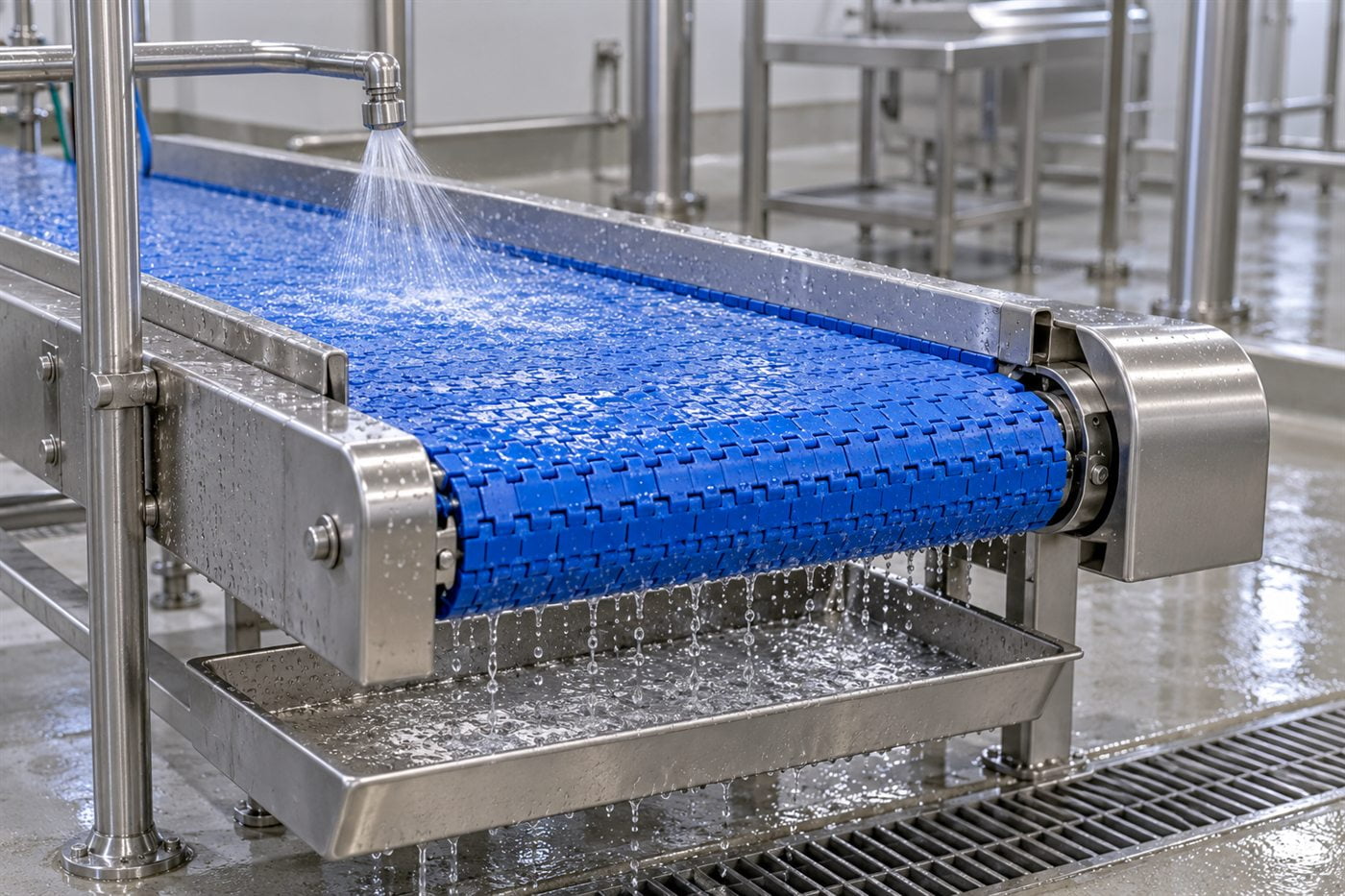
- Apply the approved cleaning method. Work across the belt surface and any designed return-side or underside cleaning zones. Use only the specified tool, detergent, temperature and pressure. Do not direct water at bearings, motors, sensors, seals or electrical enclosures unless the equipment is designed and rated for that exposure.
- Rinse, sanitize and dry as required. Follow the site’s validated process and chemical label. Some processes require a rinse; others may have different approved steps. Allow the belt and surrounding components to dry as specified before restart or product contact.
- Inspect before returning to service. Check for remaining soil, chemical residue where relevant, damaged covers or joints, scraper wear, loose fasteners, trapped debris and water around components. Record the cleaning task if the plant’s quality or maintenance system requires it.
How belt construction changes the cleaning decision
“How to clean a conveyor belt” has no material-independent answer. Construction and joint details affect what a belt can tolerate.
- Fabric-reinforced PVC or PU belts: Check the cover, fabric edges, splice and any surface coating. Scrubbing, solvents or heat can affect the top cover or joint even if the base polymer appears compatible.
- Rubber belts: Consider the specific rubber compound, fabric or steel reinforcement, splice and transported material. Oils and some chemicals can affect particular compounds; use the belt maker’s compatibility data.
- Modular plastic belts: Soil can remain around hinges, rods, sprockets and transfer features. Cleaning needs to reach the geometry that retains residue without damaging the belt or forcing debris into inaccessible areas.
- Monolithic or homogeneous belts: A continuous construction may simplify access to some surfaces, but chemical, temperature, pressure and contact-time limits still depend on the exact grade.
- Metal belts: Check the alloy, finish, joints and nearby components. A metal belt does not make the entire conveyor corrosion-proof.
The material supplier Habasit provides a belt-selection and calculation resource that includes chemical-resistance information for its products. That is a useful reminder to verify the exact belt and chemical pairing rather than infer compatibility from a broad material label: Habasit selection and calculation resources.
Food conveyor belts need a documented hygiene process
For food production, cleaning must fit the plant’s food-safety program and the belt’s intended use. The FDA’s current 21 CFR 117.40 requires equipment to be adequately cleanable and maintained, and food-contact surfaces to withstand their intended use, cleaning compounds and sanitizing agents. The rule also addresses conveyance systems and sanitary condition.
That does not mean every belt or bearing roller is suitable for food contact. Confirm the belt’s intended-use documentation and any required declarations with the supplier. Specify the approved detergent and sanitizer, concentrations and exposure conditions through the plant’s sanitation program. The responsible food-safety team should define and verify the process, including inspection, rinse and records where applicable.
For an OEM, cleanability is a design input. Consider belt joints and underside access, drainage, product traps, scraper access, frame geometry and the splash path around motors, bearings and guide rollers. A component that works mechanically may still be difficult to clean or unsuitable for a particular food-zone application. Confirm material and sealing requirements with the component supplier; do not infer a food-contact rating from “stainless,” “plastic” or “sealed.”
What OEMs should specify when designing for cleaning
Build the cleaning method into the conveyor specification before production. For a new line or replacement belt, the buyer and OEM should agree on:
- belt manufacturer, model, material, surface and joining method;
- products conveyed and the expected soils, including oils, powders, adhesives or food residues;
- dry cleaning, washdown or sanitation requirements and cleaning frequency established by the process owner;
- supplier-approved detergents, sanitizers, concentration, temperature, pressure and contact time;
- exposure limits for bearings, seals, guide rollers, coatings, motors, sensors and electrical enclosures;
- access for inspection and cleaning, drainage, guarding and any scraper arrangement;
- verification criteria, documentation, training and responsibility for approving process changes.
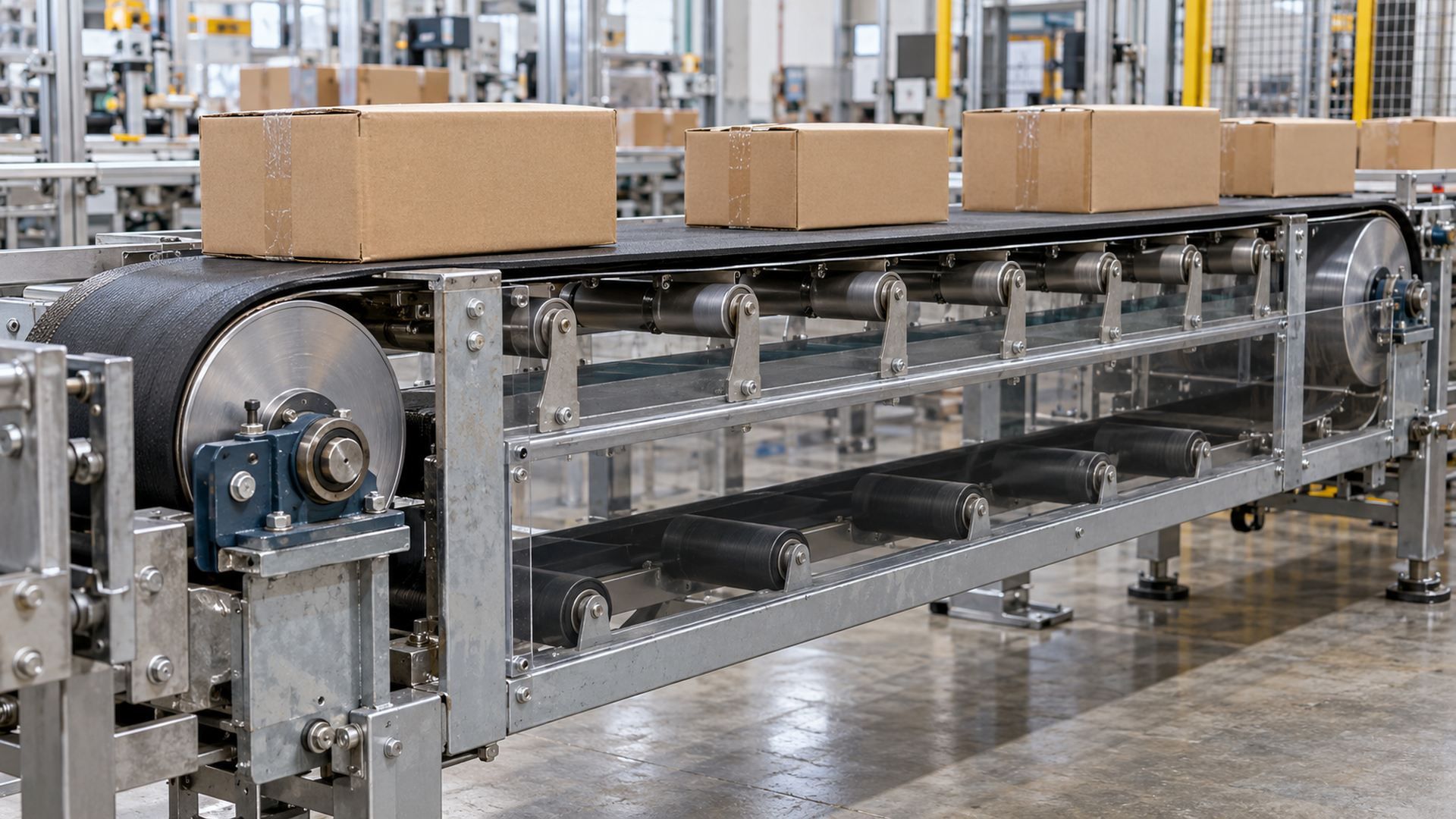
Conveyor support and guide rollers are only one part of the assembly. They may be exposed to splash, detergent, debris or washdown even when they do not touch the conveyed product. HUNE’s conveyor guide roller system and bearing roller product range can be evaluated for suitable guide or support functions, subject to the project’s material, load, environment and cleanability requirements. They should not be treated as belt-cleaning devices or assumed to carry a food-contact approval.
If a project uses custom rollers, send the supplier the roller drawing, mating track or shaft geometry, load and speed, operating environment, expected water/chemical exposure, cleaning method and any required material declarations. For related system context, see how conveyor belts work and how conveyor guide rollers keep products on track.
Frequently asked questions
Can I clean a conveyor belt while it is running?
Do not manually touch or reach into a moving conveyor. Use the site’s energy-control procedure when cleaning exposes a worker to unexpected startup or moving parts. A purpose-designed scraper may operate during production when it is installed and guarded as specified by the conveyor OEM, but that does not make manual cleaning of a running belt safe.
What cleaner should I use on a conveyor belt?
Use a cleaning agent approved for the exact belt and process. Check the belt manufacturer’s chemical-resistance information and the cleaner’s label. There is no universally safe conveyor-belt cleaner.
How do you clean a food conveyor belt?
Follow the facility’s documented sanitation process and verify that the belt, joints and components suit the intended food-contact zone and cleaning compounds. Cleaning, rinsing and sanitizing steps must be set by the responsible food-safety program and supplier guidance.
How do you remove sticky residue from a conveyor belt?
First identify the residue and belt material. Use the belt maker’s approved detergent and method, following the chemical label for dilution and contact time. Avoid unapproved solvents, sharp tools or aggressive scrubbing that can damage the cover or splice.
How often should a conveyor belt be cleaned?
Set the interval from the process, soil buildup, product changeovers, risk assessment and sanitation requirements. There is no single interval suitable for every conveyor. Inspect the belt and document the plant’s approved cleaning schedule.
Practical recommendation
Before cleaning, record the belt model, residue, approved cleaning agent and equipment isolation method in one work instruction. For OEM projects, specify cleanability and chemical exposure alongside belt, roller and bearing requirements at design review. That gives maintenance and sanitation teams a repeatable method while helping buyers source components that suit the actual operating environment. For an application review, send Sliding-Roller the conveyor layout, roller or guide drawing, load, speed and cleaning exposure through the contact page.