A useful custom bearing roller RFQ should tell the supplier what the roller must do, what it must fit and how the buyer will approve it. At minimum, include a drawing or sample, bearing and wheel dimensions, axle or stud interface, mating track geometry, load direction, operating environment, expected quantity and required delivery scope. If a specification is not fixed, identify it as open for supplier recommendation.
I do not recommend sending only a wheel diameter and target price. A bearing roller is a system of wheel, bearing, axle, retention, bracket and track. Missing information forces the supplier to make assumptions about material, fit, profile, tolerance, tooling and inspection. Those assumptions can produce quotations that look comparable but cover different products. A good RFQ separates mandatory requirements from preferences and asks each supplier to state exclusions, alternatives and open technical points.
Why Does RFQ Quality Matter for a Custom Bearing Roller?
The RFQ defines what the quoted price includes and whether two supplier offers describe the same engineering solution.
“Custom POM roller, 40 mm diameter” is not enough to establish:
- whether 40 mm is maximum OD or functional running diameter;
- whether the wheel is flat, crowned, U-grooved, V-grooved or flanged;
- whether a bearing is overmoulded or pressed into a separate wheel;
- which bearing, seal, shield, material or internal clearance is required;
- how the wheel mounts to the axle or bracket;
- what track or rail it contacts;
- what load direction and duty it experiences;
- which tolerances are functional; or
- whether tooling, sampling, inspection, packaging and freight are included.
When these items remain open, one supplier may quote an existing wheel with a standard bearing, another may include new tooling and a third may price only loose components. The lowest number is then not necessarily the lowest cost for the approved assembly.
I prefer an RFQ that is incomplete but honest over one filled with guessed values. Mark unknown items clearly. Ask the supplier to propose an option and identify the validation needed before production.
What Information Should Every Bearing Roller RFQ Include?
Every RFQ should cover product identity, application, geometry, materials, operating conditions, quality, quantity and delivery scope.
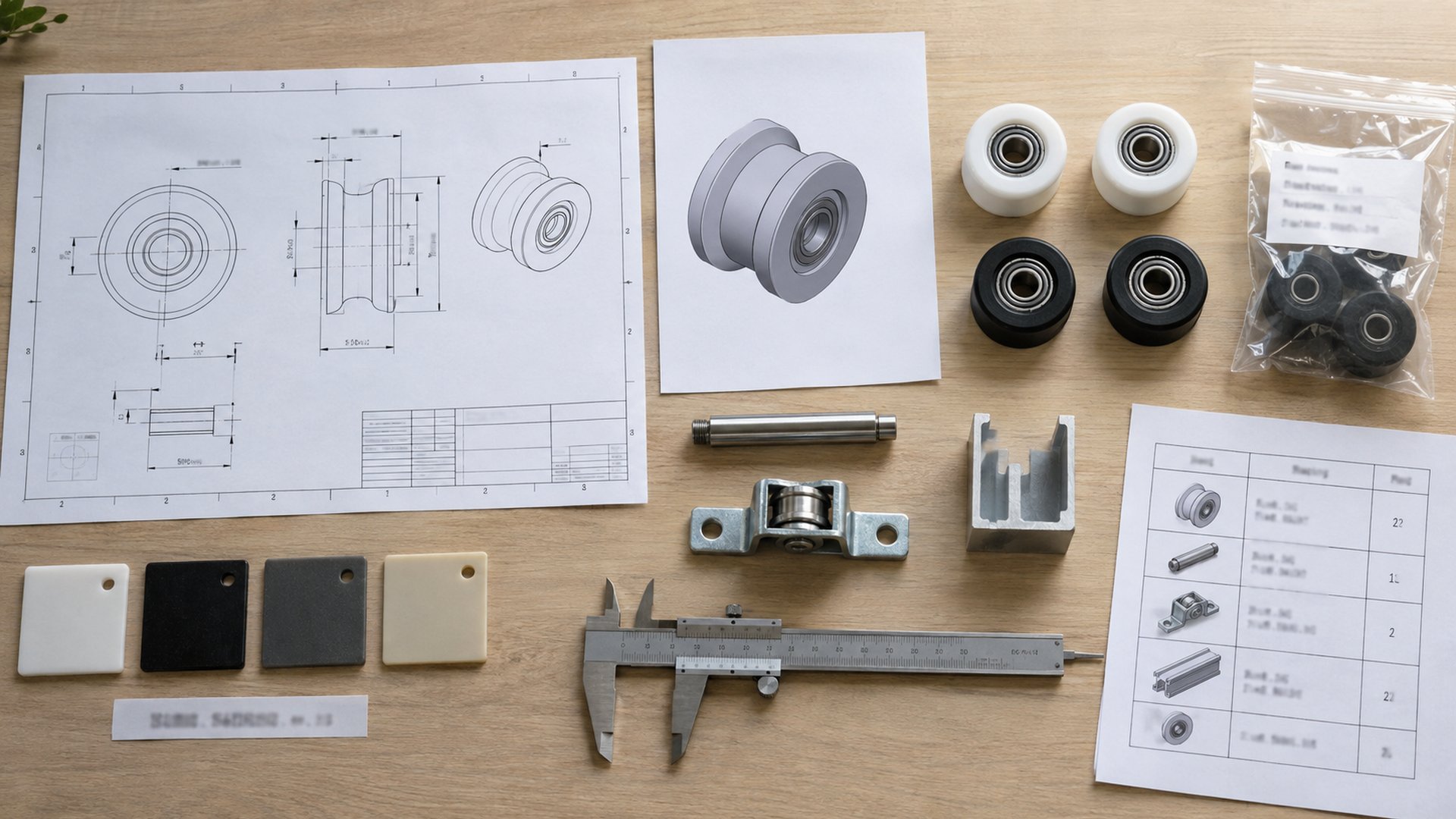 A useful RFQ combines the drawing with physical interfaces, material choices, quantities and approval requirements.
| RFQ block | Minimum information | Why the supplier needs it |
|---|---|---|
| Project identity | Buyer part number, revision, project name and confidentiality requirement | Prevents quotation against an obsolete or unidentified file |
| Application | Equipment type and roller function | Distinguishes support, guidance, tensioning and transmission duties |
| Geometry | 2D drawing, 3D model or sample plus critical dimensions | Establishes the part and its mating interfaces |
| Complete system | Axle, stud, bracket, track, rail, cable or belt information | Defines mounting, load path and contact geometry |
| Bearing | Full designation or required performance and envelope | Controls bore, OD, width, closures, material and sourcing |
| Wheel | Material, profile, running diameter, width and colour | Defines track contact and manufacturing route |
| Operating conditions | Load direction, speed, duty cycle and environment | Supports material, bearing and validation choices |
| Quality | Critical characteristics, inspection method and records | Establishes how conformity will be judged |
| Commercial volume | Prototype quantity, first order, annual demand and forecast pattern | Determines tooling, process and price-break logic |
| Delivery | Assembly scope, packaging, labels, destination and requested schedule | Prevents hidden work from appearing after quotation |
The RFQ does not need a perfect specification before supplier contact. It does need version control. Put the same part number and revision on the email, drawing, 3D model and checklist so the quotation can identify its technical basis.
How Should Buyers Describe the Application and Load Path?
State what the roller supports or guides and show how force travels through the assembly.
A typical load path is:
door, carriage, drawer, film, cable or moving component → bracket → axle or stud → bearing inner ring → rolling elements → bearing outer ring → plastic or metal wheel → mating track
The RFQ should clarify:
- whether the roller supports weight or only controls lateral position;
- radial, axial, combined or impact loading expected at the roller;
- number of rollers sharing the load;
- direction of travel and any reversing movement;
- whether misalignment or frame deflection is expected;
- speed, travel distance, starts and stops, and idle periods;
- noise, vibration or rolling-resistance priorities; and
- consequences of jamming, looseness or roller failure.
Do not convert uncertain system loads into an unsupported exact roller capacity. Provide the best available assembly mass, geometry and load cases, then identify what still needs calculation or testing. A guide wheel in a printer, a supporting wardrobe-door roller and a pulley guiding cable can use similar-looking components but impose different loads.
Which Drawings and Mating Geometry Should Be Attached?
The roller drawing should be accompanied by the geometry it must fit, especially the axle and running track.
Useful files include:
- a dimensioned 2D roller or assembly drawing;
- a neutral 3D model where available;
- axle, stud, shoulder bolt or rivet detail;
- bracket or housing section;
- track, rail, cable, belt or mating-profile section;
- installation photographs with scale or identified dimensions; and
- an original sample when reverse engineering is required.
The drawing should separate functional dimensions from cosmetic dimensions. Functional controls may include:
- bearing bore, outside diameter and width;
- wheel running diameter rather than only maximum OD;
- groove radius, angle, width and depth;
- wheel and assembly width;
- axle seat, shoulders and fillet clearance;
- bearing position and retention;
- tread runout relative to the bearing axis;
- bracket hole position and roller centre height; and
- operating side clearance.
ISO 1101:2017 defines the symbol language for geometrical tolerancing, including form, orientation, location and runout specifications. The broader ISO/TC 213 GPS framework covers dimensional and geometrical product specification and verification. These standards provide a language; they do not decide which tolerance a bearing roller needs. The buyer and supplier must connect each control to a function and inspection method.
Avoid applying one tight general tolerance to every surface. It can increase tooling, machining and inspection cost while leaving the real interface, such as tread-to-bearing runout, undefined.
What Bearing Information Belongs in the RFQ?
Use the complete bearing designation when it is fixed; otherwise specify the required interface and operating conditions and request a documented proposal.
If the bearing is nominated, include:
- manufacturer and complete designation;
- d × D × B boundary dimensions;
- open, shielded or sealed construction;
- material requirement;
- internal clearance requirement;
- lubricant or special-cleanliness requirement, if applicable;
- approved alternatives or no-substitution instruction; and
- traceability or documentation requirement.
SKF's bearing designation system shows how a designation can contain basic size plus suffix information for design, seals, clearance and other features. Suffix meanings can vary among manufacturers, so a partial code should not be treated as a universal specification.
If the supplier may select the bearing, define the shaft, available wheel envelope, load cases, speed, duty, environment and protection requirement. Ask the supplier to state the proposed manufacturer, complete designation and any purchasing assumptions.
The related HUNE guides to sealed versus shielded bearings and bearing clearance in roller assemblies help buyers describe these choices without treating one suffix as universally better.
What Wheel Material and Manufacturing Information Is Needed?
Specify performance requirements and fixed material grades separately; do not use “nylon” or “plastic” as a complete material specification.
State whether the material is:
- fixed by an approved grade and supplier;
- limited to a material family such as POM, PA6, PA66, PU or another engineering polymer;
- open to supplier recommendation; or
- required to meet colour, regulatory, flammability, food-contact, electrical or other project-specific conditions.
Then provide the operating environment: temperature range, humidity, water, dust, oils, cleaners, chemicals, UV or outdoor exposure. Only request certificates that the application or customer actually requires.
The RFQ should also say whether the preferred construction is:
- direct bearing overmoulding;
- separately moulded wheel with bearing press fit;
- machined wheel or prototype;
- moulding plus secondary machining; or
- open for DFM recommendation.
HUNE's roller material and process overview explains why resin grade, bearing arrangement and production route must be evaluated together. An existing mould can be useful only when its bearing seat, wall thickness, wheel profile and assembly interfaces fit the requirement.
What Quality and Validation Requirements Should Be Defined?
Define what will be approved at drawing, sample and production stages, and identify the evidence required at each stage.
A practical approval route can include:
| Stage | Buyer decision | Useful evidence |
|---|---|---|
| Requirement review | Is the specification complete enough for DFM? | Open-point list and supplier assumptions |
| Drawing approval | Are interfaces, materials and revisions controlled? | Approved drawing and bill of materials |
| Tooling or prototype sample | Does the geometry fit and assemble? | Dimensional report and physical samples |
| Installed test | Does the roller work in the real system? | Test plan, conditions and observations |
| Pilot production | Is the process repeatable? | Inspection results across production-intent parts |
| Mass production | How will ongoing lots be released? | Control plan, sampling or agreed inspection records |
If attribute sampling is required, identify the standard and edition, lot definition, inspection level, AQL values by defect category, switching rules and disposition process. ISO 2859-1:2026 defines AQL-indexed sampling schemes for lot-by-lot inspection. An AQL plan is an acceptance-sampling method; it is not proof that every part conforms and should not replace process control or functional validation.
Do not write “100% inspection” without naming the characteristics, gauges, acceptance criteria and record requirements. Visual appearance, wheel diameter, tread runout, bearing rotation and packaging are different checks.
What Commercial Information Changes the Quote?
Prototype quantity, production volume, tooling ownership, packaging and delivery terms can change the manufacturing route and total project cost.
Include:
- quantity for engineering samples;
- first production order quantity;
- estimated annual usage and order frequency;
- product life or programme duration, if known;
- target date for samples and production;
- requested price breaks;
- destination and Incoterm, if the quote must include logistics;
- currency and quotation-validity expectation;
- tooling scope, ownership, maintenance and storage expectations;
- payment requirements to be discussed; and
- packaging, labels, barcodes, customer part numbers and carton marks.
Do not ask only for a unit price at one quantity when tooling is involved. Request tooling, samples, unit pricing, secondary operations, assembly, inspection and packaging as separate lines where practical. This makes alternative proposals easier to compare.
I also ask suppliers to list exclusions. A quote that excludes the bearing, axle, final assembly or inspection can otherwise appear lower than a complete-assembly quote.
What Makes a Supplier Quote Technically Reliable?
A reliable quotation states its technical basis, assumptions, process route, open points and validation limits.
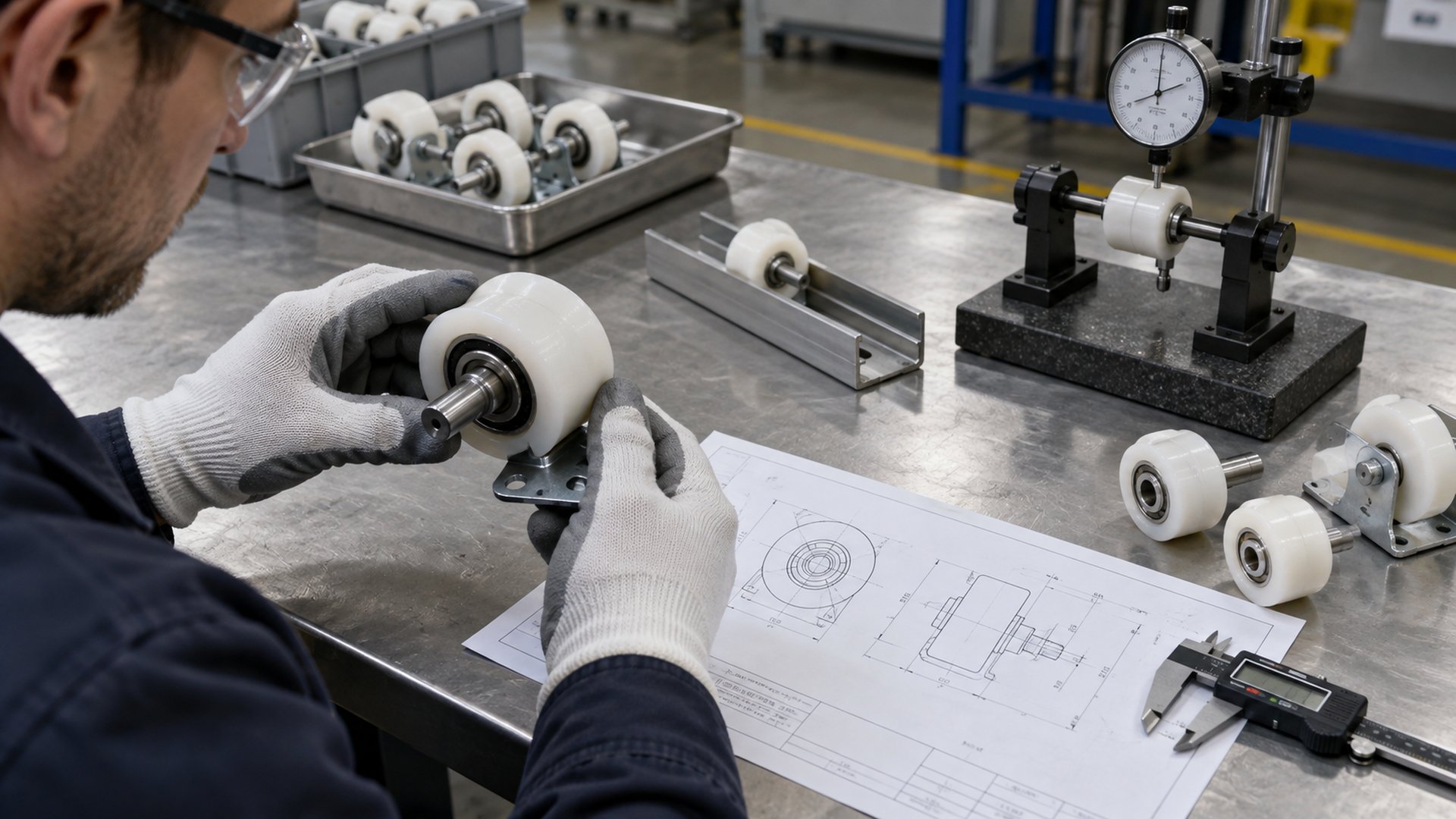 The quotation should follow a drawing and application review, with unresolved interfaces identified before tooling.
A useful supplier response should identify:
- drawing and revision quoted;
- proposed bearing, material and construction;
- existing tooling, modified tooling or new-tooling route;
- components and operations included;
- critical assumptions and deviations;
- proposed tolerances or questions requiring agreement;
- sample and production lead-time basis;
- validation and inspection included;
- MOQ and price-break quantities;
- packaging basis; and
- quotation exclusions.
The supplier does not need to solve every risk before a budgetary quote. The response should distinguish budgetary pricing from a firm production quote. A budget quote may rely on assumptions; a firm quote should close the important interfaces and define how later changes will be handled.
How Should Buyers Compare Multiple Roller Quotations?
Normalize the technical scope before comparing price.
Use a comparison matrix with rows for:
- bearing manufacturer and full designation;
- wheel material and grade;
- manufacturing route;
- wheel, axle, bracket and fasteners included;
- tooling included and ownership terms;
- drawing revision;
- critical tolerances and inspection records;
- sample quantity and approval route;
- unit price at equivalent quantities;
- packaging and logistics basis;
- lead-time assumptions; and
- deviations or open questions.
If two quotations use different bearing brands, plastic grades or tooling routes, they are alternatives rather than like-for-like prices. Decide whether the alternative meets the function before ranking cost.
The sliding rollers with bearing range shows why similar outside shapes may contain different bearings, profiles and mounting features. A specific U-groove bearing pulley structure also demonstrates that groove geometry and guided-member diameter belong in the same comparison as the bearing.
A Copyable Custom Bearing Roller RFQ Checklist
Use this checklist as a starting point and delete fields that do not apply.
- Buyer company and contact:
- Project name:
- Buyer part number and revision:
- RFQ due date:
- Application and roller function:
- Roller assembly drawing attached: Yes / No
- 3D model attached: Yes / No
- Physical sample available: Yes / No
- Mating axle or stud drawing:
- Mating track, rail, cable or belt section:
- Bearing designation or required envelope:
- Bearing closure, material and clearance:
- Wheel material or performance requirement:
- Finished wheel OD, width and profile:
- Critical dimensions and datums:
- Load direction and roller quantity:
- Speed, travel and duty cycle:
- Temperature and environmental exposure:
- Prototype quantity:
- First production quantity:
- Estimated annual quantity:
- Tooling requirement and ownership:
- Inspection and sample approval requirements:
- Required certificates or reports:
- Packaging, labels and customer part number:
- Delivery destination and requested terms:
- Target dates:
- Approved alternatives:
- Supplier assumptions and deviations to be listed: Yes
This checklist supports communication but does not replace a controlled drawing or application review. If a field is unknown, write “supplier proposal requested” instead of guessing.
How Does HUNE Review a Custom Roller RFQ?
HUNE reviews the drawing, sample and application before confirming the bearing, material, tooling and assembly route.
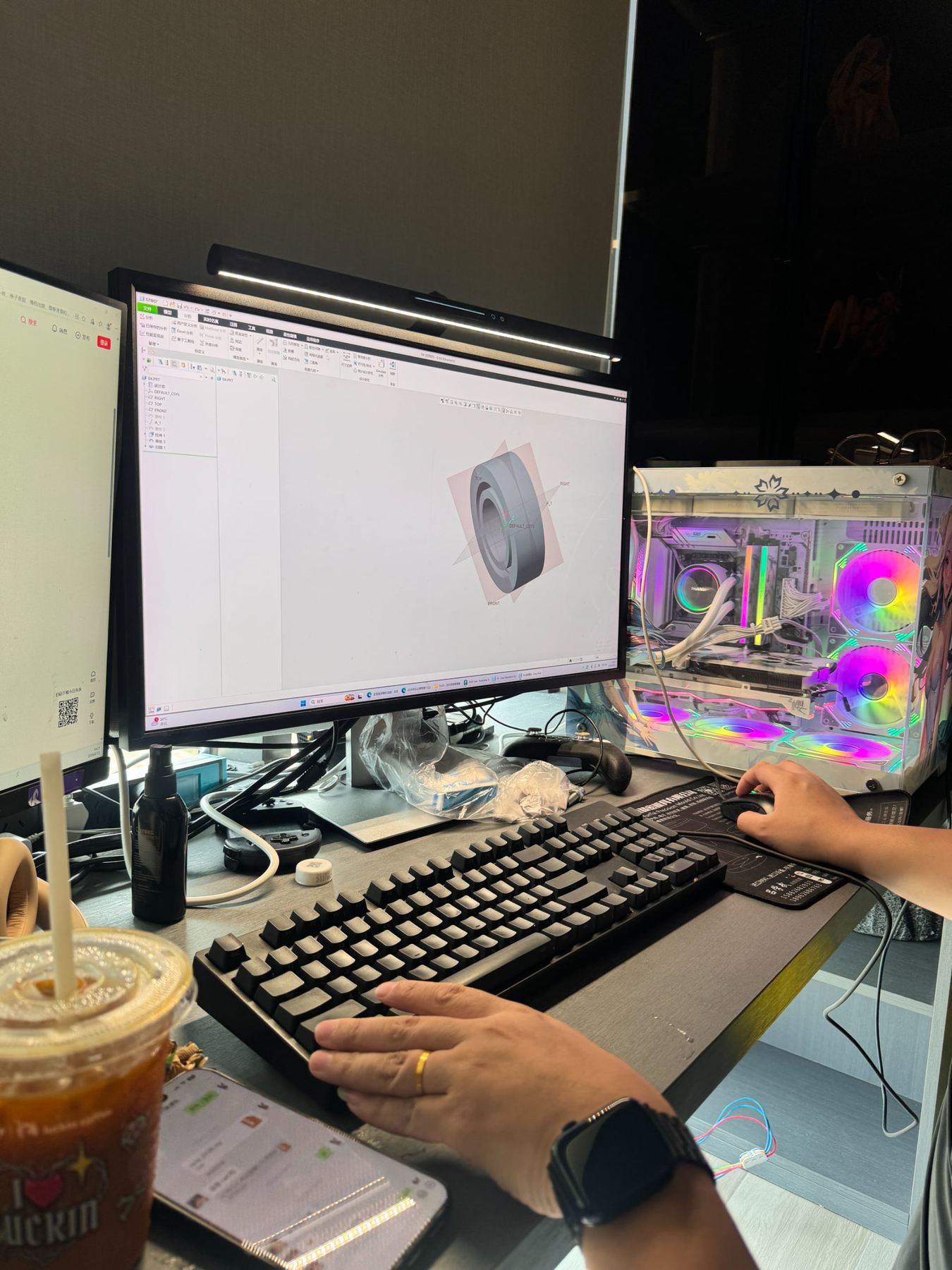 A controlled drawing and application review connect the buyer's interfaces to tooling, production and inspection.
HUNE manufactures plastic-coated bearing rollers and coordinates bearings, shafts, studs, stamped brackets, fasteners and final assemblies for OEM projects. The HUNE OEM development process begins with application and requirement review, followed by DFM, tooling, component production, assembly and inspection.
For an initial evaluation, send the available drawing or sample, installation images, mating geometry, load and operating information, quantities and packaging requirements through the HUNE contact page. We can identify missing information, compare an existing mould with a custom-tooling route and state the assumptions needed for quotation.
Frequently Asked Questions
Can I request a quote without a finished drawing?
Yes. A supplier can often prepare a budgetary evaluation from a physical sample, installation photographs, key dimensions and application information. However, critical interfaces and an approved production drawing should be confirmed before tooling or mass production. Mark unknown details as open and ask the supplier to list assumptions so early quotes remain comparable.
Should I include a target price in the RFQ?
A target can help the supplier understand the commercial boundary when it is based on a defined scope. It should not replace quantity, material, quality and delivery information. If the target excludes tooling, freight or assembly, state that clearly. Ask the supplier to explain which design or process changes would be required to approach the target.
Is a physical roller sample enough for quotation?
A sample helps reveal construction, materials and mating features, but it may be worn, modified or from an uncontrolled revision. Include the application, track or bracket interface and known critical dimensions. The supplier should create or confirm a drawing before production, and the buyer should approve which sample condition and dimensions govern.
What quantities should an OEM buyer provide?
Provide at least the prototype quantity, expected first production order and estimated annual demand. Order frequency and programme duration are also useful. These figures help the supplier compare machining, existing tooling, new injection moulding and automation options. One inflated annual forecast can produce an inappropriate process recommendation, so use the best available planning range.
Should every dimension receive a tolerance in the RFQ?
No. Prioritize dimensions that control bearing fit, shaft location, track contact, installed height, alignment, retention and assembly clearance. Cosmetic and non-contact features can use justified general tolerances when appropriate. Ask how each tight tolerance will be measured and what function it protects before adding cost to the drawing.
Final Sourcing Recommendation
A custom bearing roller RFQ should make the supplier's assumptions visible before price becomes the main comparison. Define the application, load path, bearing, wheel, axle, bracket and track as one system. Attach controlled files, distinguish mandatory requirements from preferences, and state the sample, inspection, volume, tooling and packaging scope.
Before issuing the RFQ, ask one practical question: could a supplier build and inspect the intended part without inventing a functional interface? If the answer is no, add the missing track, axle, load, material or approval information. Then require each quotation to identify its drawing revision, technical basis, deviations and exclusions. This creates a much stronger foundation for DFM, sampling and repeat production.